
 Today on Launch Pad with Hannah Lindgren
Build Us a Moon Base: NASA Puts Up $1 Million for America's High School and College Students to Solve Life on the Lunar Surface
The new Moon Base Student Challenge asks young Americans to tackle power, construction, life support and astronaut safety. No engineering degree required, and registration is open until Jan. 25.
Filed November 21, 2026 · 📍 Charlotte, NC 28202
Were you there? Share your story
Key points
- NASA's Moon Base Student Challenge offers a $1 million prize pool to U.S. high school and college students.
- Teams choose from six problem areas, from power and construction to life support and astronaut safety.
- Registration runs through Jan. 25, 2027, through NASA's STEM Gateway; no specialized engineering experience is required.
- NASA Administrator Jared Isaacman unveiled the contest at the Kennedy Space Center Visitor Complex.
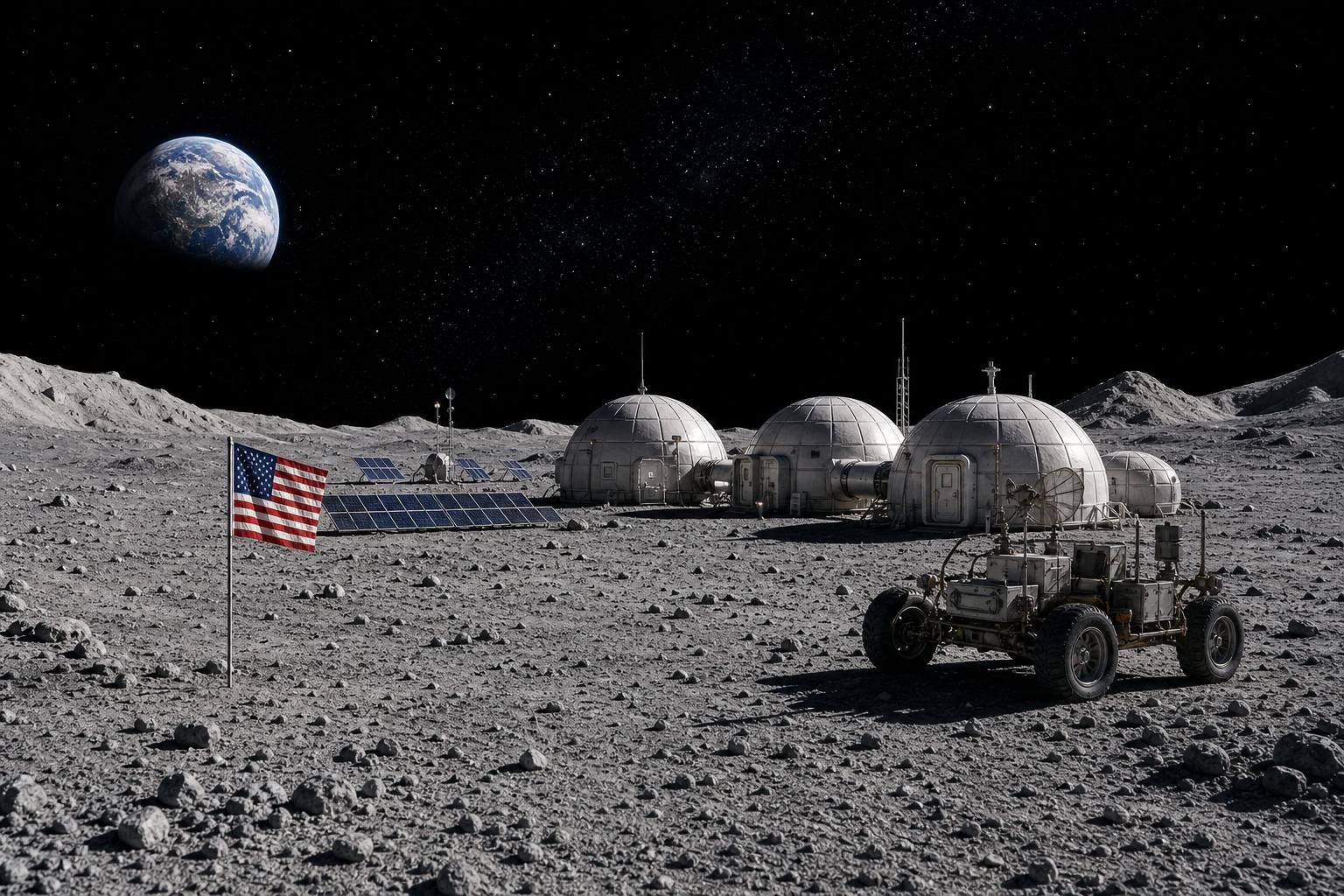
America is going back to the Moon to stay, and NASA wants the next generation of engineers, builders and dreamers to help figure out how.
The space agency has launched the Moon Base Student Challenge, a competition with $1 million in prizes for American high school and college students who come up with practical ideas for living and working on the lunar surface, NASA announced [1]. NASA Administrator Jared Isaacman unveiled the challenge at the Kennedy Space Center Visitor Complex in Florida, according to Space.com [2].
What students are asked to solve
Teams pick from six problem areas, according to NASA and Space.com: power generation and storage, construction, life-support systems, surface mobility, communications networks, and astronaut safety [1][2]. Each one is a real obstacle standing between today's missions and a permanent human presence on the Moon. The Times of India summed up the contest as NASA asking students to solve the problems that stand in the way of a human settlement there [4].
The challenge is open to students based in the United States at the high school and post-secondary levels, and NASA says participants do not need specialized engineering experience to take part [1][3]. That matters. Some of the best ideas in American history came from people who were simply curious, stubborn and willing to tinker.
How it works
Teams register through the NASA STEM Gateway, and registration is open until Jan. 25, 2027 [1][2]. NASA's Office of STEM Engagement designed the challenge with the agency's Moon Base Program, and the Institute of Competition Sciences runs it under a NASA contract, Space.com reported [2]. Official rules are posted on the challenge website [1].
The $1 million is a total prize pool, not a single award, and NASA has not published a breakdown of how many teams will win or how much each will receive, according to the coverage [2][3]. Space.com noted that prize payments depend on available federal funds and NASA's final approval [2]. Local stations across the country, including WBTV in Charlotte, have been spreading the word to schools [5].
Why the problems are hard
The Moon is a harsh place to build a home. There is no breathable air, the surface is covered in fine, abrasive dust that clings to everything, and the long lunar night means solar power alone is not enough to keep a base running. Getting power, shelter, air and water right is the difference between a short visit and a settlement, which is why NASA put those problems at the center of the contest [1][4].
Surface mobility and communications are just as important. Astronauts will need vehicles to travel between work sites and reliable links back to Earth and to each other. Astronaut safety ties all of it together, because every system on a Moon base has to protect the people depending on it [1][2].
Why it matters
For decades, America's lead in space has rested on a simple truth: free people, given a hard problem and a fair shot, will outwork and outthink anyone. This challenge puts that idea to work in classrooms, garages and college labs across the country. It also offers a hopeful alternative to the screen-time culture that worries so many parents. A teenager spending her winter break designing a lunar power grid is learning patience, teamwork and the satisfaction of building something real.
There is something fitting, too, about inviting young people to look up. The psalmist marveled at the heavens as the work of God's fingers, the Moon and the stars which He ordained. Generations of American explorers have shared that wonder, and the next ones may be sitting in a high school physics class right now.
What comes next
Teams have until Jan. 25, 2027, to register [1]. Parents, teachers and coaches who want to get students involved can find the rules and sign-up on NASA's challenge pages [1][2]. Somewhere in America, the first plans for a Moon base may already be taking shape on a kitchen table.
Sources
Do you trust scientific experts more or less than five years ago?
- More
- Less
- About the same
More in Science & Space

Math's 167-Year Riddle Solved? A Bold Riemann Proof Claim Lands
Last night on Launch Pad with Hannah Lindgren

Girl, 6, Dies in Chinese Gene-Editing Trial; Scientist Fired
Yesterday on Launch Pad with Hannah Lindgren
Spuds for the Moon: Oregon State Scientists Grow Potatoes in Simulated Lunar Soil
Thursday night on Launch Pad with Hannah Lindgren
Were you there?
If you were at the scene, or this story touched your life, tell us what you saw and what it was like.
Discussion 0
Sign in or create a free account to join the discussion.
No comments yet. Start the discussion.