
 Tonight on Launch Pad with Hannah Lindgren
Spuds for the Moon: Oregon State Scientists Grow Potatoes in Simulated Lunar Soil
Plants raised in moon-like dirt mixed with worm compost matched those grown in Earth soil, a hopeful step toward feeding astronauts on long missions.
Filed November 19, 2026 · 📍 OR 97301
Were you there? Share your story
Key points
- Oregon State University researchers grew potatoes through a full life cycle in simulated lunar soil
- Mixing in 30% vermicompost produced growth that matched plants in Earth soil
- Without compost, the plants were severely stunted
- The tubers were tiny and untasted; larger tests and a 10-variety comparison come next
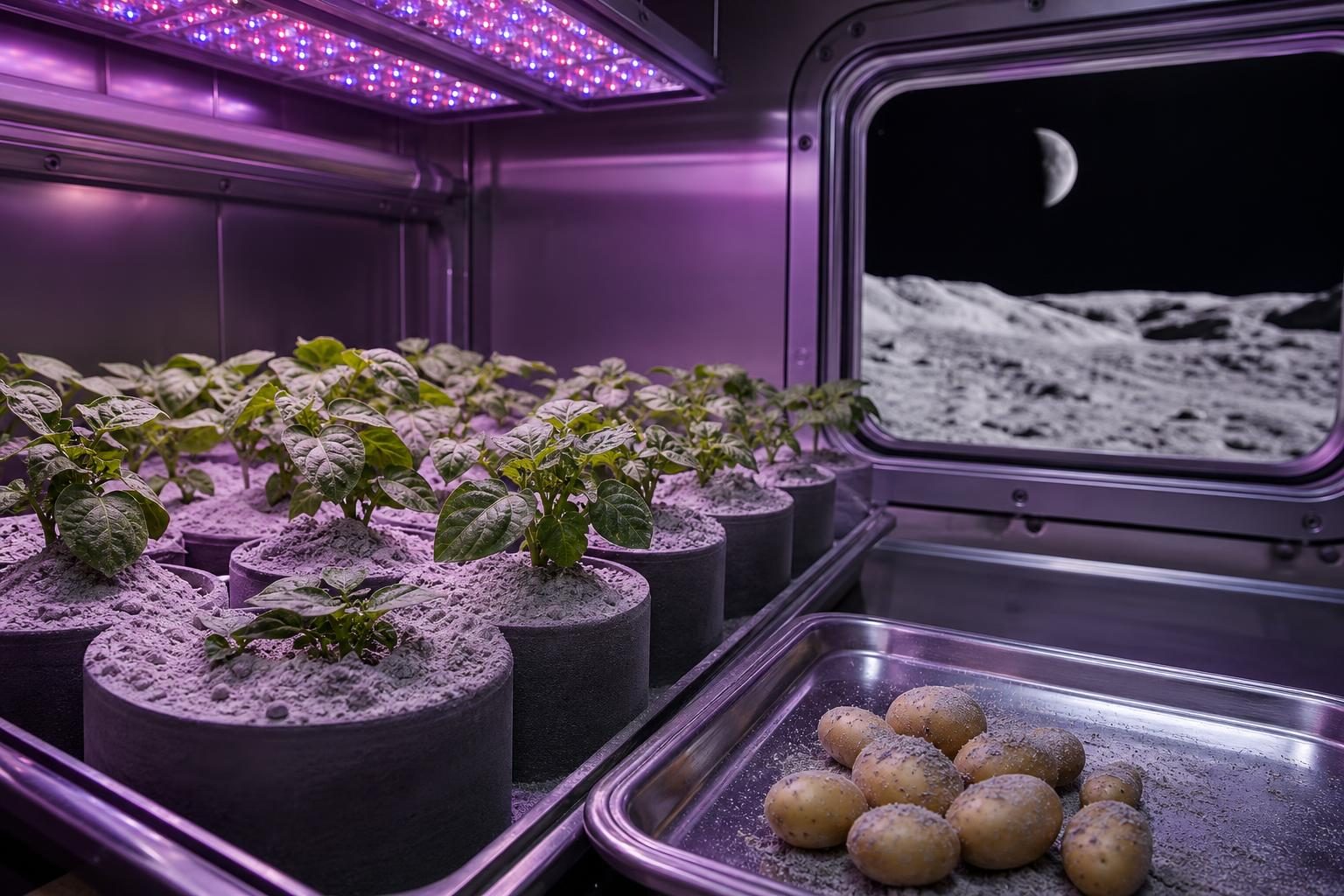
Scientists at Oregon State University say they have grown potatoes through their full life cycle in soil designed to mimic the surface of the moon, a result that could help astronauts one day grow their own food on long lunar missions, KTVZ reported [1].
The study, published in the journal npj Microgravity, found that the plants did well as long as the simulated moon dirt was mixed with organic matter [1][2]. Without that help, they struggled badly.
What the Researchers Did
The team tested five different lunar soil simulants, covering both the dark volcanic plains of the moon, known as mare regions, and the brighter highlands, according to Reuters [2]. They mixed the simulants with vermicompost, a rich fertilizer produced by worms breaking down organic waste [1][2].
The results were striking. Plants grown in simulants mixed with 30% vermicompost matched the growth and development of potatoes raised in ordinary Earth soil under the same conditions, Reuters reported, and their yield kept pace too [2]. Potatoes grown in the simulants without compost were severely stunted and developed poorly formed roots [2].
That finding points to a practical answer for future moon bases. Lunar dust is not soil in the way a farmer understands it. It has no living organisms and none of the organic matter that holds water and feeds plants. Compost made from a crew's own food scraps and plant waste could, in principle, turn that dust into something that can grow a meal.
Why Potatoes
The potato is a natural candidate for space farming. It packs calories and nutrients into a compact plant, and it grows from pieces of itself, without the need to raise seeds. A new scientific report described by The Guardian says the humble potato could be key to sustaining human life on the moon over the long term [3].
Moviegoers will remember the idea from "The Martian," the 2015 film in which a stranded astronaut survives by growing potatoes, and the new study suggests that bit of science fiction was not so far-fetched [5].
The Limits
The researchers were careful not to oversell the work. The plants were grown in small pots, so the potatoes they produced were tiny, Reuters reported [2]. The team has not yet tasted them [2].
There is also a big difference between a simulant and the real thing. Actual lunar regolith, as scientists call moon dirt, may affect plants differently than the material made on Earth to imitate it [2][4]. Real moon soil is scarce, and most of what exists came back with the Apollo astronauts more than 50 years ago.
What Comes Next
The Oregon State team plans to keep going. A forthcoming paper will compare 10 potato varieties grown in lunar soil simulants, and a second study will use larger pots to see how the plants perform with more room to grow [1][2].
The work fits a broader push to make long stays on the moon possible. Space agencies and companies are planning for crews who will live and work there for weeks or months at a time, and every pound of food grown on site is a pound that does not have to be launched from Earth [3].
A Word on Wonder
There is something fitting about this story arriving the week of Thanksgiving. Long before rockets and research grants, people of faith understood that the earth was given to us to work and to keep, and that the harvest is a gift. Now American scientists are asking whether that same simple act, planting a potato and waiting for it to grow, can follow humanity to another world.
It is the kind of patient, practical ingenuity that has always marked American exploration, from the frontier farms to the space program. If the next generation of explorers sits down to a meal of potatoes grown in moon dust, they will owe it to researchers who started with a few small pots in a lab in Oregon [1].
Sources
- [1]Opens in a new tab ↗
- [2]TimesLIVE (Reuters)Care for lunar chips? Scientists grow potatoes in simulated moon soilOpens in a new tab ↗
- [3]Opens in a new tab ↗
- [4]Opens in a new tab ↗
- [5]Digital TrendsThe Martian might not be too far removed from reality. Scientists just grew potatoes in Moon-like soilOpens in a new tab ↗
Do you trust scientific experts more or less than five years ago?
- More
- Less
- About the same
More in Science & Space
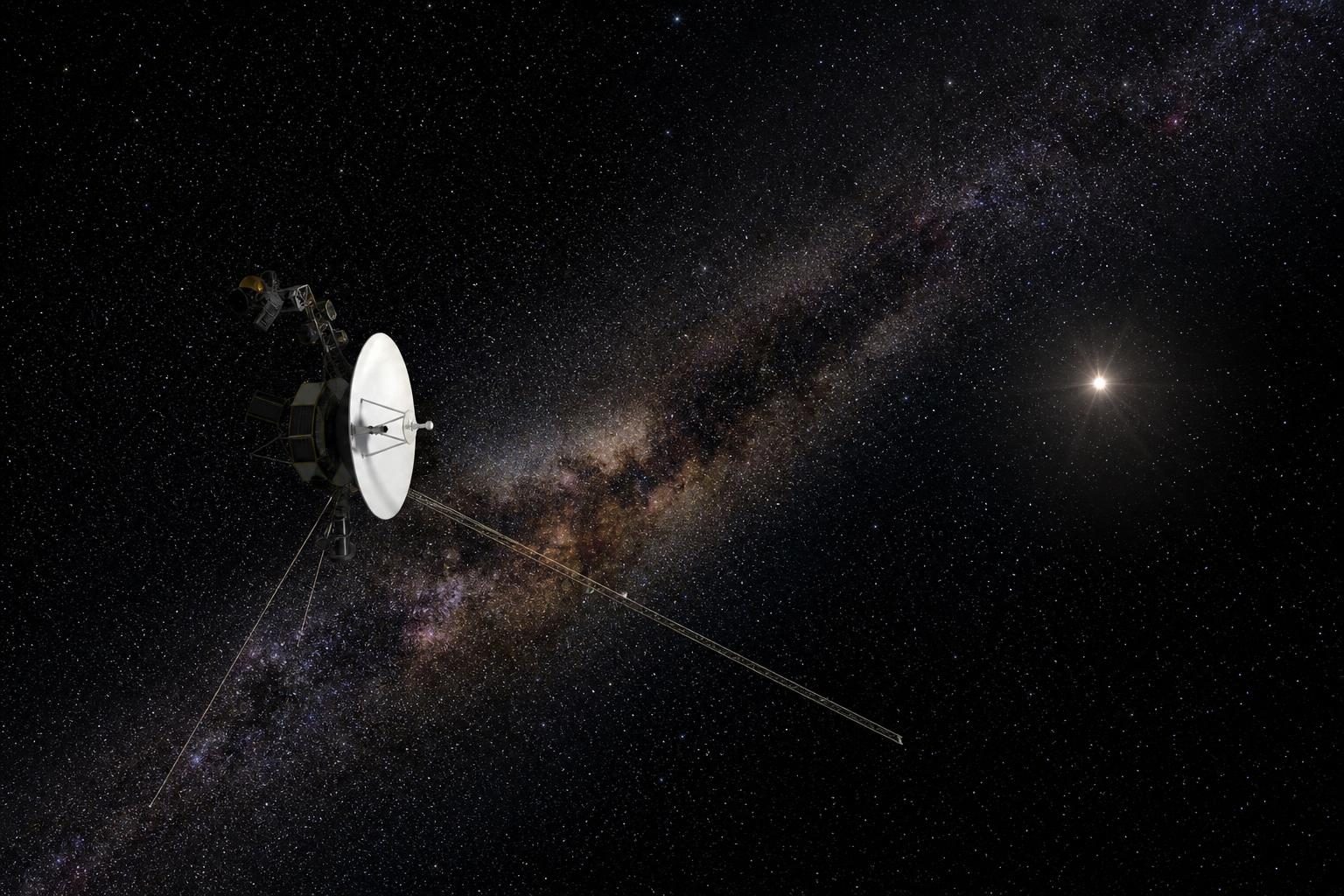
One Light-Day From Home: Voyager 1, Launched in 1977, Becomes the First Human-Made Object So Far From Earth
Yesterday on Launch Pad with Hannah Lindgren
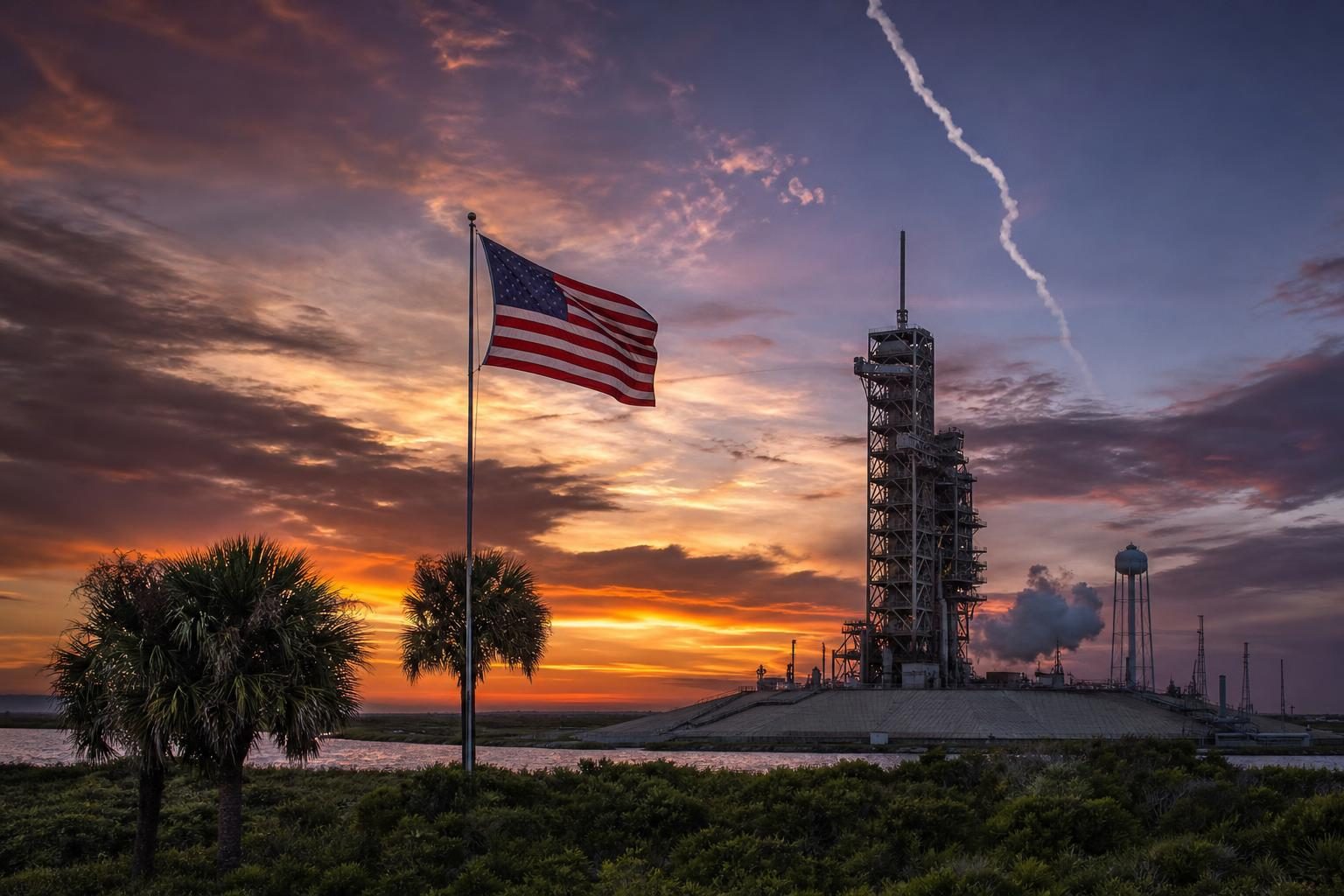
Lost 10 Minutes Up: ULA's Vulcan Fails on Its Comeback Flight, Taking 40 Amazon Leo Satellites With It
Sunday night on Launch Pad with Hannah Lindgren

Caught Coming Home From Orbit: SpaceX Snags Starship in the Tower's Arms, a First in Spaceflight
Saturday night on Launch Pad with Hannah Lindgren
Were you there?
If you were at the scene, or this story touched your life, tell us what you saw and what it was like.
Discussion 0
Sign in or create a free account to join the discussion.
No comments yet. Start the discussion.