
 Tonight on World Watch with Grace Whitfield
Somalia Gives the UAE's Ambassador 72 Hours to Leave, Accusing Abu Dhabi of Violating Its Sovereignty
Mogadishu recalled its own envoy and called the Emirates' conduct an 'open invasion,' as a feud over Somaliland and the country's ports reaches a new low.
Filed November 19, 2026 · 📍 World desk · Washington, DC
Were you there? Share your story
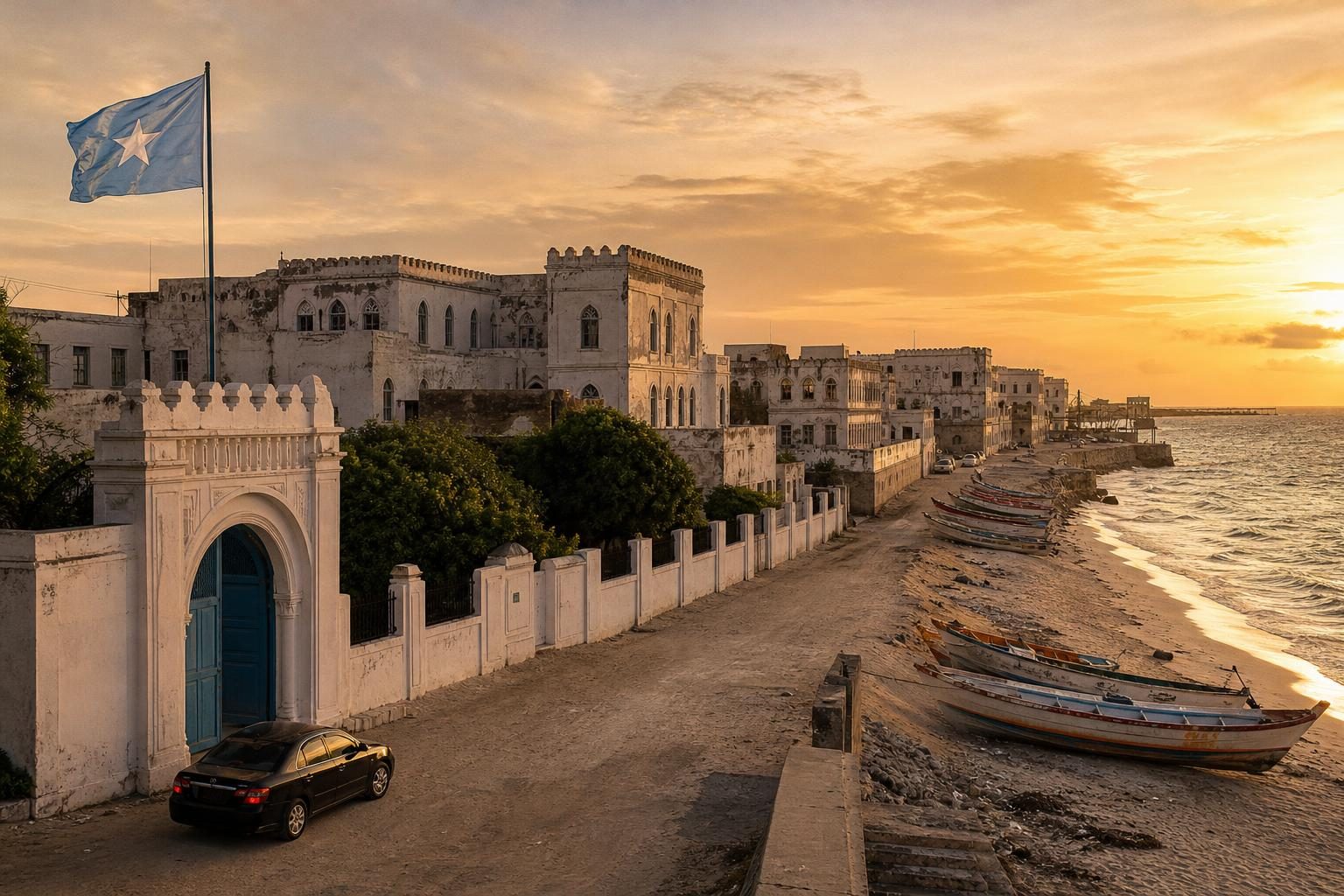
Key points
- Somalia expelled the UAE ambassador Thursday and recalled its envoy from Abu Dhabi
- Somali officials accused the UAE of interfering in internal affairs; the UAE called the move irresponsible
- Somalia canceled all agreements with the UAE in January after Israel recognized Somaliland
- UAE-run ports at Berbera, Bosaso and Kismayo sit in regions Mogadishu barely controls
Somalia on Thursday ordered the United Arab Emirates' ambassador to leave the country within 72 hours and recalled its own envoy from Abu Dhabi, accusing the Gulf state of interfering in its internal affairs, AFP reported [1]. Somali officials said the UAE's actions amounted to an "open invasion," Al Jazeera reported [2].
The decision came out of a cabinet meeting in Mogadishu. Information Minister Abdulfatah Qasim said the government had instructed the foreign ministry to bring Somalia's ambassador home from the UAE, and he warned that measures would be taken against anyone who cooperates with what the government calls the UAE's invasion of the country [2][3].
The Emirates answered sharply. Abu Dhabi called the expulsion irresponsible and denounced what it described as an escalatory and hostile approach by the Somali government toward the UAE, according to AFP and The New Arab [1][3]. The UAE has repeatedly denied Somalia's accusations [1].
A Rift That Has Been Building
Thursday's expulsion is the sharpest step yet in a feud that broke into the open this year. In January, Somalia canceled all of its agreements with the UAE, including port deals and defense and security cooperation, citing violations of its sovereignty [4].
That break followed Israel's recognition of Somaliland, the breakaway northern region that has governed itself for decades but that Mogadishu still claims as part of Somalia, AFP reported [1]. Somali officials were also angered by accusations that the UAE helped a Yemeni separatist leader leave by boat and plane through Somali ports without the government's permission [1].
The tension has kept climbing. On Tuesday, President Hassan Sheikh Mohamud used his state of the nation address to accuse the UAE of giving political and financial support to some of Somalia's regional states so they could defy the federal government [1][5]. Two days later, the ambassador was told to pack his bags.
The Ports at the Center
Behind the diplomatic language is a fight over ports and power on one of the world's most important coastlines. The UAE built and operates a large deep-water port and a military base at Berbera in Somaliland, along with ports at Bosaso and Kismayo in other parts of Somalia, AFP reported [1].
Those facilities sit in regions where the federal government in Mogadishu has very little control, according to AFP [1]. Bosaso lies in the semi-autonomous state of Puntland and Kismayo in Jubaland, and Somalia's federal system leaves its member states wide room to run their own affairs. That is the heart of Somalia's complaint: it sees a foreign power dealing directly with regional authorities and going around the national government. It is also why the expulsion, however dramatic, may change little on the ground in the near term.
Why It Matters to Americans
Somalia's long coastline runs along the Gulf of Aden and the Indian Ocean, near the shipping lanes that connect the Red Sea to the rest of the world. Stability there matters to every American who buys goods carried through those waters, and to the U.S. service members who have spent years helping Somalia fight terrorism.
The UAE, for its part, is one of Washington's closest security partners in the Gulf. When two countries the United States works with fall into a public feud, it complicates American diplomacy in a region already strained by the war with Iran.
There is a lesson here about sovereignty that Americans understand well. A nation has the right to decide who it deals with and on what terms, and Somalia is asserting that right. The harder question for Mogadishu is whether it can extend its authority over regions that already do business with the Emirates on their own.
What Comes Next
The UAE's ambassador has 72 hours to leave Somalia, putting his departure deadline on Sunday [1]. Watch whether the Emirates answer with measures of their own, whether Somalia's regional states side with Mogadishu or with Abu Dhabi, and whether outside powers, including the United States, try to cool a dispute that neither side appears ready to back away from [1][3].
Sources
Israel's new parliament is sworn in. Who would you rather see lead Israel?
- Benjamin Netanyahu
- Gadi Eisenkot
- Someone new
- That's for Israelis to decide
More in World News
Netanyahu's Office Defends Aide Who Relayed Election-Day Tip
Tonight on World Watch with Grace Whitfield

Tories Tap James Cleverly to Take On Sadiq Khan, Promising Safer Streets and Renewed Pride in London
Today on World Watch with Grace Whitfield

Russian Strikes Hit Kyiv, Damaging Dutch and Austrian Embassies
Today on World Watch with Grace Whitfield
Were you there?
If you were at the scene, or this story touched your life, tell us what you saw and what it was like.
Discussion 0
Sign in or create a free account to join the discussion.
No comments yet. Start the discussion.