
 Today on Free Speech Frontline with Ryan Mercer
AI-Found Bugs Could Mean More Outages, Microsoft Chief Warns
Officials point to rushed software fixes, not hackers, behind the week of failures, and tech leaders say the pressure to patch faster isn't going away.
Filed November 21, 2026 · 📍 Wall Street, NY 10005
Were you there? Share your story
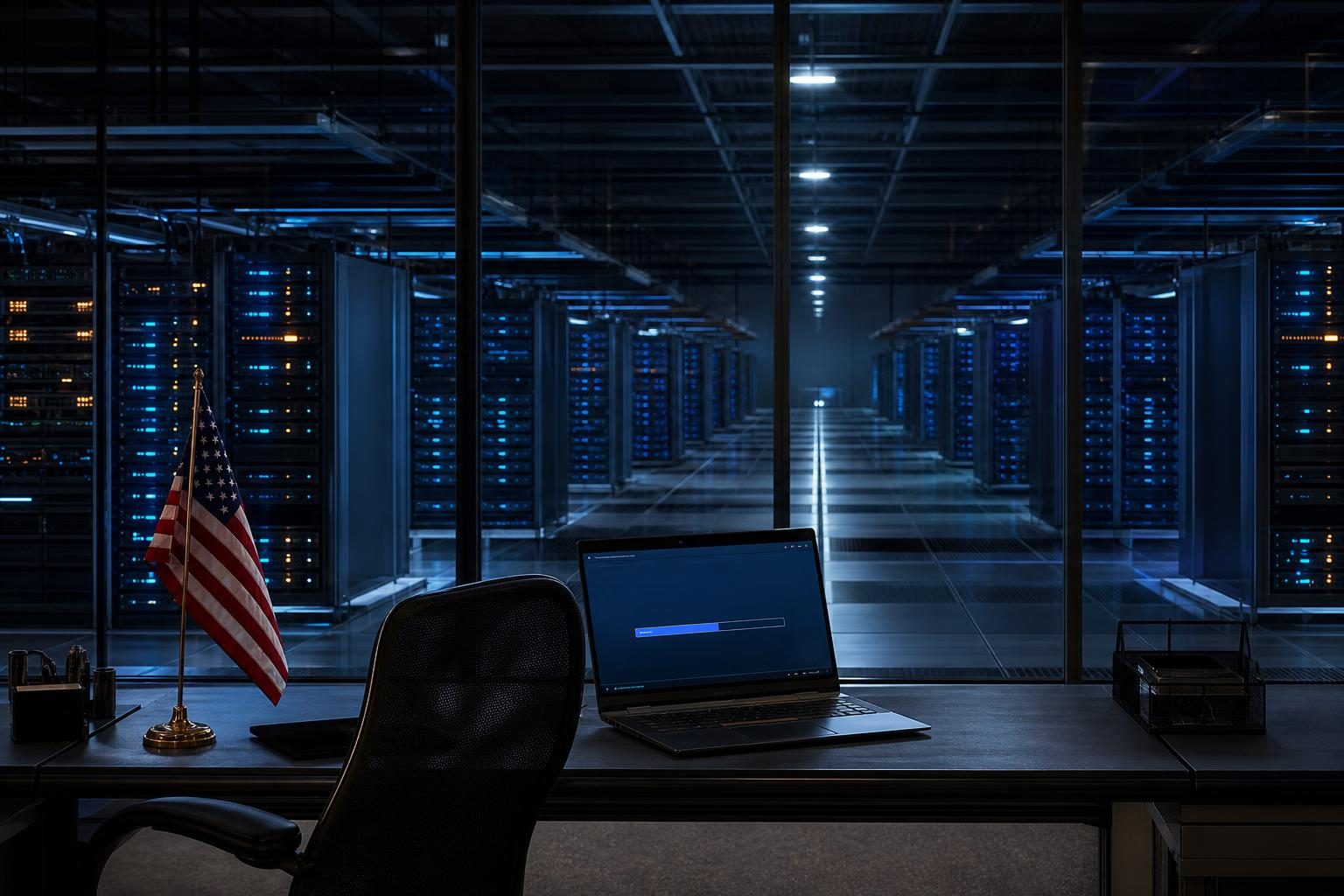
Part of our continuing coverage: 'Zero Evidence' of a Link: Rubio and Intelligence Chief Clayton Trace a Week of U.S. Tech Failures to Upgrades and Patches, Not Hackers
Key points
- Microsoft's Satya Nadella warned that AI could set off more outages by forcing rushed software fixes.
- Officials told Congress the recent failures trace to patching, not hacking, CyberScoop reported.
- Microsoft and JPMorgan Chase have not publicly blamed their outages on fixing AI-found flaws.
- The answer is better testing and modern infrastructure, not smothering American AI with new rules.
The weeklong run of computer failures that grounded flights, froze bank apps and knocked email offline may not be over, and some of the biggest names in technology are now saying so out loud.
Microsoft chief executive Satya Nadella warned this week that artificial intelligence could set off more outages, Anadolu Agency reported from his remarks at The New York Times DealBook Summit [1]. His point, as reported, is that AI tools now find software flaws so quickly that companies are under pressure to rush fixes into live systems with little time to test them, and those rushed fixes can break things on their own [1].
Patches, not hackers
That fits a growing consensus about what went wrong. CyberScoop reported that Trump administration officials have said cyberattacks are almost certainly not behind the string of outages, and that witnesses at a House Homeland Security hearing repeatedly pointed to patching rather than hacking, though they did not say the patches were driven by AI [2].
Others have gone further. The Next Web, citing The Washington Sun, reported that the National Security Agency and Wall Street executives told members of Congress the failures grew out of efforts to fix security holes that AI had uncovered [3].
The picture is not settled. Gizmodo noted that neither Microsoft nor JPMorgan Chase has publicly blamed its own outage on fixing AI-discovered flaws [4]. And Virtualization Review reported that a Cloud Security Alliance review found no evidence tying AI-related patching to the outages, while still flagging the strain on how companies manage changes to their systems [5].
Through it all, companies including Microsoft, United, JPMorgan Chase, Apple and Marriott have said they see no evidence of a cyberattack, the Associated Press reported, and Sen. Mark Warner of Virginia called the disruptions "a wake-up call" [6].
Why it matters
For families who sat on runways or could not reach their bank accounts, the good news is that this was not a foreign enemy taking down America's systems. Officials who urged calm and pointed to the evidence rather than to fear have been borne out so far [2].
The harder news is that the same technology helping defenders find weaknesses is also forcing them to move faster than their old safety checks allow. That is an engineering and management problem, and it calls for engineering and management answers: better testing, backup systems that actually work, and a serious push to modernize the aging equipment that keeps power, water and transportation running.
It does not call for Washington to smother American AI with new rules while China races ahead. The country that builds the best tools will also be the one best able to defend against them. The lesson of this week is to build resilience, not to retreat.
Expect more questions when Congress returns to the outages, and expect companies to face growing pressure to show customers their fixes are tested before they go live.
Sources
- [1]Opens in a new tab ↗
- [2]CyberScoopConsensus mounts that tech outages were fueled by patching of AI-discovered vulnerabilitiesOpens in a new tab ↗
- [3]Opens in a new tab ↗
- [4]Opens in a new tab ↗
- [5]Virtualization ReviewIs It AI? After Nationwide Outages, Broadcom and CISA Sound Alarms on Critical Security FlawsOpens in a new tab ↗
- [6]The Boston Globe (Associated Press)Tech outages are piling up, and AI is raising the stakes. Could this be the new normal?Opens in a new tab ↗
Do you trust AI chatbots to give straight answers on politics?
- Yes
- Sometimes
- No, they lean left
- I don't use them
More in Technology
No Treaty, More Talks: Geneva's 'Killer Robot' Conference Ends With a Two-Year Plan as Washington's Caution Holds
This morning on Free Speech Frontline with Ryan Mercer
YouTube Nears a Reported $3 Billion Deal With America's Schools Over Social Media Addiction: What Parents Need to Know
Yesterday on Report Card with Rebecca Hartman

Four Arrested as Anti-AI Protesters Block Anthropic's Doors
Yesterday on Free Speech Frontline with Ryan Mercer
Were you there?
If you were at the scene, or this story touched your life, tell us what you saw and what it was like.
Discussion 0
Sign in or create a free account to join the discussion.
No comments yet. Start the discussion.