
 Today on Sunshine State Report with Tomás Ortega
Same Agenda, Softer Voice: What Governor-Elect Byron Donalds Is Signaling as Florida Turns the Page on the DeSantis Years
Donalds has promised to build on his predecessor's record while putting affordability first. The first test is already here: how to deliver the property tax cut voters approved by nearly 62%.
Filed November 21, 2026 · 📍 Tallahassee, FL 32301
Were you there? Share your story
Key points
- Governor-elect Byron Donalds has pledged to carry on Gov. Ron DeSantis' legacy while promising a sharper focus on affordability.
- Voters approved Amendment 3 with nearly 62%, raising the homestead exemption on non-school property taxes starting in 2027.
- DeSantis wants a special session before his term ends Jan. 5; incoming legislative leaders say one is not needed.
- Donalds has said Amendment 3 is likely a beginning, not the end, of Florida's property tax overhaul.
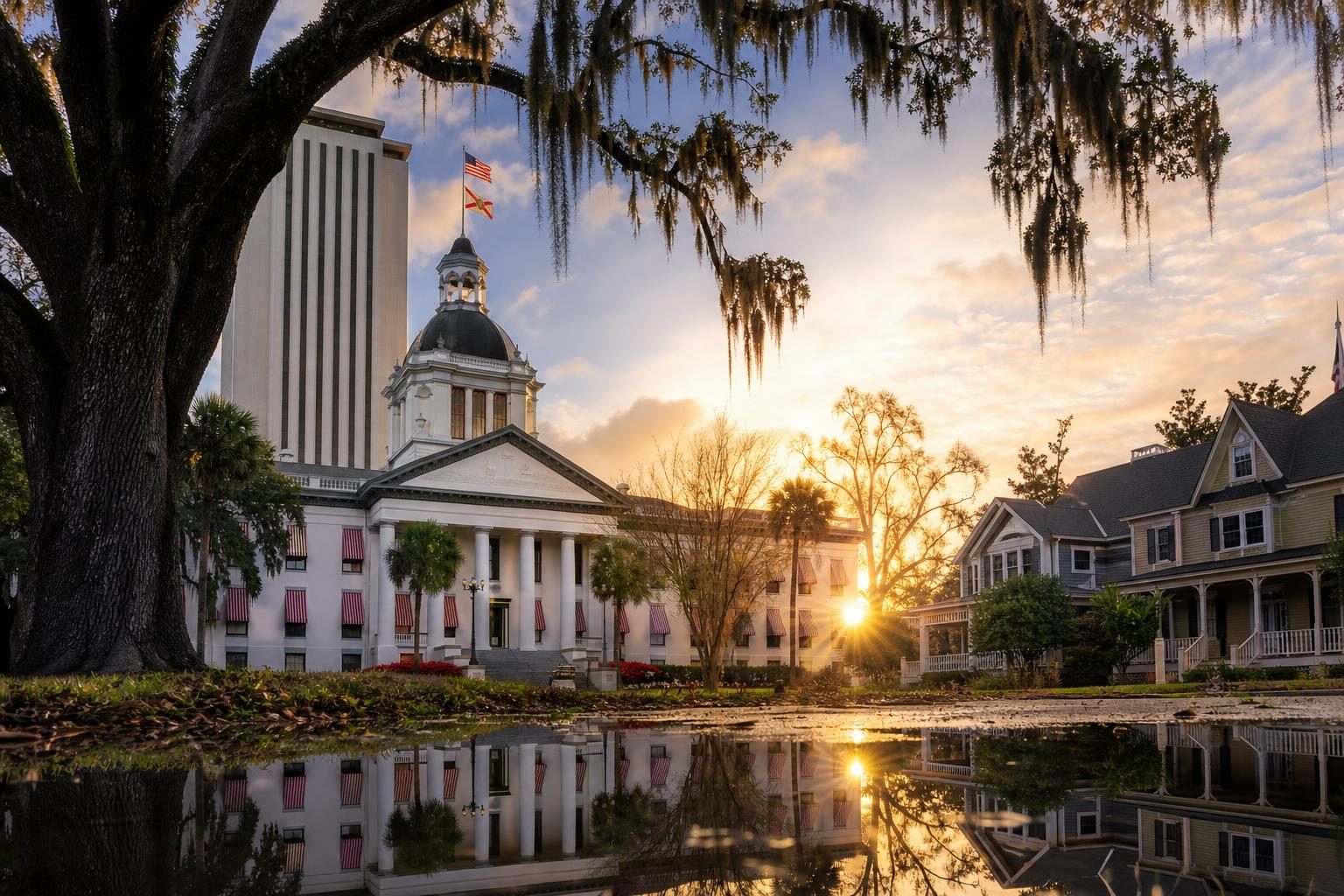
Florida is about to change governors for the first time in eight years, and the question in Tallahassee this week is not whether the conservative direction of the state will hold. It is how the next governor will sound, and what he will do first.
Yahoo News this week examined how Governor-elect Byron Donalds' approach could differ from that of Gov. Ron DeSantis [1]. The early answer from Donalds himself is continuity on substance with a different emphasis. According to the News Service of Florida, Donalds has pledged to continue DeSantis' legacy, and he has said nothing has been decided about a special session or how to carry out the property tax amendment voters just approved [3].
The first test: Amendment 3
The most immediate issue is property taxes. Floridians approved Amendment 3 with nearly 62% of the vote, according to the reports [2][4]. Newsweek reported that the measure raises the homestead exemption for non-school property taxes to $150,000 in 2027 and $250,000 in 2028 [4].
DeSantis wants lawmakers back in Tallahassee for a special session to put the amendment in place before his term ends on Jan. 5, and he has said he would work with the Legislature on timing [3]. The incoming legislative leaders are not rushing. They have said a special session is unnecessary, and the regular 60-day session begins March 2 [2][3].
That leaves the real work to Donalds. Newsweek reported that Donalds supported Amendment 3 on the campaign trail but has made clear the measure is unlikely to be the end of the state's property tax overhaul [4]. WUSF reported in September that he doubled down on cutting, or even eliminating, property taxes, and that he has talked about using Florida's Taxation and Budget Reform Commission, which meets every 20 years, to pursue bigger changes [5].
Critics warn that local governments will try to make up the lost revenue through higher fees or sales taxes, and that owners who do not qualify for the larger homestead break could see bills rise if cities and counties raise millage rates [2][4]. Donalds has campaigned against exactly that kind of backdoor tax increase, and holding local officials to the voters' intent may become one of the defining fights of his first year.
Affordability first
Beyond taxes, Donalds has put the cost of living at the center of his agenda. Fox 13 reported that he has called for wholesale permitting reform to bring down housing costs, set a goal of math, reading and writing mastery for every Florida graduate, and promised a plan to lower home insurance bills, one of the heaviest burdens on Florida families [6].
Those are not breaks with DeSantis so much as the next chapter. The outgoing governor built his reputation on school choice, law and order, parental rights and standing up to federal overreach. Donalds, a congressman from Southwest Florida, has said he wants to keep that foundation and spend his political capital on making Florida affordable for the working families and retirees who keep moving here [3][6].
The tone question
Some observers expected friction between the outgoing and incoming governors. Instead, since the election, the News Service of Florida reported, Donalds has promised to continue DeSantis' legacy rather than run against it [3].
The difference, if there is one, may be style. DeSantis governed as a fighter who relished national battles. Donalds has signaled he wants Floridians to judge him by their household budgets: lower property taxes, cheaper insurance and homes young families can afford. For a state that has become the model of conservative governance, that is not a retreat. It is a test of whether conservative ideas can keep delivering for ordinary people.
What comes next
Donalds takes office in January, days after Amendment 3 takes effect [4]. Whether lawmakers meet in a special session before then, and how the Legislature handles property taxes in March, will tell Floridians a great deal about how quickly the new governor can turn campaign promises into law [2][3].
Sources
- [1]Opens in a new tab ↗
- [2]Opens in a new tab ↗
- [3]News Service of Florida via Key West CitizenNew Legislative leaders skittish on DeSantis' property tax cut special sessionOpens in a new tab ↗
- [4]Opens in a new tab ↗
- [5]Opens in a new tab ↗
- [6]Fox 13 Tampa BayElection 2026: Where Byron Donalds stands on data centers, schools, home insurance, and MedicaidOpens in a new tab ↗
Should Florida ban new data centers until it studies power and water use?
- Yes
- No, bring the jobs
- Only near neighborhoods
More in Florida & Southeast News
Titans' Jaylen Harrell Hospitalized After Serious Crash in Hometown Tampa
Today on Sunshine State Report with Tomás Ortega

Nearly 150 Sickened on Caribbean Princess Cruise Out of Fort Lauderdale as CDC Investigates Mystery Stomach Illness
Yesterday on Sunshine State Report with Tomás Ortega
DeSantis Weighs 2028 Timing, Says No Decision Yet
Yesterday on Sunshine State Report with Tomás Ortega
Were you there?
If you were at the scene, or this story touched your life, tell us what you saw and what it was like.
Discussion 0
Sign in or create a free account to join the discussion.
No comments yet. Start the discussion.