
 Tonight on Launch Pad with Hannah Lindgren
Math's 167-Year Riddle Solved? A Bold Riemann Proof Claim Lands
A researcher at Anthropic says he and the company's Claude program have proved the Riemann hypothesis. Outside mathematicians have not yet checked the work.
Filed November 20, 2026 · 📍 Washington, DC 20001
Were you there? Share your story

Key points
- Anthropic researcher Levent Alpöge says he and the Claude program proved the Riemann hypothesis.
- The proof was released as Lean code, not a traditional paper, and has not been independently confirmed.
- Riemann's 1859 puzzle about prime numbers is a $1 million Millennium Prize Problem.
- Expert review, not the headlines, will decide whether the claim stands.
A mathematician at the artificial intelligence company Anthropic said Friday that he has found a proof of the Riemann hypothesis, the 167-year-old puzzle about prime numbers that many consider the most important unsolved problem in mathematics [1][3].
Levent Alpöge, a member of Anthropic's technical staff, said he reached the result working with Claude, the company's AI model, Business Insider reported [2]. Scientific American described the claim as a bid to settle the most famous problem in all of math [1]. No independent mathematician has yet confirmed that the proof holds, and early coverage stresses that it remains a claim [1][4].
What Was Released
Rather than a traditional paper for other mathematicians to read, the proof was released as code written for Lean, a proof assistant that checks every logical step by machine, Futurism reported [4]. The outlet said the files run to millions of lines, that the argument written out in full would fill more than 250,000 pages, and that no conventional paper has been released [4].
That format cuts both ways. A program like Lean can confirm that each step follows from the last, but people still have to make sure the statement being checked truly is the Riemann hypothesis and that no hidden assumption slipped in along the way. That human review is the real test, and it could take a long time.
The Economist noted that humans had spent 167 years trying to prove the hypothesis [3], and the Washington Times reported that it may now have been cracked with a computer's help [6]. The Daily Mail pointed out that the announcement came one day after Anthropic's record-setting stock market debut [5].
Why It Matters
The German mathematician Bernhard Riemann proposed the hypothesis in 1859. It predicts a hidden order in the way the prime numbers, 2, 3, 5, 7 and on without end, are scattered along the number line. Thousands of results in number theory are built on the assumption that it is true, and the Clay Mathematics Institute lists it among its seven Millennium Prize Problems, with a $1 million reward for a proof that survives expert review.
Primes are also the backbone of the codes that protect online banking and shopping. A proof would not break those codes, but it would sharpen what mathematicians know about the numbers they rest on.
Wonder, and Caution
Riemann was the son of a Lutheran pastor and a man of deep faith, and he began his university years studying theology before turning to mathematics. Many of the great mathematicians before and after him saw in the order of the numbers a reflection of an orderly Creator. Whether or not this proof stands, that search for order goes on.
Caution is warranted. Claims on famous problems have collapsed before under expert review, and this one arrives in an unusual form: from a company employee working with his company's own product, with no peer-reviewed paper yet. The world's mathematicians will have to check the work, and their verdict, not the headlines, will decide whether the riddle has finally fallen.
Sources
- [1]Scientific AmericanAnthropic mathematician claims to prove Riemann hypothesis, most famous problem in all of mathOpens in a new tab ↗
- [2]Opens in a new tab ↗
- [3]Opens in a new tab ↗
- [4]Opens in a new tab ↗
- [5]Opens in a new tab ↗
- [6]The Washington TimesRiemann hypothesis may have been proved by AI mathematicianOpens in a new tab ↗
Do you trust scientific experts more or less than five years ago?
- More
- Less
- About the same
More in Science & Space

Girl, 6, Dies in Chinese Gene-Editing Trial; Scientist Fired
Overnight on Launch Pad with Hannah Lindgren

Spuds for the Moon: Oregon State Scientists Grow Potatoes in Simulated Lunar Soil
Last night on Launch Pad with Hannah Lindgren
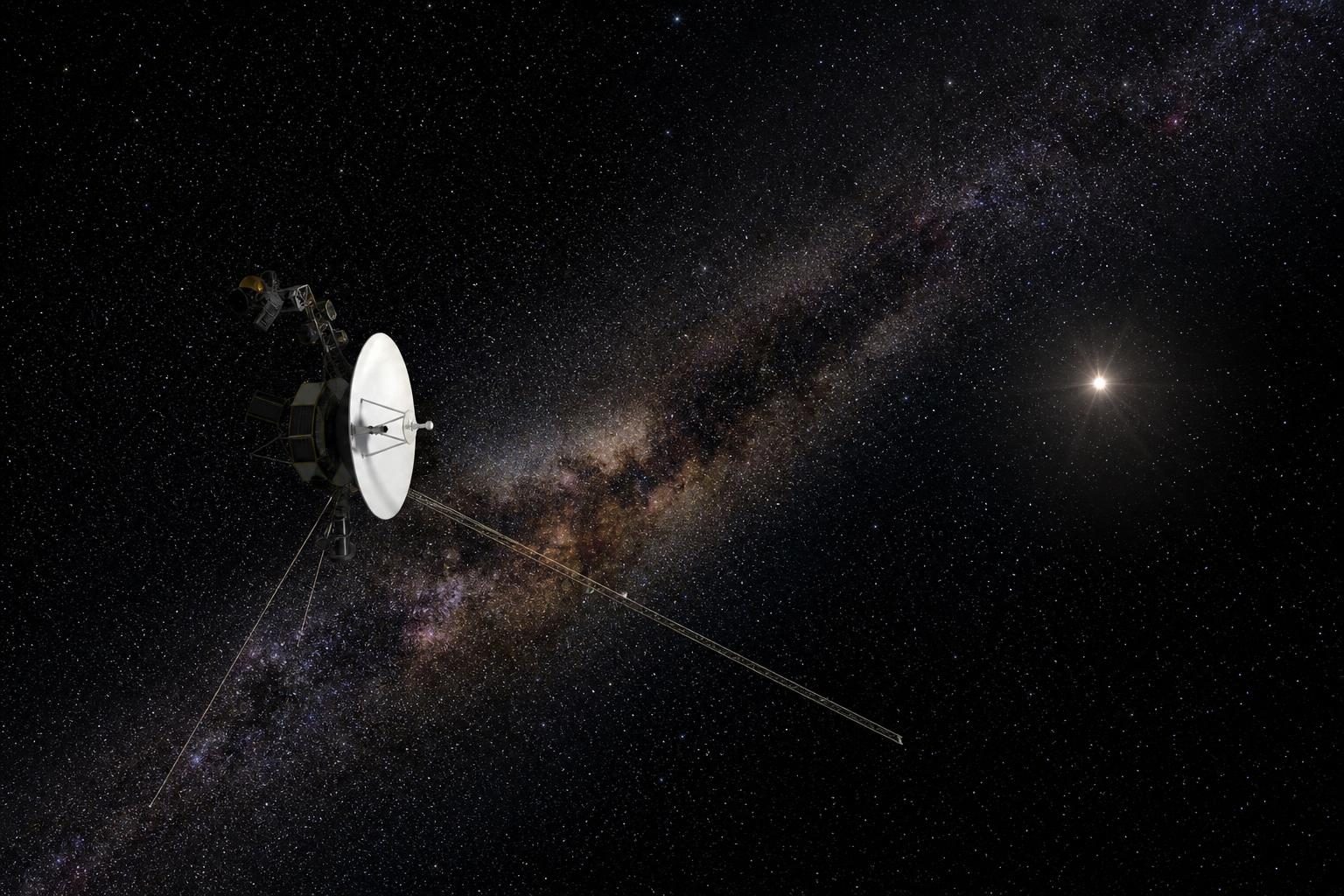
One Light-Day From Home: Voyager 1, Launched in 1977, Becomes the First Human-Made Object So Far From Earth
On Wednesday on Launch Pad with Hannah Lindgren
Were you there?
If you were at the scene, or this story touched your life, tell us what you saw and what it was like.
Discussion 0
Sign in or create a free account to join the discussion.
No comments yet. Start the discussion.