
 Last night on Cross-Examination with Dominic Kane
Carney Wins Tariff Relief From Xi in Shenzhen, but Canada's Growing China Deal Raises Hard Questions for North America
Beijing cuts tariffs on Canadian pork, shrimp and crops while Ottawa eases some steel and aluminum duties, as Canada's trade talks with the United States remain unfinished.
Filed November 17, 2026 · 📍 Washington, DC 20001
Were you there? Share your story
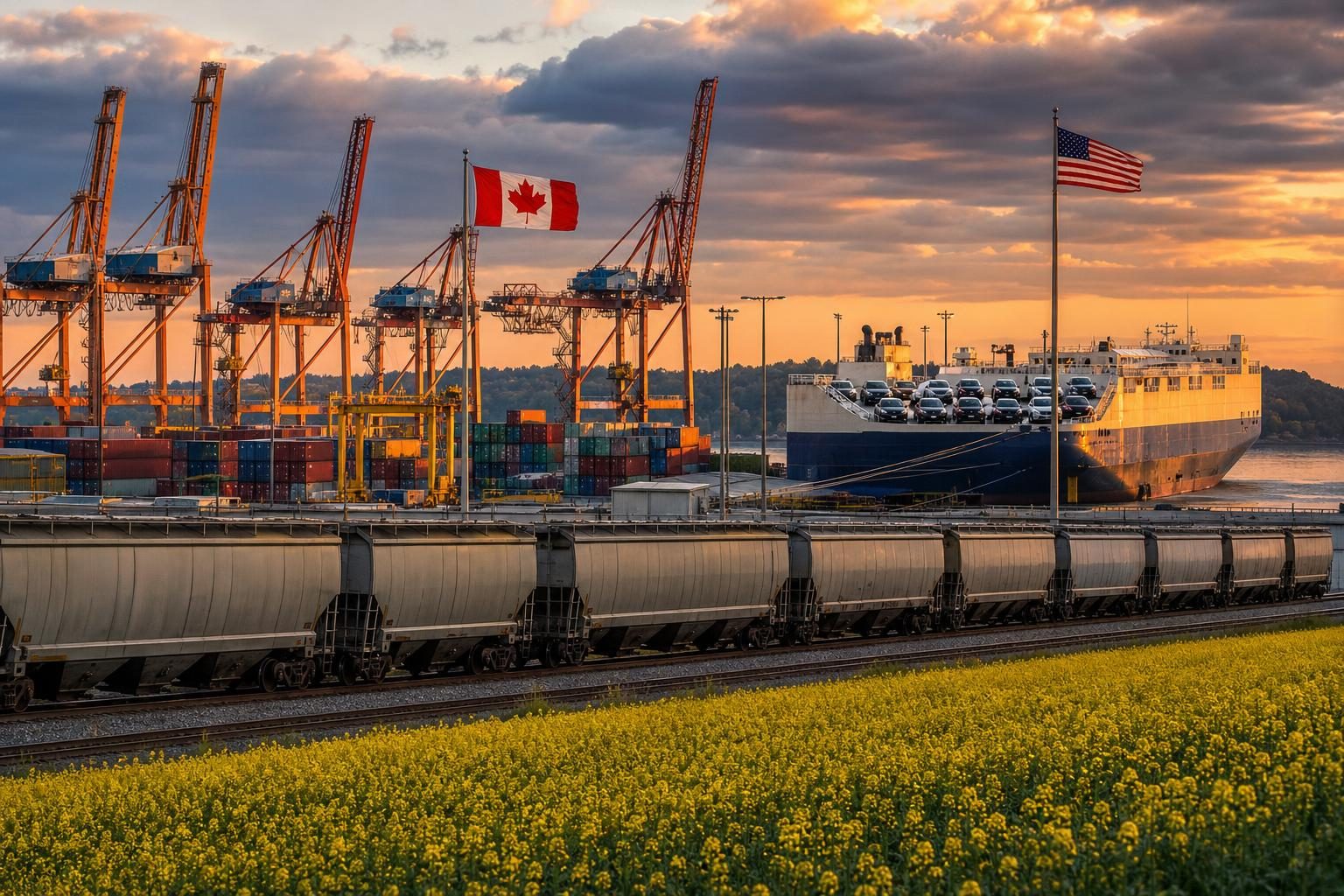
Part of our continuing coverage: Carney Says Canada Could Turn to Chinese Automakers if Trump Talks Fail, Raising the Stakes for North America's Auto Belt
Key points
- Carney and Xi met in Shenzhen on Tuesday on the sidelines of the APEC gathering.
- China will cut tariffs on about $400 million in Canadian exports through 2028; Canada eases some steel and aluminum tariffs.
- January's deal letting up to 49,000 Chinese EVs into Canada at a 6.1% tariff remains in place.
- Critics question whether Canada is getting the better end, and promised Chinese EV factories have not appeared.
Canadian Prime Minister Mark Carney sat down with Chinese leader Xi Jinping in Shenzhen on Tuesday and came away with an expanded trade arrangement, even as Canada's talks with the United States, by far its largest customer, remain unfinished [1][6].
Under the new measures, China will cut tariffs on roughly $400 million worth of Canadian exports, including frozen pork and shrimp, through 2028, and Canada agreed in return to ease some of its tariffs on steel and aluminum, CBC News reported [1]. Beijing also extended the tariff pause on Canadian canola meal, peas, lobster and crab that Carney first won in January, and committed to buy more lentils, fava beans, wild seafood and pet food [1][2].
For Canadian farmers and fishermen, that is real money. For Washington, and for anyone who cares about North American security, it raises some hard questions.
What Canada Gave, and What It Got
The tariff relief is targeted and time-limited. The headline numbers favor Canadian food producers who were hit by Chinese retaliation in recent years, and Canadian trade data suggests exports to China have climbed sharply since Carney's first meeting with Xi in January, according to reporting on the deal [2].
The concession that matters most, though, was made earlier. In January, Carney agreed to cut Canada's 100% tariff on Chinese electric vehicles to 6.1% for up to 49,000 vehicles a year, Al Jazeera reported at the time [5]. Tuesday's talks did not change that deal, and it remains in place [1][5].
Carney has said there are clear guardrails on what Canada will put on the table with China, and that any further discussion of the auto sector depends on how Canada's talks with the United States turn out [1].
The Hard Questions for Ottawa
First, who is getting the better end? Radio-Canada International asked at what cost the deal came, and critics argue the gains run more in China's favor than Canada's [3][4]. A tariff break on pork and shrimp is welcome, but it is small next to the access Chinese automakers gained to a market that sits right next door to the United States.
Second, where are the promised factories? The Epoch Times reported that Ottawa had expected significant investment from Chinese electric-vehicle makers to follow the January deal, and that it has not materialized [4]. If Chinese cars arrive without Chinese plants, Canadian autoworkers carry the risk while Beijing collects the sales.
Third, what does this mean for the continent's security? The United States has spent years trying to keep Chinese-made connected vehicles, chips and network gear out of American infrastructure. Canada and the United States share supply chains, highways and a defense partnership that stretches back generations. A widening door for Chinese vehicles on one side of the border is a concern for both.
The View From Washington
None of this happens in a vacuum. Carney said earlier this month that Canada could turn to Chinese automakers if talks with President Trump fail, as this site reported at the time. Canadian officials have been fielding questions about the state of those U.S. negotiations this week [6].
There is a fair case to be made for Ottawa's position: Canada is a trading nation, and diversifying customers is prudent. But there is also a strong case that the best deal for Canada runs through Washington, not Beijing. The United States buys the large majority of Canada's exports, and the two countries' energy, auto and defense industries are bound together in ways no Shenzhen handshake can replace.
President Trump's approach has been to use America's market as leverage to win fairer terms from friends and rivals alike, from this week's trade statement with Thailand to the talks with Ottawa. Canada's turn toward Beijing may be meant as leverage of its own. Whether it works depends on whether Canadians believe China is a reliable partner. Its record on canola, when Beijing slapped on tariffs during past disputes, suggests caution.
What Comes Next
Carney's visit continues alongside the APEC gathering in Shenzhen [1]. The new Chinese tariff cuts run through 2028, and the canola and seafood relief remains in place for now [1][2]. Talks between Canadian and American trade officials continue [6].
The question for Canadians is simple: is a few hundred million dollars in tariff relief from Beijing worth the risk of complicating a trade relationship with the United States worth vastly more? The answer will shape the North American economy for years to come.
Sources
- [1]Opens in a new tab ↗
- [2]Yahoo News CanadaCanada has extended and expanded its deal with China. Here's how it affects different sectorsOpens in a new tab ↗
- [3]Radio-Canada InternationalCarney secures another China trade deal, but at what cost?Opens in a new tab ↗
- [4]The Epoch TimesWhy Beijing Is Gaining the Upper Hand in Deals With OttawaOpens in a new tab ↗
- [5]Opens in a new tab ↗
- [6]Opens in a new tab ↗
Israel's new parliament is sworn in. Who would you rather see lead Israel?
- Benjamin Netanyahu
- Gadi Eisenkot
- Someone new
- That's for Israelis to decide
More in World News
Britain Heads Back to Brussels: What Friday's Reset Summit Offers, What It Costs, and Why Washington Should Care
Today on World Watch with Grace Whitfield
The President Will Meet Russia's Leader Privately on Thursday as APEC Opens With Beijing's Tariff Pitch and a Nuclear Agenda
Today on The Briefing Room with Claire Donovan

Israel Moves Back Into Central Gaza to Hit Hamas Infrastructure: The Hard Questions for a Ceasefire on the Brink
This morning on Cross-Examination with Dominic Kane
Were you there?
If you were at the scene, or this story touched your life, tell us what you saw and what it was like.
Discussion 0
Sign in or create a free account to join the discussion.
No comments yet. Start the discussion.