
 Today on World Watch with Grace Whitfield
Britain Heads Back to Brussels: What Friday's Reset Summit Offers, What It Costs, and Why Washington Should Care
A leaked draft shows a deal on food rules, defense, energy and a youth program is nearly done. The fights over tuition, a mobility cap and Brussels' strings show what Britain may give up.
Filed November 18, 2026 · 📍 Washington, DC 20001
Were you there? Share your story
Key points
- Prime Minister Andy Burnham is expected to sign off on a U.K.-EU reset agreement in Brussels on Friday.
- A leaked draft covers trade, defense industry cooperation, food standards, youth mobility and electricity market access.
- Tuition fees, the size of a youth mobility cap and health care eligibility were still in dispute.
- The EU is pressing Britain to follow its line on other trading partners, which could limit Britain's room for U.S. deals.
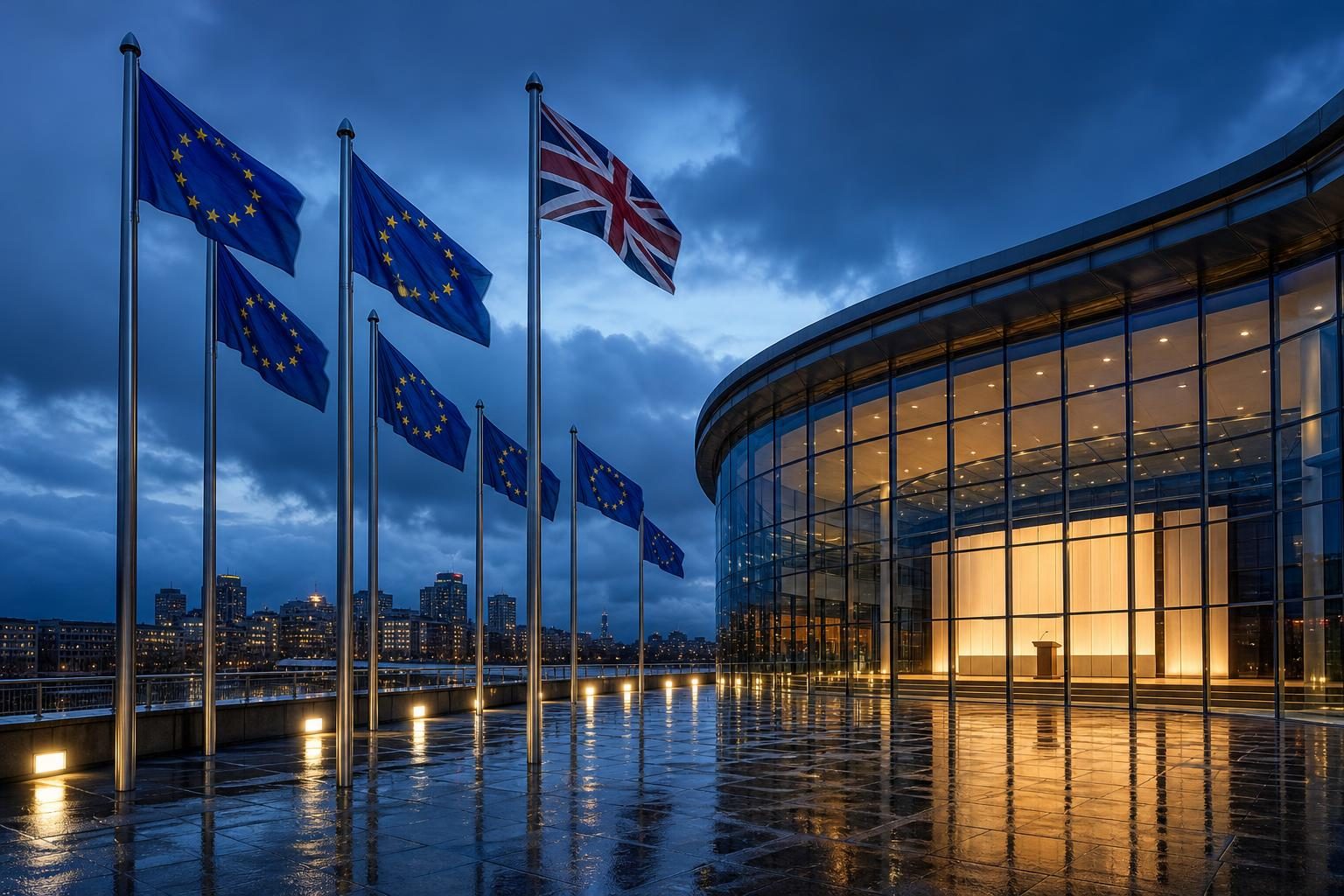
Ten years after British voters chose to leave the European Union, their prime minister is heading to Brussels to bring the country closer again. Prime Minister Andy Burnham will attend a U.K.-EU summit in Brussels on Friday that he has made a key step in his pledge to reset relations with the 27-nation bloc, NBC News reported, citing the Associated Press [1]. Ahead of the trip, Burnham argued that Brexit has not worked and that the promises made by the Leave campaign were not delivered [1].
The deal is close. A leaked 72-paragraph second draft of the agreement shows that most of it has already been settled, The Guardian reported, with sign-off expected when Burnham arrives in Brussels [2]. The reset began in earnest under his predecessor, Keir Starmer, and Friday's summit is meant to lock in what the two sides have negotiated since [2].
What remains in dispute says a great deal about what the European Union wants from Britain, and what Britain may have to give up to get it.
What Is on the Table in Brussels
The package is broad. Draft summit conclusions seen by Euronews describe agreements covering trade, cooperation between defense industries, food and farm standards, a youth mobility program, economic security and British access to the EU's electricity market [3]. The Guardian's look at the draft listed items that touch daily life, from the cheese that crosses the Channel to passports that let families travel with their pets [2].
Euronews described the draft as showing both the ambition of the reset and its limits, noting that political divisions remain even as the two sides prepare to deepen ties on trade, defense and energy [3].
For British farmers, food producers and exporters, closer agreement on food standards could mean fewer checks at the border and less paperwork for goods moving to European customers. That is a real benefit for businesses that have struggled with new red tape since 2020. The price, as critics point out, is that rules written in Brussels would carry more weight in Britain again.
The Fight Over Students and Young Workers
The sharpest disagreements are about young people. Bloomberg reported last week that university tuition fees, the size of a cap on participants in a new youth mobility scheme and eligibility for health care were among the main points still unresolved [4].
Since Britain left the bloc, students from EU countries have generally been charged the higher fees English universities set for international students, and those fees help fund British universities [4]. The EU wants its young people treated more like British students. According to the leaked text, the draft offers two paths: equal treatment with British nationals, or significantly reduced undergraduate fees, with the details left for further talks [3].
The mobility program itself would let young Europeans and young Britons live, study and work in each other's countries for a limited time. Britain has pushed for a firm cap on numbers, while Brussels has wanted a larger program, and the size of that cap was still being argued over as the summit approached [4][5]. Euronews reported that the draft aims to apply the agreement no later than 2028, with opportunities under the scheme available to young people no later than January 2030 [3].
That timeline tells its own story. A program that may not fully open for more than three years suggests how politically sensitive any return of freer movement remains in Britain, where control of the border was at the heart of the 2016 vote.
Defense, Energy and Trade Strings
Defense is where the reset has the most to offer the free world. Russia's war on Ukraine has pushed European governments to spend more and build more, and Britain is one of the continent's strongest military powers. Closer cooperation between British and European defense industries, which the draft envisions, could help allies produce weapons and ammunition faster [3].
That is welcome news for anyone who wants Europe to carry more of its own load. American presidents of both parties have urged European allies to invest more in their own security, and a defense partnership that puts British shipyards, factories and engineers to work alongside European ones would be a practical answer. The test will be whether the cooperation produces more weapons on the shelf, not just more paperwork in Brussels.
Energy is another area of shared interest. Access to the EU's electricity market could help Britain trade power across the Channel more efficiently at a time when energy prices remain painful for families on both sides [3].
But the EU's offers come with strings. Bloomberg reported Wednesday that Britain is resisting EU demands that it follow the bloc's treatment of other trading partners, a stance that could threaten Britain's bid to access subsidies and contracts under the EU's Made in Europe rules [5]. In other words, Brussels wants a say in how Britain deals with the rest of the world, including, potentially, with the United States.
The Case Against: Sovereignty and the Voters of 2016
Not everyone in Britain is cheering. The Daily Express reported concerns that the reset could hand Brussels a role over British taxes, including the possibility that Britain would lose the freedom to cut the sales tax on gasoline and diesel below its standard rate [6]. For critics, giving up any power to lower costs at the pump is a strange way to help families with their bills.
The deeper objection is about who governs. The message of the 2016 vote was that laws affecting Britons should be made by people Britons can vote out. Every agreement that ties British rules to Brussels without giving Britain a vote on those rules cuts against that principle, however convenient it may be for trade.
Burnham's argument deserves a fair hearing. He argues that Brexit has not delivered what its backers promised [1], and supporters of the reset say closer ties with Britain's biggest trading partner will ease costs for businesses. The question is whether Britain can cooperate closely with its neighbors without slowly drifting back under rules it chose to leave.
What It Means for America
For Americans, the summit is more than a European family matter. Britain is the closest ally the United States has, a partner in intelligence sharing, a nuclear power and the anchor of NATO's European defenses. A Britain that cooperates more closely with Europe on defense production could mean a stronger, better-armed alliance, which serves American interests and lightens the load on American taxpayers.
Trade is where Washington will watch most closely. The EU is pressing Britain to follow the bloc's line on other trading partners [5]. If Britain agrees to that and to EU food standards, it may have less room to strike its own deals with the United States, including better access for American farmers and manufacturers. American negotiators will want to know which rules Britain keeps for itself.
There is also a lesson for Americans about self-government. Big blocs tend to grow their reach one agreement at a time. Britain's voters decided in 2016 that they wanted the final word on their own laws. Whatever is signed on Friday, friends of Britain on this side of the Atlantic should hope it keeps that promise intact.
What Comes Next
Burnham is expected to sign off on the agreement in Brussels on Friday [2]. Even if the summit succeeds, the hardest pieces, including the details of tuition fees and the mobility cap, may be left for months of further negotiation [3][4]. At home, the government will have to sell the deal to voters who remember what they were promised a decade ago, and to an opposition ready to call it a retreat from Brexit [6].
Sources
Israel's new parliament is sworn in. Who would you rather see lead Israel?
- Benjamin Netanyahu
- Gadi Eisenkot
- Someone new
- That's for Israelis to decide
More in World News

The President Will Meet Russia's Leader Privately on Thursday as APEC Opens With Beijing's Tariff Pitch and a Nuclear Agenda
Today on The Briefing Room with Claire Donovan

Israel Moves Back Into Central Gaza to Hit Hamas Infrastructure: The Hard Questions for a Ceasefire on the Brink
This morning on Cross-Examination with Dominic Kane

Police Investigate After a Three-Year-Old Boy Dies Following a Medical Emergency at a Greater Manchester Nursery
This morning on World Watch with Grace Whitfield
Were you there?
If you were at the scene, or this story touched your life, tell us what you saw and what it was like.
Discussion 0
Sign in or create a free account to join the discussion.
No comments yet. Start the discussion.