
 Overnight on Launch Pad with Hannah Lindgren
Amazon Tries Again: Ariane 6 Set to Launch 36 Leo Satellites, Eight Days After Vulcan Lost 40
A European rocket is scheduled to lift off from French Guiana at 6:09 a.m. Eastern, Amazon's first satellite launch since the Vulcan failure that set back its Starlink challenger.
Filed November 23, 2026 · 📍 Washington, DC 20001
Were you there? Share your story
Part of our continuing coverage: Lost 10 Minutes Up: ULA's Vulcan Fails on Its Comeback Flight, Taking 40 Amazon Leo Satellites With It
Key points
- An Ariane 6 is set to launch 36 Amazon Leo satellites from Kourou, French Guiana, with a window opening at 6:09 a.m. EST on Nov. 23.
- It is Amazon's first launch since a ULA Vulcan failed on Nov. 15 and lost 40 Leo satellites.
- ULA's preliminary findings point to an inadequate fuel supply to the BE-4 engines, not the engines themselves; the FAA is overseeing the investigation.
- Amazon has roughly 400 satellites in orbit against Starlink's more than 11,000.
Eight days after a United Launch Alliance Vulcan Centaur failed and took 40 Amazon Leo internet satellites down with it, Amazon is set to try again this morning on a European rocket, Space.com reported [1].
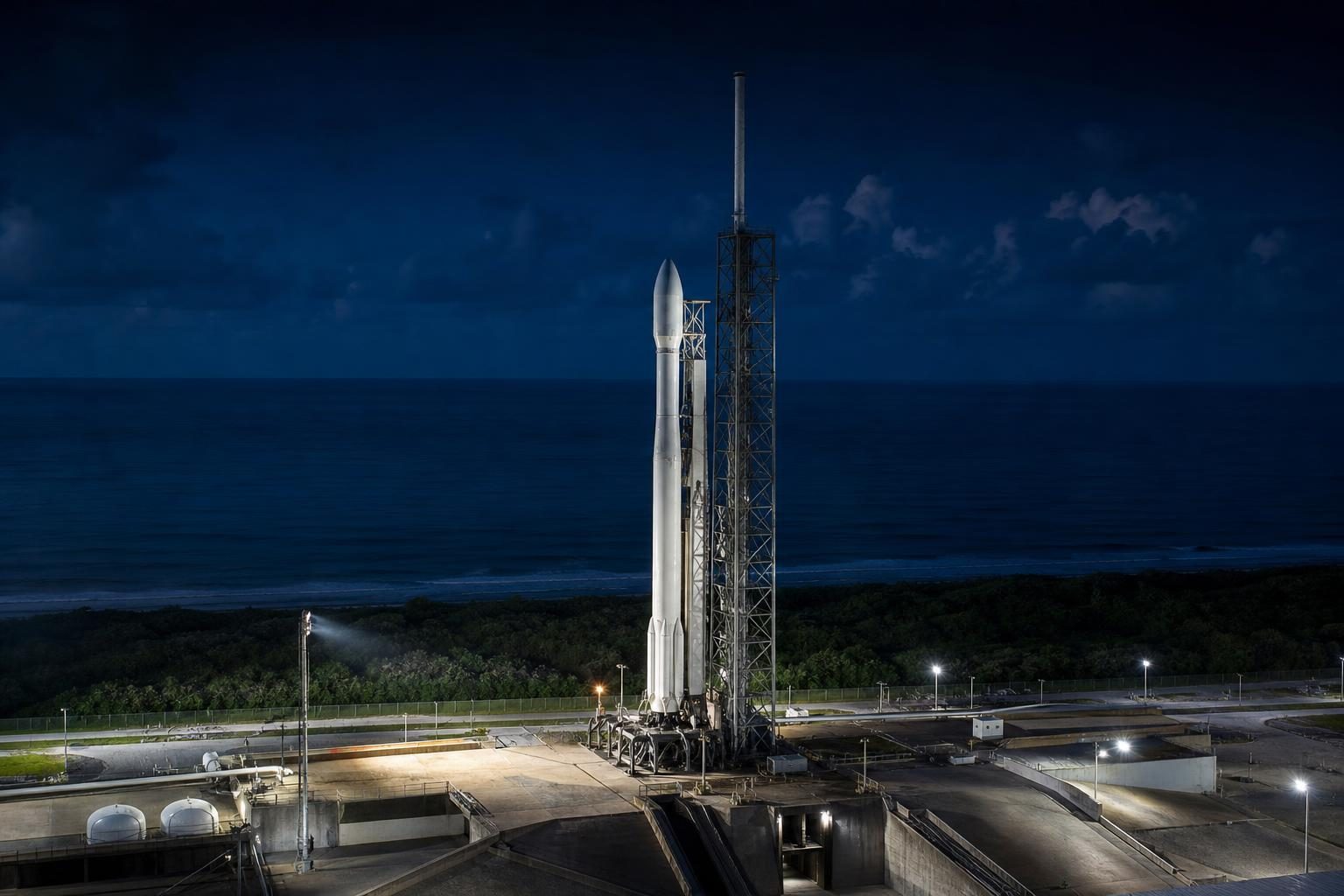
An Arianespace Ariane 6 is scheduled to lift off from Europe's Spaceport in Kourou, French Guiana, carrying 36 Amazon Leo broadband satellites, according to Space.com [1]. The 29-minute launch window opens at 6:09 a.m. Eastern time, which is 11:09 GMT and 8:09 a.m. local time in Kourou [1]. Amazon's own mission updates page lists the same Monday target of 6:09 a.m. EST [2].
It will be the fourth time an Ariane 6 has carried Amazon Leo satellites, following missions in February, April and June of this year, Space.com reported [1]. That record matters now, while engineers work out what went wrong with the American rocket that failed.
What went wrong on Nov. 15
Spaceflight Now described the Nov. 15 loss as the first outright failure in United Launch Alliance's history [4], a hard blow for the company.
ULA's preliminary findings traced the rocket's low thrust to its fuel delivery rather than to its Blue Origin-built BE-4 engines, GeekWire reported [3]. The company said the shortfall came from an "inadequate fuel supply from the vehicle to the BE-4 engines," according to GeekWire, and work remains to pin down the root cause [3]. The American Institute of Aeronautics and Astronautics likewise reported that the investigation points to a fuel supply issue [6].
The investigation has a formal structure. The Federal Aviation Administration required a mishap investigation the day after the failure, and ULA is leading it under FAA oversight, with the agency taking part and approving the final report and any corrective actions, according to AIAA [6].
The finding reaches beyond one rocket. GeekWire noted that Amazon bought 38 Vulcan launches for its Leo network, and that it also has 24 launches booked on Blue Origin's New Glenn, which uses the same BE-4 engines on its first stage [3]. If the fuel-supply explanation holds, it points to a problem inside Vulcan rather than in the engines both rockets share, which would be welcome news for Amazon's New Glenn plans.
A long road to catch Starlink
Amazon Leo, named for the low Earth orbit where it operates, is meant to compete with SpaceX's Starlink, which now counts more than 11,000 working spacecraft, Space.com reported [1]. Amazon plans a constellation of more than 3,200 satellites, and roughly 400 have reached orbit so far [1]. The program was formerly known as Project Kuiper, a name that still appears in the web address of Amazon's launch updates page [2].
That gap explains why every batch counts. Based on the Space.com figures, the 40 satellites lost on Nov. 15 equal about a tenth of everything Amazon has managed to put into orbit to date [1].
Amazon is also working against a federal schedule. Earlier this year, the Federal Communications Commission gave the company more time to deploy its satellites, but it stripped the spectrum priority Amazon had held for satellites launched after the original deadline, The Next Web reported [5]. Each successful flight brings the network closer to the scale it needs to win customers and keep its standing with regulators.
Why it matters, and what comes next
For rural families, farms, small towns and ships at sea, a second serious satellite internet provider would mean a real choice in places that cable and fiber may never reach. Competition has long been the customer's best friend, and there is no reason broadband from orbit should be any different. A healthy American space industry also depends on more than one company being able to deliver.
Space.com said live coverage of today's launch would begin about 30 minutes before liftoff [1]. A successful flight would add 36 satellites to Amazon's network and end a difficult week for the program on a hopeful note.
For ULA, the road back runs through its investigation. The company has said it still has work to do to find the root cause of the failure, GeekWire reported [3], and the FAA must sign off on the final report before the matter is closed, according to AIAA [6].
Sources
- [1]Opens in a new tab ↗
- [2]Opens in a new tab ↗
- [3]GeekWireLatest findings point to fuel supply, not Blue Origin’s engines, in loss of Amazon Leo satellitesOpens in a new tab ↗
- [4]Spaceflight NowULA suffers first outright failure with loss of Vulcan rocket carrying 40 Amazon Leo satellitesOpens in a new tab ↗
- [5]Opens in a new tab ↗
- [6]Opens in a new tab ↗
Do you trust scientific experts more or less than five years ago?
- More
- Less
- About the same
More in Science & Space

A Mosquito That Fights Back: Brazil Trial Finds Bacteria-Carrying Insects Cut Dengue and Chikungunya Infections by About 69%
Last night on Launch Pad with Hannah Lindgren

Look North Tonight: NOAA Gives Nine States a Chance at the Northern Lights Into Monday Morning
Last night on Launch Pad with Hannah Lindgren
A 4.5-Billion-Year-Old Visitor Crashed Through Her Roof. Now It Belongs to Houston, and Admission Is Free
Last night on Launch Pad with Hannah Lindgren
Were you there?
If you were at the scene, or this story touched your life, tell us what you saw and what it was like.
Discussion 0
Sign in or create a free account to join the discussion.
No comments yet. Start the discussion.