
 Overnight on The Bottom Line with Douglas Park
All 12 Senate Spending Bills Are Finally on the Table, but With Dec. 11 Close, Congress Is Eyeing Another Stopgap
The Senate has put all 12 spending bills on the table, but with none enacted, Democrats divided over the Iran war and defense numbers unsettled, another stopgap looks likely.
Filed November 23, 2026 · 📍 Pentagon, VA 22202
Were you there? Share your story
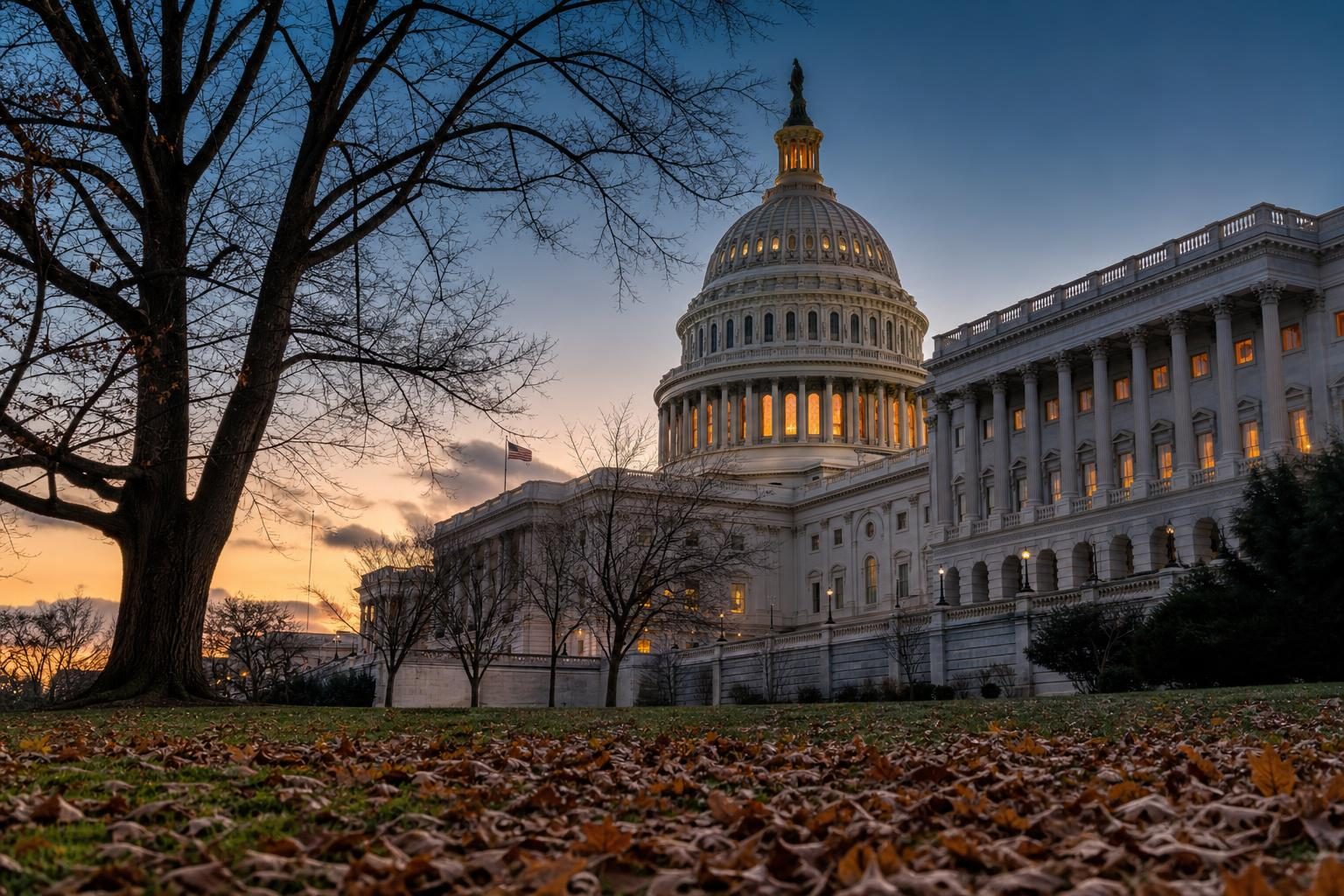
Part of our continuing coverage: House Democrats Step Back From a Christmas Shutdown Over Iran as Four Senators Hold Their Line Before the Dec. 11 Deadline
Key points
- Senate appropriators released text of all 12 fiscal 2027 spending bills; none has become law.
- The House has passed three of 12 bills, and Senate Republicans need at least seven Democrats.
- Democrats are split over risking a shutdown to cut off Iran war funding.
- Appropriators expect another short-term extension, likely into the new year, before the Dec. 11 deadline.
With less than three weeks left before federal funding runs out, the Senate has taken a modest step toward keeping the government open. The road to a deal, however, still runs through a Democratic caucus divided over the war with Iran and a Republican conference still sorting out how much to spend on defense.
The Center Square reported that the Senate Appropriations Committee has now released the text of all 12 fiscal year 2027 spending bills [1]. Fiscal 2027 began Oct. 1, yet not one regular spending bill has become law, and analysts told the outlet that Congress is unlikely to finish all 12 before the Dec. 11 deadline [1]. To avoid a shutdown, Congress must pass a bill that President Donald Trump signs by that date [1].
What moved, and what did not
The release gives negotiators a complete set of Senate numbers to work from. House Appropriations Chairman Tom Cole welcomed it, saying that with the Senate bills public and the House measures long on the table, "we have what we need to negotiate in earnest," according to The Center Square [1]. Sen. Patty Murray, D-Wash., criticized the Republican bills for what she called a startling funding increase for the Pentagon, the outlet reported [1].
The House is further along on paper than on the floor. Its versions were released months ago, but the full House has passed only three of the 12, The Center Square reported [1]. In the Senate, the math is unforgiving: Republicans need the support of at least seven Democrats to pass any funding bill or extension before the end of the year [1].
Defense is the biggest single puzzle. Senate Republicans could not agree on whether to meet President Trump's $350 billion request for new Pentagon money through budget reconciliation, a party-line procedure, Reuters reported [2]. Instead, the GOP conference chose to pursue bipartisan talks on a $1.1 trillion defense appropriations bill that contains only $69 billion of the president's request [2].
The Iran war divides Democrats
The sharpest sticking point is the war. Democrats are split over whether limiting money for it is worth a government shutdown, Reuters reported, and Rep. Rosa DeLauro of Connecticut is among those who oppose that tactic. "Shutting the government down doesn't stop the war," she said [2].
The Hill reported that House Democrats are wrestling with whether to demand an end to war funding now, at the risk of a shutdown, or to put off that fight until next year, when they will control Congress [3]. DeLauro, the top Democrat on House Appropriations, has signaled that Democrats will keep fighting to end the war but will not go to the mat over it in the lame-duck session, partly to protect their January agenda, according to The Hill [3]. In the Senate, Sen. Chris Van Hollen of Maryland has pressed to attach anti-war language to any Dec. 11 bill, while other Democrats, including Sen. Cory Booker of New Jersey, want to wind the war down without a shutdown [3].
Republicans see the danger. Fox News reported that House Republicans worry Democrats' post-midterm clout could trigger another shutdown ahead of the deadline [6]. Reuters noted that a lapse would be the fourth partial government shutdown of President Trump's second term, which began in January 2025 [2].
What a shutdown would mean at home
The most likely outcome is another stopgap. The Deseret News reported that appropriators have already acknowledged they will need another short-term extension, likely into the new year, and found little appetite on either side for a shutdown [4]. The Center Square likewise reported that lawmakers will almost certainly push the Dec. 11 deadline into 2027 [1].
If talks fail, federal workers and their families would feel it first. FedSmith, which covers the federal workforce, called a December shutdown a serious risk as of Nov. 18, though it said the evidence did not yet show a lapse was more likely than an agreement [5]. The outlet explained that a shutdown affects when employees are paid, while a separate pay freeze affects whether their salary schedules rise at all, and that a lapse does not automatically end coverage under the Federal Employees Health Benefits program [5]. FedSmith also reported that Democrats remain divided over whether to risk a shutdown to win limits on the war [5].
For taxpayers, the deeper problem is a budget process that keeps failing on schedule. Nearly two months into the fiscal year, Congress has yet to enact a single regular appropriations bill [1]. Each stopgap keeps agencies running on old settings, postpones hard choices about priorities and makes the next deadline another moment of brinkmanship. Families who balance their own budgets every month have reason to expect the same discipline from Washington.
The next marker is Dec. 11. Whether Congress meets it with full-year bills, another extension or a shutdown depends on whether Democrats keep the Iran fight separate from the basic duty of funding the government, and whether Republicans can settle their own defense numbers in time [2][3].
Sources
- [1]Opens in a new tab ↗
- [2]Reuters (via U.S. News & World Report)Congress Struggles to Avert U.S. Shutdown as Iran War Divides LawmakersOpens in a new tab ↗
- [3]Opens in a new tab ↗
- [4]Opens in a new tab ↗
- [5]Opens in a new tab ↗
- [6]Opens in a new tab ↗
With Democrats taking Congress, what should Republicans focus on first?
- Blocking bad bills
- Working on prices and costs
- Winning back the House in 2028
- Confirming judges before January
More in Politics
Intel Chief Stands by Trump: 'I Trust Him Completely'
Last night on The Briefing Room with Claire Donovan
Trump Says Iran Sees Weakness in the Midterm Results and Has Stepped Up Attacks, but Vows Every One Is Being Stopped
Last night on The Briefing Room with Claire Donovan
Trump Weighs In: Schumer Would Be 'Very Hard' to Work With
Last night on The Sterling Report with Ava Sterling
Were you there?
If you were at the scene, or this story touched your life, tell us what you saw and what it was like.
Discussion 0
Sign in or create a free account to join the discussion.
No comments yet. Start the discussion.