
 Tonight on The Briefing Room with Claire Donovan
Trump Says Iran Sees Weakness in the Midterm Results and Has Stepped Up Attacks, but Vows Every One Is Being Stopped
In a Sunday post, the President said Tehran fired more drones and missiles in the past week than in more than a year after Democrats' Nov. 3 wins, and accused Democrats and Iran of both wanting high oil prices.
Filed November 22, 2026 · 📍 Capitol Hill, DC 20515
Were you there? Share your story
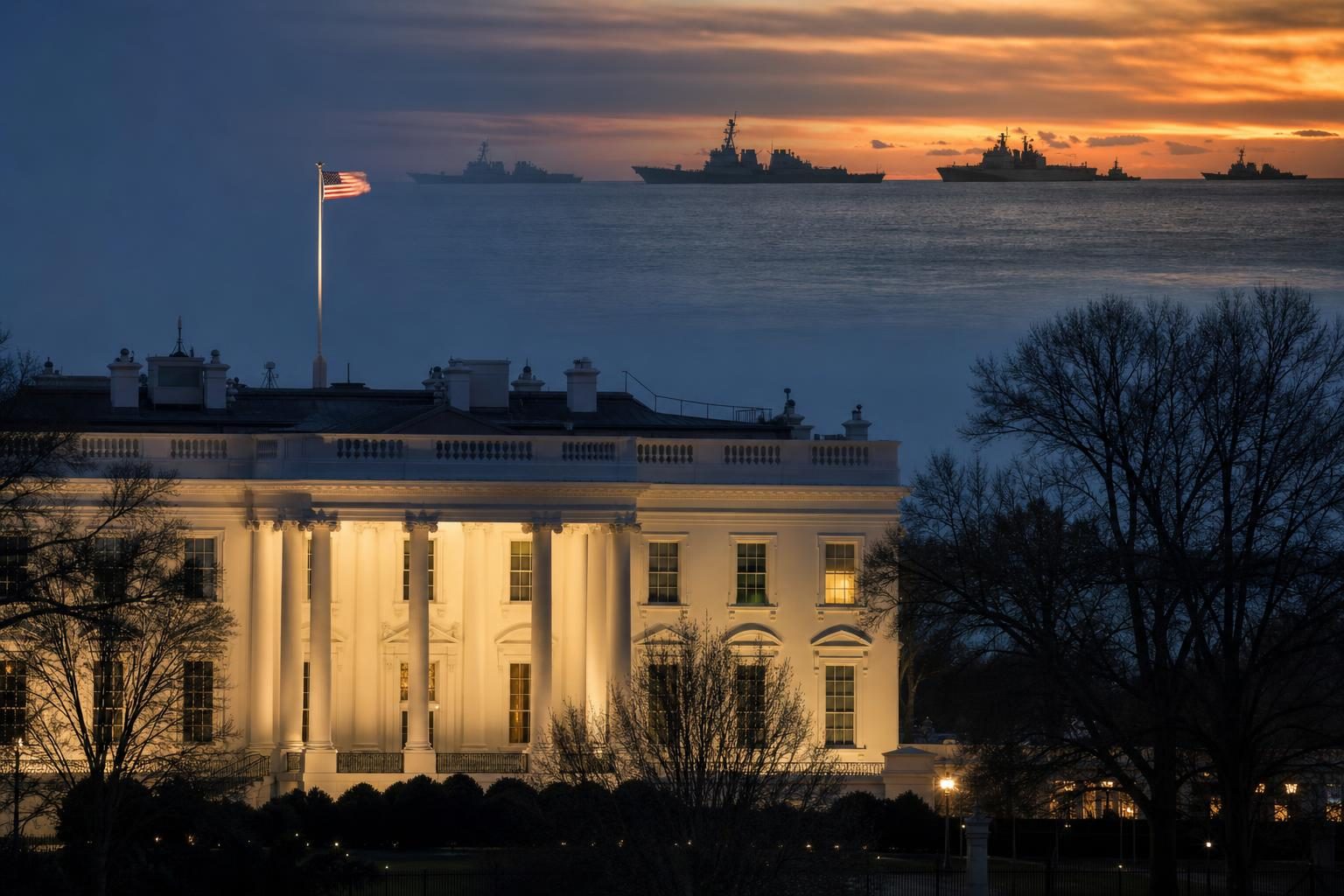
Part of our continuing coverage: Trump Puts Iran on Notice: No Deal by the New Year Could Bring Renewed Strikes, as Tehran's Allies Keep Firing at the Gulf
Key points
- President Trump said Iran has launched more drones and missiles in the past week than at any time in more than a year.
- He linked the surge to Democrats' Nov. 3 midterm wins, saying Tehran views Democrats as weak and that he would not let it succeed.
- Trump said the attacks have all been knocked down without causing damage, and blamed Democrats and Iran for trying to keep oil prices up.
- The post came days after he warned of renewed strikes if no deal is reached by the new year, as he leans on economic pressure.
President Trump said Sunday that Iran has sharply stepped up its drone and missile attacks since Democrats won the midterm elections, arguing that Tehran sees the incoming Democratic majorities as weak and is testing America's resolve [1][2].
In a post on Truth Social, the President said Iran had launched more drones and missiles in the past week than at any time in more than a year [1][2]. He said all of them had been knocked down and had done no damage, and he vowed that he would not let Iran's leaders take advantage of the moment [1][2].
The President's Argument
Trump tied the surge directly to the Nov. 3 election, in which Democrats won control of both chambers of Congress amid voter frustration over the war and higher fuel costs [2][3]. Iran's leaders, he wrote, consider the Democrats weak and ineffective [2].
He also turned to the economy. Trump wrote that oil prices have fallen sharply since the election and accused both Democrats and Iran of having tried to keep prices high before Americans voted [4]. He said the stock market had lost more than $6 trillion in value since what he called the Democrats' rather strange win, a remark that also cast doubt on the outcome without offering evidence [2][3].
The Bigger Picture
The post came at a tense moment in the war. Iran and its allies have continued firing at U.S. forces and partners in the Gulf, and as Liberty Bell Report reported on Sunday, the President has warned that if no deal is reached by the new year, renewed American strikes could follow.
For now, the administration appears to favor squeezing Iran's economy over a return to full-scale bombing. Israel Hayom, citing three diplomatic sources, reported that Trump currently prefers to continue and intensify the economic campaign against Iran rather than resume all-out war, while keeping military options ready [5].
That two-track approach, pressure now and force held in reserve, is consistent with what the President has said publicly. It also reflects a lesson the administration appears to have drawn from the war so far: an oil-dependent regime under a blockade may be pushed toward a deal by an empty treasury more reliably than by another round of bombing, while the threat of bombing keeps it from getting comfortable [5]. It also puts a premium on the air defenses that, by his account, have stopped every one of Iran's recent salvos [1].
Why It Matters
Whatever one makes of the President's sharper political jabs, his core point about deterrence deserves a hearing. Adversaries watch American politics closely. A regime like Iran's, which has spent decades testing the limits of what Washington will tolerate, has every reason to probe during a transition of power on Capitol Hill, when it may calculate that the country is divided and distracted.
The answer the President is offering is continuity: the same commander in chief, the same defenses and the same willingness to act. That message is aimed as much at Tehran as at voters at home. It tells Iran's leaders that the midterms changed who will run Congress in January, not who commands the armed forces.
Democrats, for their part, are weighing how hard to push against the war once they take power, including a debate, as Liberty Bell Report has reported, over whether to use the Dec. 11 government funding deadline to cut off money for it. The President's post was a signal that he intends to frame any such move as weakness that Iran will exploit.
What Comes Next
The next weeks will show whether Iran's stepped-up attacks continue and whether U.S. and partner air defenses keep stopping them [1]. In Washington, the funding fight and the new Congress will test how much room the President has to keep his strategy on course. And in Tehran, the regime will have to decide whether the President's warnings about the new year are a bluff it can afford to call.
Sources
With Democrats taking Congress, what should Republicans focus on first?
- Blocking bad bills
- Working on prices and costs
- Winning back the House in 2028
- Confirming judges before January
More in Politics
Intel Chief Stands by Trump: 'I Trust Him Completely'
Tonight on The Briefing Room with Claire Donovan
Trump Weighs In: Schumer Would Be 'Very Hard' to Work With
Tonight on The Sterling Report with Ava Sterling

Jeffries Promises a Stock-Trading Ban Early Next Year. Republicans Who Back the Idea Should Hold Him to the Fine Print
Today on Deep Dive with Kevin Nakamura
Were you there?
If you were at the scene, or this story touched your life, tell us what you saw and what it was like.
Discussion 0
Sign in or create a free account to join the discussion.
No comments yet. Start the discussion.