
 Tonight on Street Watch with Elijah Carter
One Molecule at a Time: How Cartel Chemists Are Flooding America With Nitazenes, the Opioids Stronger Than Fentanyl
A 60 Minutes investigation traces a pipeline of chemicals from China and India to labs in Mexico and Canada, a $10 pill that killed a 21-year-old, and a Louisiana basement where the threat turned up on American soil.
Filed November 22, 2026 · 📍 Baton Rouge, LA 70802
Were you there? Share your story
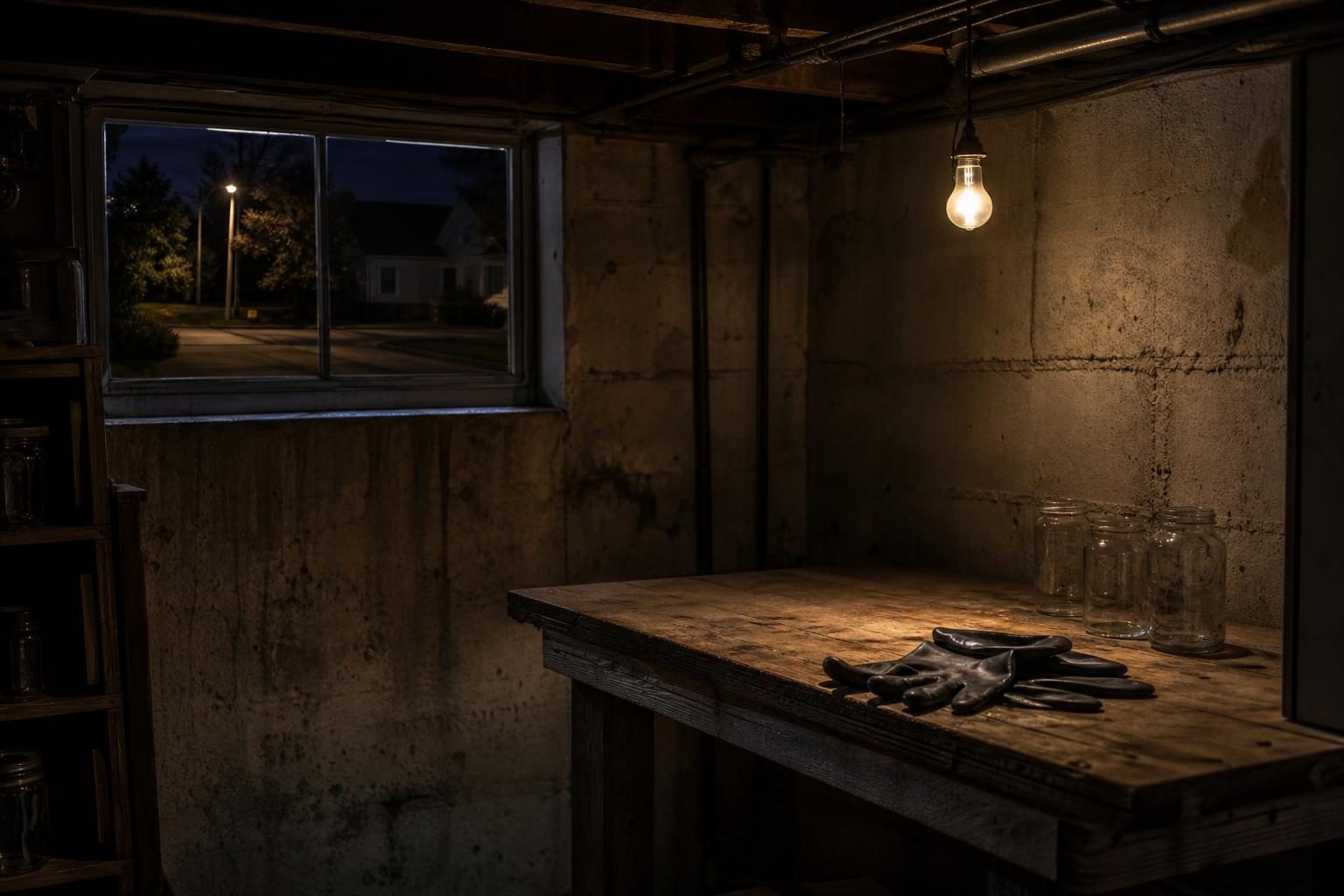
Part of our continuing coverage: Deputies Expected a Fentanyl Lab. In a Baton Rouge Basement, the DEA Says They Found the Nation's First Large-Scale Nitazene Operation
Key points
- Nitazenes, a class of synthetic opioids that can be up to 80 times more potent than fentanyl, are being produced by drug cartels, the DEA told 60 Minutes.
- Chemicals from China and India are bought online and shipped to makeshift labs in Canada and Mexico, then pressed into powders and pills bound for the U.S.
- When one chemical is banned, cartel chemists swap in a substitute, making a slightly different drug that can slip past the law.
- A Baton Rouge basement lab first thought to be making fentanyl turned out to be producing a nitazene, the first such large-scale lab found in the U.S.
Qua Broughton was 21 years old when he bought pills over social media. They cost about $10 apiece. They contained a drug most Americans have never heard of, and it killed him, CBS News reported in a 60 Minutes investigation that aired Sunday [2].
The drug was a nitazene, part of a family of synthetic opioids that can be up to 80 times more potent than fentanyl [1][2]. The Drug Enforcement Administration calls synthetic opioids the deadliest drug threat the country has ever faced, and the agency says drug cartels are turning them out in a way designed to stay one step ahead of the law [1].
A $10 Pill
The details of Broughton's death are painfully ordinary, and that is what makes them so frightening. He did not seek out an exotic drug. He bought pills online, the way many young people now buy everything from sneakers to concert tickets, and he paid about $10 apiece for them, according to CBS [2]. There is no sign he knew what was in them.
That is the business model. The cartels do not need customers who are looking for nitazenes. They need customers who are looking for a pill, any pill, and who trust that what arrives is what was advertised. A counterfeit tablet stamped to look like a familiar prescription is the perfect delivery system for a poison the buyer has never heard of.
A Painkiller That Was Never Approved
Nitazenes are not new to chemistry. Researchers at the Swiss drug company CIBA synthesized a series of them in the late 1950s while searching for new painkillers, according to the DEA [4]. None were ever approved for medical use. For decades they were known mainly in academic laboratories [4].
That changed in recent years, when nitazenes began showing up in the illicit drug supply. The DEA has temporarily placed several of them in Schedule I, the category reserved for drugs with no accepted medical use and a high potential for abuse [4]. Researchers have warned that they are now appearing in overdose deaths in American cities, sometimes mixed into other drugs and sometimes pressed into counterfeit pills [5][6].
Potency estimates vary from one compound to the next, and scientists caution that the family includes some drugs that are far stronger than others [5][6]. What they share is the ability to stop a person's breathing in very small amounts.
The Pipeline
The 60 Minutes report, built on months of reporting, laid out the supply chain as the DEA describes it [1]. Chemicals sourced from companies in China and India are ordered online. They are shipped to makeshift labs in Canada and Mexico, where they are mixed into powders and pressed into pills. From there the product moves into the United States [1].
DEA Administrator Terry Cole told the program he considers synthetic drug-making the most deadly criminal act carried out by today's cartels [1].
The genius of the cartels' approach, if one can call it that, lies in the chemistry. Drug laws work by naming specific substances. When regulators ban one precursor chemical or one finished drug, the cartels' clandestine chemists change the molecule slightly and keep going, the DEA said [1]. The result is a steady stream of new compounds that are close enough to their predecessors to kill, but different enough to slip past the list of banned substances for a time. As the 60 Minutes report put it, the cartels tweak one molecule at a time [1].
Here at Home
For a while, the hope was that nitazenes were a problem made overseas. A raid in Louisiana put that idea to rest.
Deputies and federal agents who raided a home in Baton Rouge believed they were shutting down a fentanyl lab. DEA testing later found the basement operation was producing etonitazene, a nitazene [3]. The lab was part of a drug distribution network targeted by the DEA and the East Baton Rouge Sheriff's Office, and officials described it as the first known large-scale nitazene operation found on American soil [3]. As Liberty Bell Report reported on Saturday, the discovery showed how quickly a threat that began abroad can take root in an ordinary neighborhood. Neighbors on a quiet residential street had no reason to suspect that one of the deadliest drugs ever sold in America was being made beneath a family home. That should change how every community thinks about the threat.
Why Testing Matters
Part of what makes nitazenes so dangerous is that many people who take them have no idea they are doing so. A young person who buys what he thinks is a prescription painkiller or anxiety pill online may be getting something else entirely. Researchers have warned that routine drug screens may not catch nitazenes, which means some overdose deaths may never be traced to them [5].
That has practical consequences for families. A parent who is told a child died of an overdose may never learn exactly what killed him. A community trying to understand its overdose numbers may be working from an incomplete picture.
Why It Matters to Our Readers
There is a moral clarity to this story that should cut through the usual political noise. The people making these drugs are not misunderstood entrepreneurs. They are criminal organizations that knowingly sell poison to young Americans, often through the same social media apps teenagers use to talk to their friends.
That is why border security, the fight against the cartels and pressure on the countries where the chemicals originate are not abstractions. Each one is a link in the chain that ended in a $10 pill and a 21-year-old's death [2]. The chemicals start in Asia, pass through labs in our neighbors to the north and south, and end in American homes [1]. Breaking any link saves lives.
It is also why families and churches have a role to play. Parents need to tell their children, plainly and often, that a pill bought online or from a friend is never safe, no matter how real it looks. Youth pastors and coaches can repeat the same message. The cartels count on silence and ignorance. The best answer is a community that talks openly about the danger.
What Parents Should Know
Researchers advise that naloxone, the overdose-reversal medicine sold over the counter as Narcan, can work against nitazenes, though more than one dose may be needed because of their strength [5][6]. Anyone who finds a person unresponsive or struggling to breathe should call 911 immediately.
Counterfeit pills can look identical to the real thing. The only safe medication is one prescribed by a doctor and filled at a licensed pharmacy.
What Comes Next
The DEA has made synthetic drugs a top priority, and Cole's comments suggest the agency sees the cartels' chemists as the front line of the fight [1]. The harder task is keeping the law from always running a step behind the chemistry, a problem that will require cooperation from China, India, Mexico and Canada, and attention from Congress as it weighs how to classify whole families of drugs rather than one molecule at a time.
For the family of Qua Broughton, any progress comes too late [2]. For the next young person scrolling through a social media feed, it could be the difference between life and death.
Sources
- [1]Opens in a new tab ↗
- [2]Opens in a new tab ↗
- [3]CBS NewsThey thought it was a fentanyl lab. It was nitazenes — synthetic opioids up to 80 times more potent.Opens in a new tab ↗
- [4]DEA Diversion Control DivisionBenzimidazole-OpioidsOpens in a new tab ↗
- [5]The ConversationNitazenes found in 5 overdose deaths in Philly – here's what they are and why they're so deadlyOpens in a new tab ↗
- [6]Vanderbilt University Medical CenterForgotten opioid has resurfaced as lethal street drugOpens in a new tab ↗
Should the death penalty stay on the books for the worst crimes?
- Yes, for the worst murders
- Only with absolute proof like DNA
- No, life without parole is enough
More in Crime & Justice
'Drop by Drop': Cartel-Backed Loan Sharks Spread Across Mexico, Squeezing the Vendors and Shopkeepers Who Can Least Afford It
Tonight on Border Watch with Cole Brennan
Nine Shot, Two Critical at Crowded Private Concert in California's Tulare County
Overnight on Breaking Now with Nathan Brooks
Tessa Majors Killer Freed Early Without a Parole Hearing
Overnight on The Verdict Room with Natalie Sinclair
Were you there?
If you were at the scene, or this story touched your life, tell us what you saw and what it was like.
Discussion 0
Sign in or create a free account to join the discussion.
No comments yet. Start the discussion.