
 Tonight on Launch Pad with Hannah Lindgren
A 4.5-Billion-Year-Old Visitor Crashed Through Her Roof. Now It Belongs to Houston, and Admission Is Free
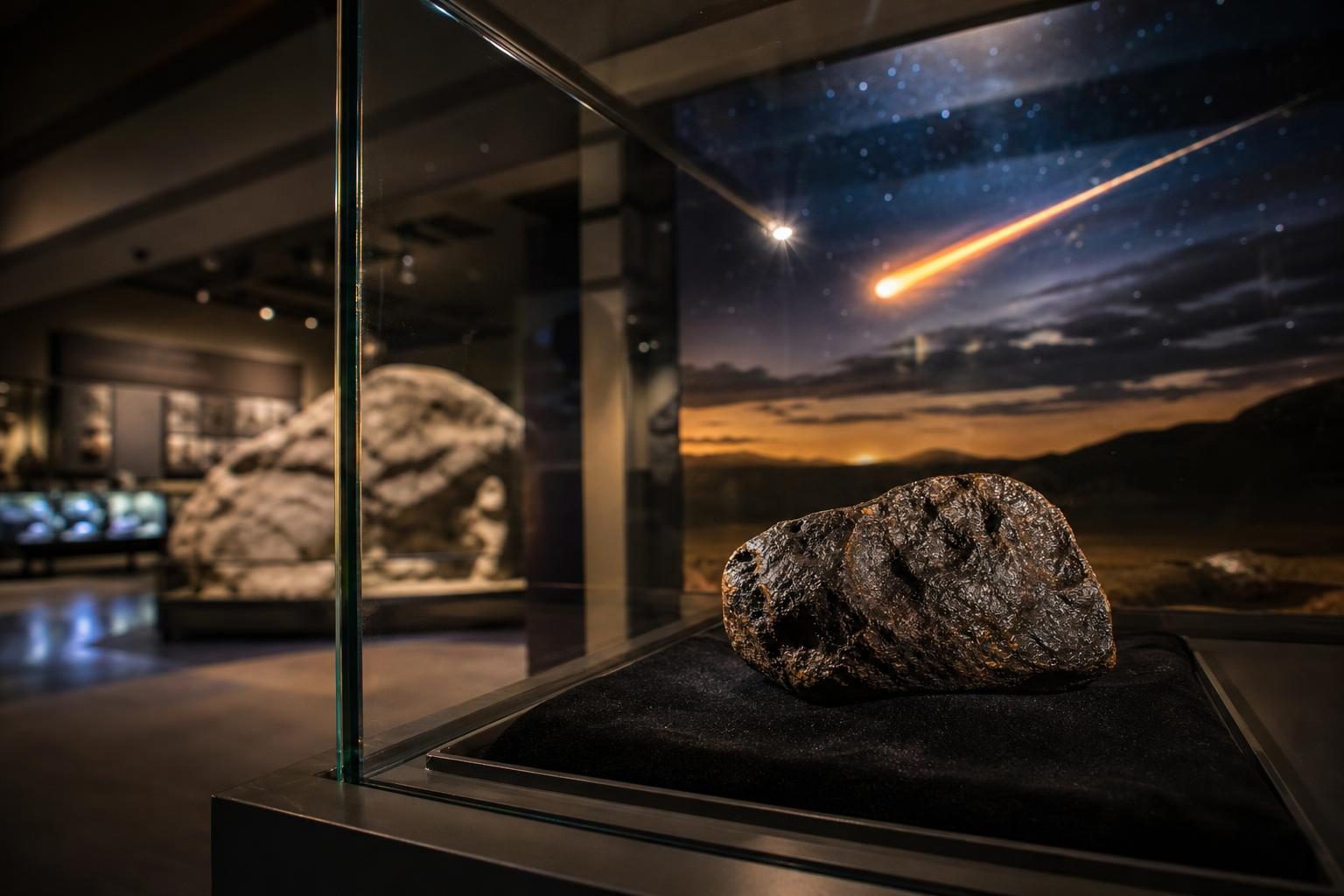
Sherrie James gave the meteorite that hit her home to the Houston Museum of Natural Science, where its fragments anchor the new 'Fall to Earth' exhibit.
Filed November 22, 2026 · 📍 Houston, TX 77002
Were you there? Share your story
Key points
- A meteorite that crashed into Sherrie James' Houston-area home is now on display at the Houston Museum of Natural Science.
- It is part of the free 'Fall to Earth' exhibit, which opened Nov. 6.
- The rock is about 4.5 billion years old; 19 fragments were recovered.
- A museum official called it virtually priceless because its fall was so well documented.
Earlier this year, a rock as old as the solar system itself fell out of the Texas sky and crashed into Sherrie James' home in the Houston area. No one was hurt, and this fall she decided the space rock belonged to everyone, Houston Public Media reported in a story carried by NPR stations [1]. "I want everybody to see it," she told the station [1].
The meteorite is now on display at the Houston Museum of Natural Science, where it is part of the museum's "Fall to Earth" exhibit, which opened to the public on Nov. 6 and is free to visit [1][3]. The museum plans to keep it on display indefinitely [1].
Texas Public Radio reported that the meteorite is about 4.5 billion years old, a relic from the earliest days of the solar system [2]. Houston television station KPRC reported in late October that the Spring homeowner's meteorite was headed for the museum's exhibit hall [3].
Why scientists call it priceless
Most meteorites are found long after they land, sometimes thousands of years later, in deserts or on Antarctic ice. This one is different. A museum vice president told Houston Public Media that the specimen is virtually priceless because both its fall through the atmosphere and its crash landing were so well documented [1].
That documentation matters to scientists. When a fireball is recorded by cameras and witnesses, researchers can reconstruct its path and trace it back to the part of the solar system it came from. When the rock is recovered quickly, before rain, soil and air begin to change it, it preserves its original chemistry. A meteorite that is both well tracked and freshly recovered is a rare gift to the people who study how the planets formed.
Most of the incoming object burned up on its way down, but 19 fragments were recovered and are on display, according to Houston Public Media [1].
When the rock first came through the roof, the Smithsonian Magazine reported on the suspected meteorite tearing into a suburban Houston home [4]. Texas Standard reported at the time that meteors are more common than most people think, though it is rare for one to survive the trip and land where people live [5].
Meteor, meteorite, meteoroid
The words are easy to mix up. A meteoroid is a small rock or bit of debris traveling through space. When it enters Earth's atmosphere and heats up, the streak of light it makes is a meteor, the "shooting star" children wish on. If any piece survives the fiery descent and reaches the ground, that piece is a meteorite.
Thousands of tons of space dust and debris strike the Earth every year, but nearly all of it burns up or falls into the oceans and empty land. That is why a meteorite striking a home is such a startling event, and why Sherrie James' decision to share it is a gift to every schoolchild who will walk through the museum doors.
A small piece of the heavens
There is something fitting about a family choosing to share a piece of the sky with their neighbors. The psalmist wrote that the heavens declare the glory of God, and few things make that line feel more real than holding a stone that was already ancient when the first mountains rose.
Science and wonder belong together. A 4.5-billion-year-old rock can teach a child about chemistry and orbits, and it can also make an adult stop and marvel at the vastness and order of creation. Houston families looking for something to do over the Thanksgiving break can do both for free.
The exhibit is open now at the Houston Museum of Natural Science in the city's Museum District [1][3]. For one homeowner in the Houston area, the strangest day of her year became a lesson she wanted to give away.
Sources
- [1]WUNC (Houston Public Media/NPR)A meteorite hit her home. She's showing it to Houston: 'I want everybody to see it'Opens in a new tab ↗
- [2]Texas Public RadioA 4.5 billion-year-old meteorite crashed into her home. She gave it to the Houston Museum of Natural ScienceOpens in a new tab ↗
- [3]KPRC Click2HoustonSpring homeowner's meteorite to go on display at Houston Museum of Natural ScienceOpens in a new tab ↗
- [4]Smithsonian MagazineThis Suspected Meteorite Tore Through the Roof of a Suburban Houston HomeOpens in a new tab ↗
- [5]Texas StandardMeteors are more common than you might think. Here's what happened with one in HoustonOpens in a new tab ↗
Do you trust scientific experts more or less than five years ago?
- More
- Less
- About the same
More in Science & Space
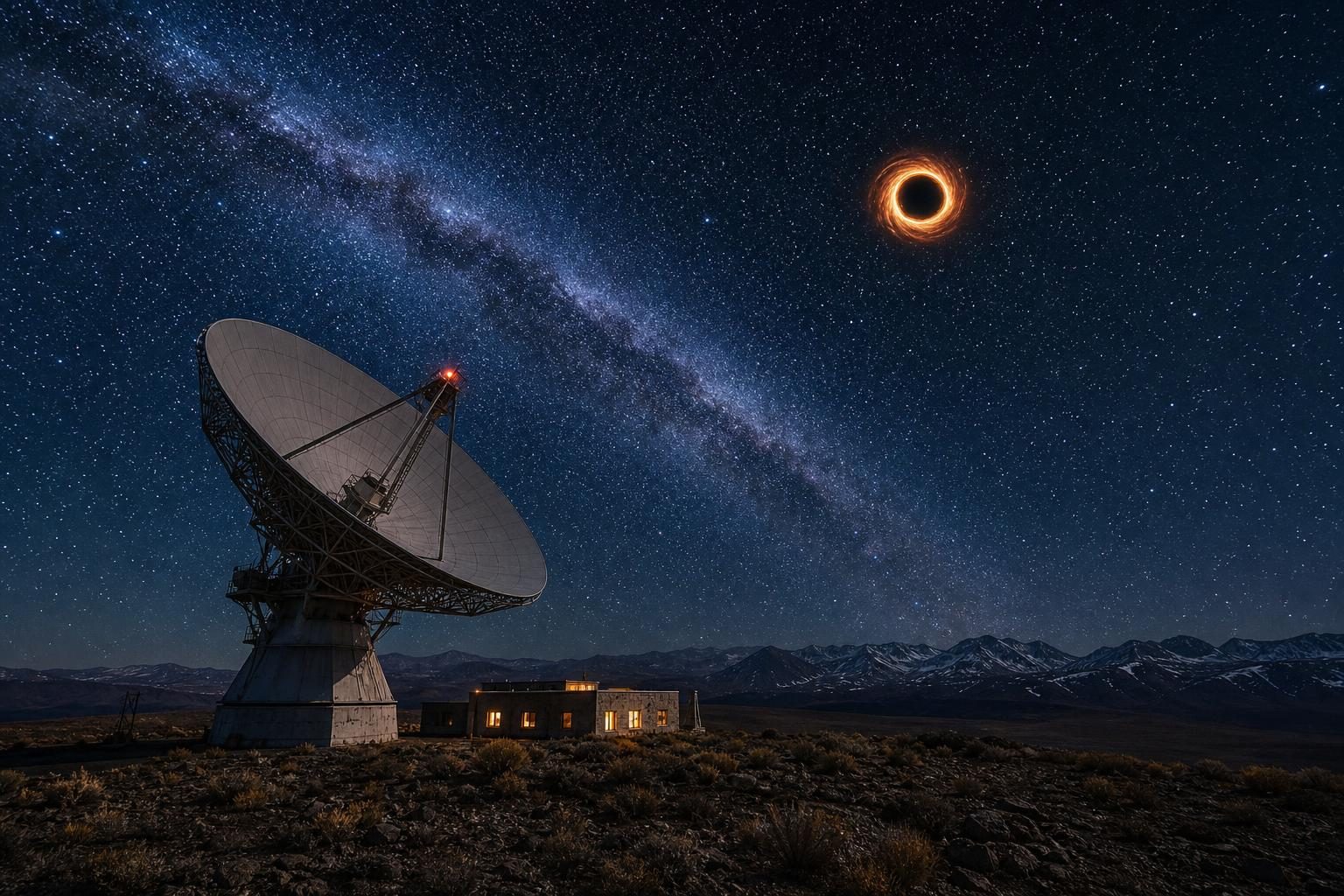
The Ring Holds Up: An Independent Team Confirms the First-Ever Picture of a Black Hole, Using a Method That Never Knew What One Looks Like
This morning on Launch Pad with Hannah Lindgren
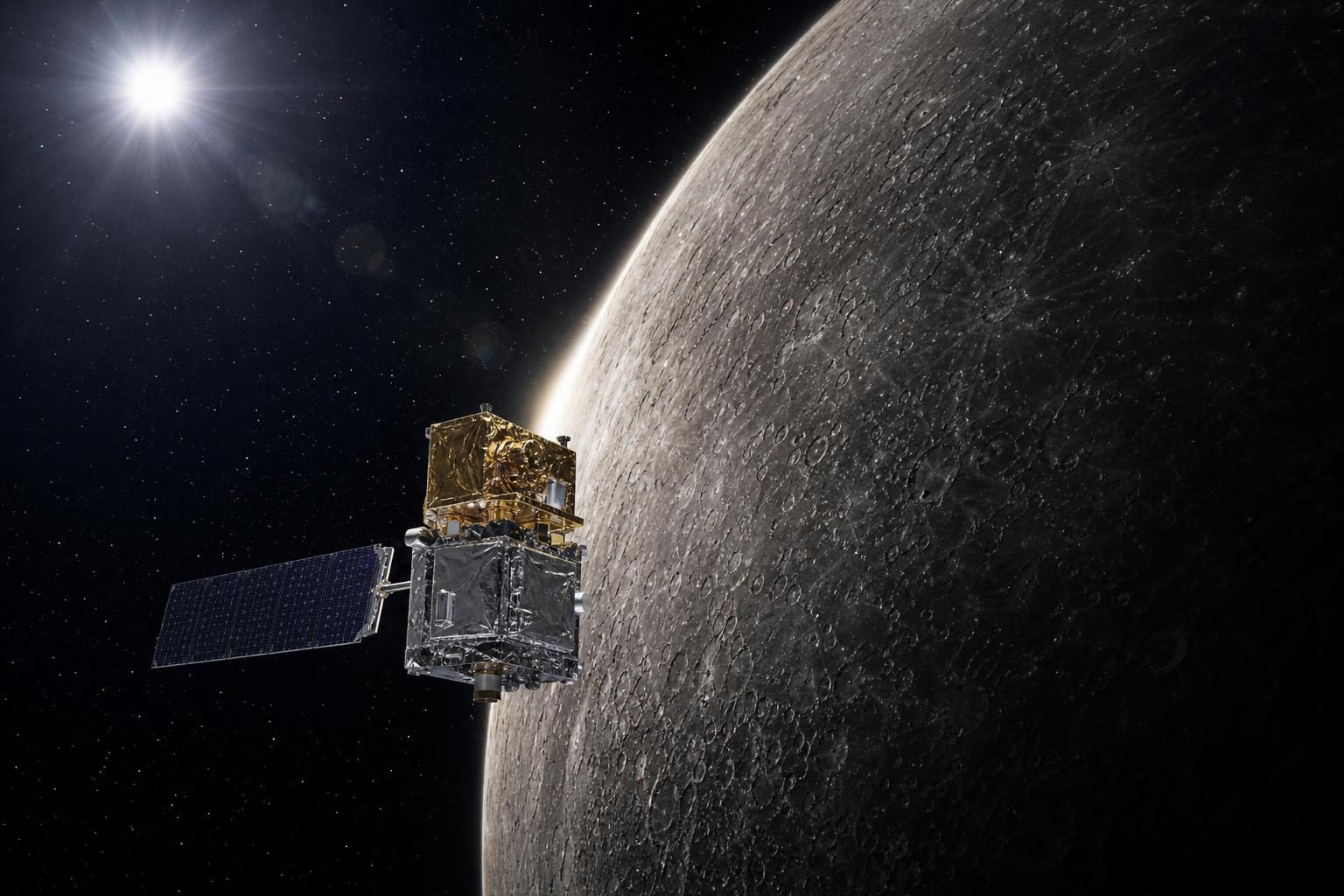
Captured at Last: After Eight Years in Space, Europe and Japan's BepiColombo Slips Into Orbit Around Mercury
Last night on Launch Pad with Hannah Lindgren

Build Us a Moon Base: NASA Puts Up $1 Million for America's High School and College Students to Solve Life on the Lunar Surface
Yesterday on Launch Pad with Hannah Lindgren
Were you there?
If you were at the scene, or this story touched your life, tell us what you saw and what it was like.
Discussion 0
Sign in or create a free account to join the discussion.
No comments yet. Start the discussion.