
 Tonight on Command Post with Dan Whitaker
Iran Says It Hit U.S. Radars in Bahrain; Two Civilians Hurt
Tehran's Guards claim strikes on American Patriot sites. Bahrain says the missiles and drones set a civilian industrial plant ablaze, leaving a Pakistani worker in critical condition.
Filed November 22, 2026 · 📍 Pentagon, VA 22202
Were you there? Share your story
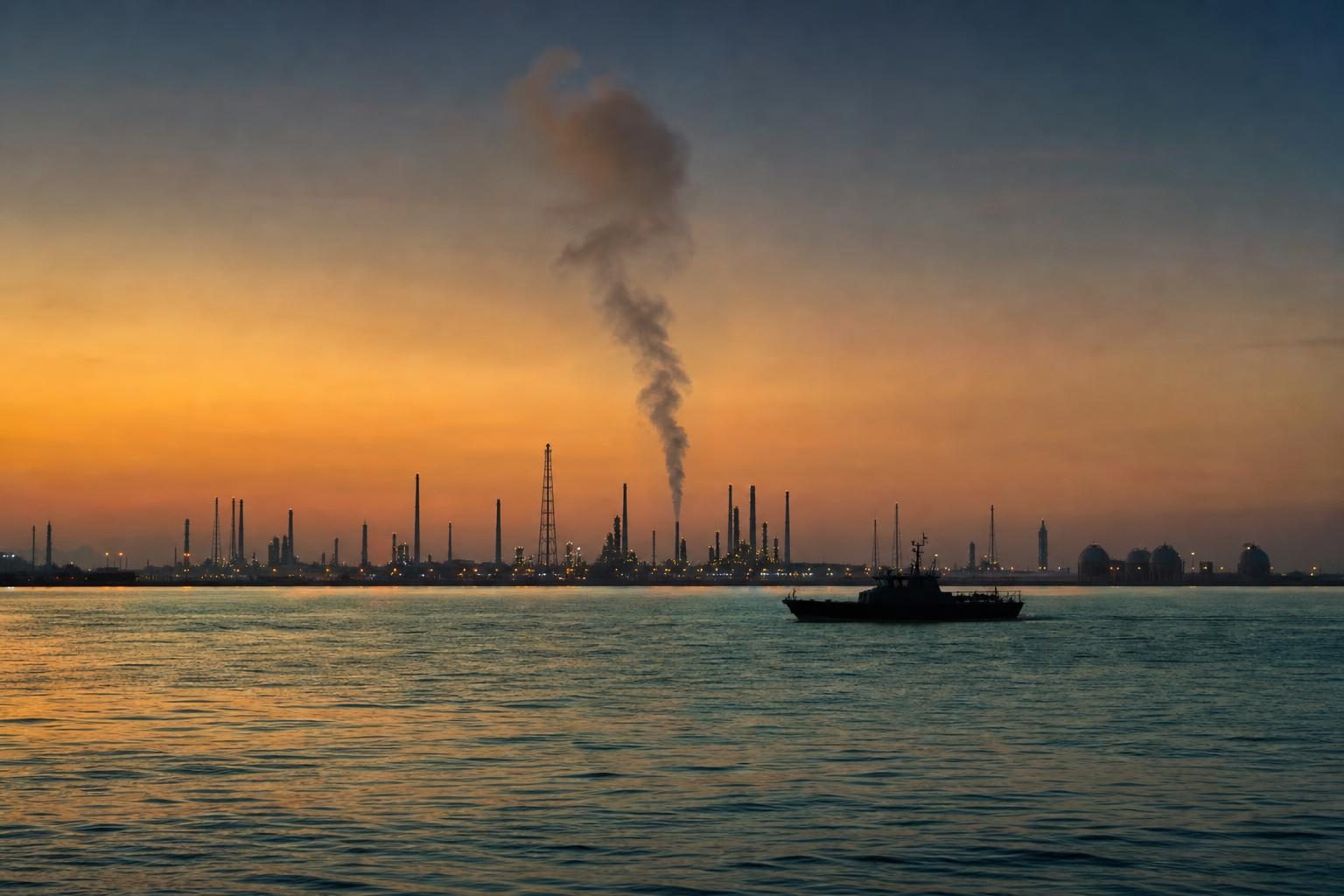
Part of our continuing coverage: CENTCOM Says Every U.S. Jet Is Accounted For After Iran Claims an F-16 Hit, as an Iranian Strike Sets a Bahrain Industrial Site on Fire
Key points
- Iran's Revolutionary Guards claim they hit two U.S. Patriot radars at Bahraini bases
- Bahrain says a civilian industrial plant burned; a Pakistani resident is in critical condition
- The U.S. military has not confirmed the radar claim; Saudi Arabia, the UAE and Qatar condemned the attack
- Iran's foreign minister says Tehran is still open to a broader deal with Washington
Iran's Revolutionary Guards said Sunday they struck two American Patriot air-defense radars at bases in Bahrain. The island kingdom tells a different story: it says the weekend barrage hit a civilian industrial plant, setting it on fire and wounding two people, one of them critically [1][2].
Bahrain's Interior Ministry said a Bahraini citizen with disabilities was in stable condition and a Pakistani resident was in critical condition, and that both were being treated in hospital [2]. Residents told AFP they saw smoke rising over Sitra Island on the kingdom's east coast, which is home to several industrial sites, including a refinery run by the state oil company Bapco [3].
Competing Claims
Iranian state media said the Guards' aerospace force hit radars at the Al-Riffa and Awali bases in a combined missile and drone operation, though some Iranian outlets named Sakhir instead of Awali as the second target [4][6]. Tehran called the strike retaliation for American drone flights over Iranian airspace and an attack on a radar site on Hengam Island, and it offered no details on any damage [6].
As of Sunday, the U.S. military had neither confirmed nor denied the radar claim. Central Command did reject a separate Iranian claim that Iranian forces had hit and damaged an American aircraft [4].
Bahrain's Defence Force said it intercepted several Iranian aerial attacks before they reached their targets, and the kingdom formally reserved its right to self-defense under Article 51 of the U.N. Charter [5]. Its Foreign Ministry called the strike a direct threat to civilian lives and a breach of Bahrain's sovereignty [1].
The Neighbors Close Ranks
Saudi Arabia, the United Arab Emirates and Qatar all condemned the attack on Bahrain [5]. Riyadh held Iran "responsible for the consequences of its continued attacks," and said it had intercepted a Houthi drone headed toward the capital and a ballistic missile aimed at its western region over the weekend [5]. The State Department has warned that Iran has launched attacks on U.S. assets in both Kuwait and Bahrain [5].
Even as the projectiles flew, Iranian Foreign Minister Abbas Araghchi said the June memorandum negotiated in Islamabad is no longer operational, while insisting Tehran remains open to a broader settlement with Washington [5]. Meanwhile, the U.S. says it is enforcing a naval blockade of Iran's ports on the Persian Gulf and the Gulf of Oman [4].
What It Means
Iran's pattern is now familiar. It announces dramatic hits on American hardware, Washington declines to confirm them, and the people who actually get hurt are workers and residents of the Gulf states that stand with the United States. Bahrain's account of a burning factory and a critically wounded migrant worker is a sharper indictment of Tehran than anything its own propaganda claims.
The next tests are whether the Pentagon reports any damage at the bases Iran named, and whether Araghchi's talk of a deal amounts to anything while Iranian missiles keep falling on its neighbors. For American troops in the Gulf and the allies who host them, the answer matters more than any statement from Tehran.
Sources
Should U.S. military aid to Israel end early?
- Yes, Israel can afford its own weapons
- Phase it out slowly
- No, keep it while Iran is a threat
More in Military & Defense
Iran Masses Tankers to Test U.S. Blockade
Today on Command Post with Dan Whitaker
Ninety Days Alone: Pentagon Readies Bases to Survive a Blackout
This morning on Command Post with Dan Whitaker
Russian Warship Erupts in Flames at Libyan Port
This morning on Command Post with Dan Whitaker
Were you there?
If you were at the scene, or this story touched your life, tell us what you saw and what it was like.
Discussion 0
Sign in or create a free account to join the discussion.
No comments yet. Start the discussion.