
 This morning on Command Post with Dan Whitaker
Ninety Days Alone: Pentagon Readies Bases to Survive a Blackout
FORTRESS America would have major U.S. installations keep the power, water, fuel and communications running for three months without the civilian grid. Here is what the plan does, what it costs, and what it means for your family.
Filed November 22, 2026 · 📍 Pentagon, VA 22202
Were you there? Share your story
Key points
- A Sept. 30 Hegseth memo created the FORTRESS America program office.
- Planning documents call for major bases to run on their own for at least 90 days.
- Microgrids, big batteries and small reactors are among the tools under study.
- No budget or completion date has been made public.
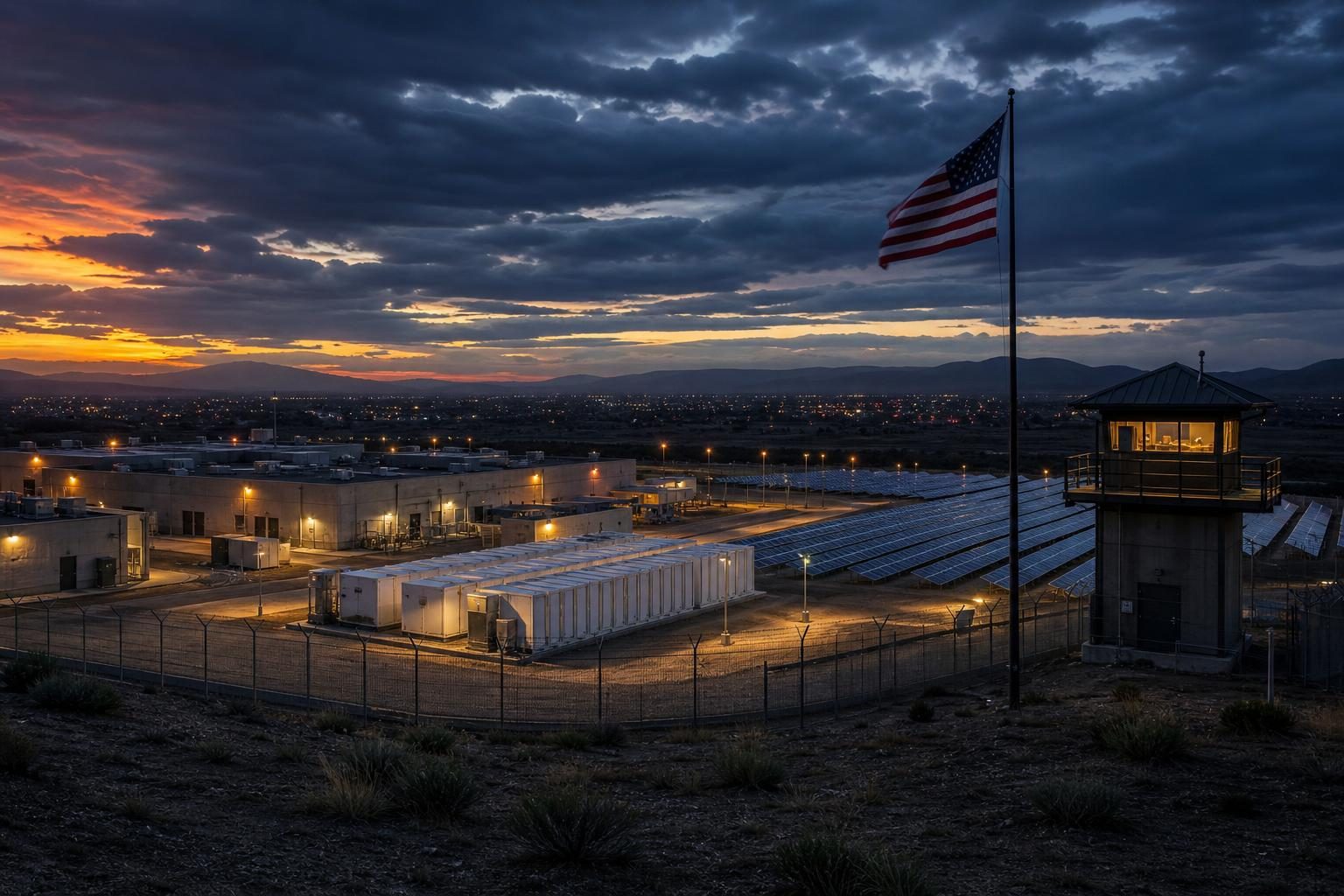
The Pentagon is preparing America's biggest military bases for the kind of crisis most families never want to imagine: weeks or months with no power from the civilian grid, no reliable fuel deliveries and broken supply chains. The effort, called FORTRESS America, aims to let major installations keep running on their own while the rest of the country recovers [1][2].
Defense Secretary Pete Hegseth set the program in motion with a memo dated Sept. 30 that ordered the Under Secretary of War for Acquisition and Sustainment to stand up a FORTRESS America program office within 30 days [2]. A follow-up memo on Oct. 6 gave that office five areas to coordinate: energy independence, industrial resilience, strategic reserves, installation protection and space [2].
Ninety Days on Their Own
Fox News Digital reported in late October, citing internal planning documents, that major installations in the continental United States would be expected to sustain essential operations for at least 90 days without outside help [1]. The standard covers electricity, water, fuel and communications, Fortune and Fox reported [1][4].
To get there, planners are looking at microgrids that can cut a base loose from the civilian network, large battery banks and small portable nuclear reactors [1][4]. Air & Space Forces Magazine reported that the work starts with resilient energy, and that officials point to Tyndall Air Force Base in Florida, rebuilt after Hurricane Michael, as a model for much of what FORTRESS hopes to achieve [3].
The War Zone noted that the Army's plan to put microreactors on bases runs on a separate track, a program called Janus, with the first reactor targeted for September 2028 [2][5]. Military Times reported that the Army has already picked five companies to build on-base reactors [5].
Prudence, Not Panic
The plan has drawn fresh attention this month after a run of technology outages left many Americans wondering what a long blackout would mean for them [6]. But officials have not tied FORTRESS to any specific threat, and the Pentagon has not released a total budget or a finish date, according to The War Zone [2]. The outlet also cautioned that key pieces of the plan have yet to be proven out [2].
That is worth keeping in perspective. A 90-day standard is a goal for the military, not a warning that the lights are about to go out. It reflects a hard lesson of modern conflict: an enemy does not have to defeat American troops on a battlefield if it can cripple the power plants, pipelines and networks that keep them ready to fight.
Fortune paired the Pentagon plan with Britain's recent advice that households keep food and water on hand for emergencies [4], and the same common sense applies on this side of the Atlantic. Scripture puts it plainly: "A prudent man foreseeth the evil, and hideth himself" (Proverbs 22:3). A nation that expects its soldiers to be ready for the worst can ask its own households to keep a few days of water, food and medicine in the pantry.
What Comes Next
The program office is now responsible for turning the memos into projects, base by base [2]. Congress, which writes the defense budget, will have its say on how fast the work moves and what it costs, and the price tag and timeline are still the open questions [2].
Sources
Should U.S. military aid to Israel end early?
- Yes, Israel can afford its own weapons
- Phase it out slowly
- No, keep it while Iran is a threat
More in Military & Defense
Iran Masses Tankers to Test U.S. Blockade
Today on Command Post with Dan Whitaker
Russian Warship Erupts in Flames at Libyan Port
This morning on Command Post with Dan Whitaker

CENTCOM Says Every U.S. Jet Is Accounted For After Iran Claims an F-16 Hit, as an Iranian Strike Sets a Bahrain Industrial Site on Fire
Last night on Breaking Now with Nathan Brooks
Were you there?
If you were at the scene, or this story touched your life, tell us what you saw and what it was like.
Discussion 0
Sign in or create a free account to join the discussion.
No comments yet. Start the discussion.