
 Today on Faith & Family with Ethan Calloway
Why Federal Law Says No to Keeping 'Gender Support Plans' From Parents
The Education Department is investigating five districts in five states over gender plans that may be hidden from parents; federal privacy law and a recent Supreme Court order favor families.
Filed November 19, 2026 · 📍 Supreme Court, DC 20543
Were you there? Share your story
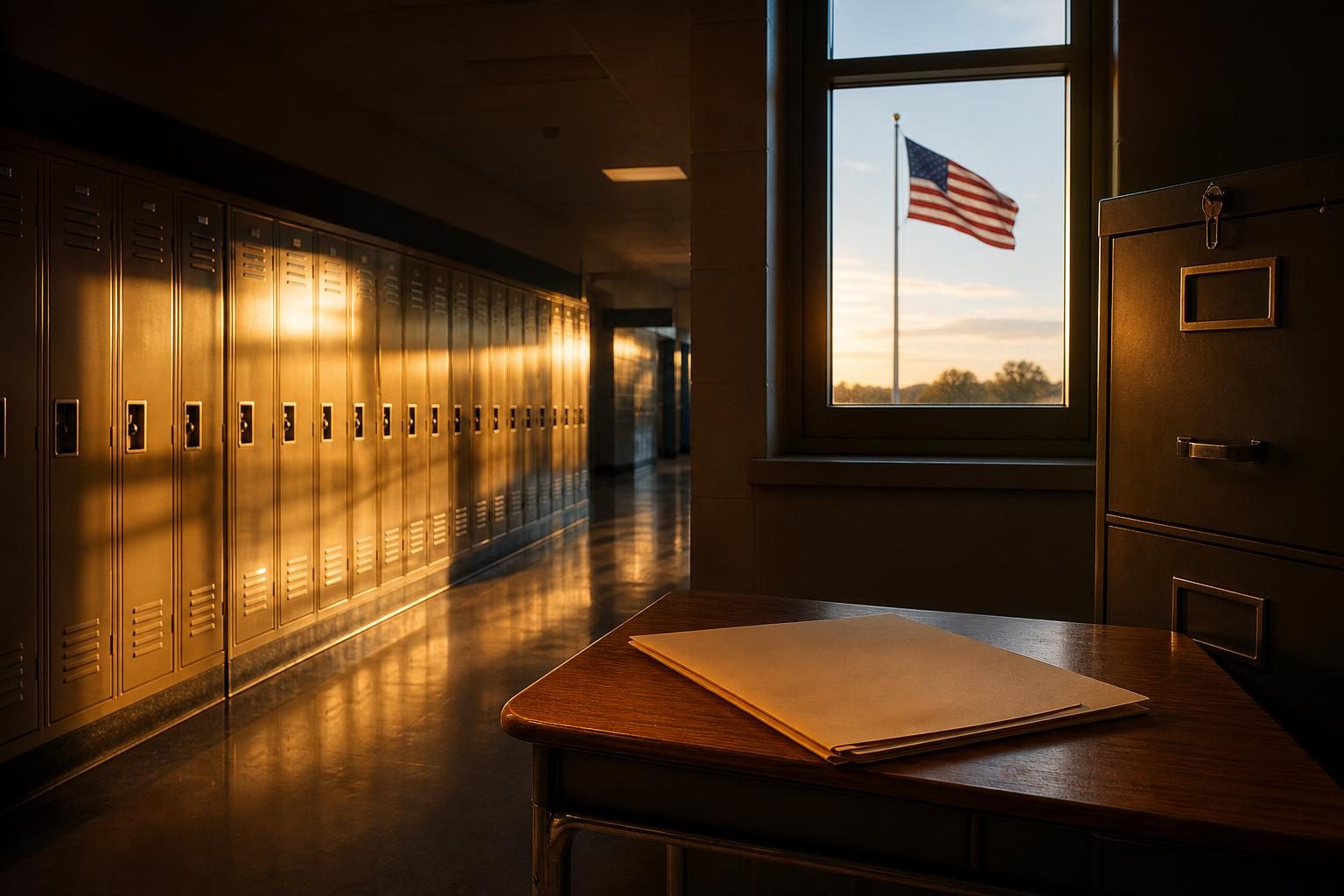
Key points
- Education Department probes five districts in PA, WI, CO, IL and MN over gender plans.
- Officials say FERPA lets parents see such plans, even when kept in separate files.
- A 6-3 Supreme Court order in Mirabelli v. Bonta sided with parents in March.
- Districts cite student safety; violations could bring enforcement and loss of federal funds.
The U.S. Department of Education has opened investigations into five public school districts over "gender support plans" that federal officials say may be kept from parents, the Post Millennial reported [1]. The department's Student Privacy Policy Office will examine whether Colonial School District in Pennsylvania, Eau Claire Area School District in Wisconsin, Thompson School District in Colorado, Community Unit School District 300 in Illinois and St. Paul Public Schools in Minnesota violated two federal laws, the Family Educational Rights and Privacy Act (FERPA) and the Protection of Pupil Rights Amendment (PPRA) [2][3].
The law's answer to the core question is clear: parents have a right to know what schools record about their children.
What the Districts' Policies Do
According to the department, the districts provide forms such as "Gender Support Plans" that ask minors to choose the names and pronouns they want used at school, and several encourage keeping those plans or similar records in separate filing systems [2].
Colonial's policy says students have a right to keep their gender status private and that additional parental consent is not required, and it directs staff to ask students privately which names and pronouns to use at home, the Post Millennial and University Herald reported [1][3]. A Colonial spokesperson said the policy, in place since 2019, was meant to create a welcoming school environment [1][3].
Eau Claire's form asks students how safe they feel about their parents knowing of their gender identity or transition, and which restrooms and locker rooms they want to use [1][3]. The district told local station WEAU it learned of the probe through the media and was awaiting federal contact, University Herald reported [3]. Thompson's guidelines have staff weigh whether telling parents could endanger a student's safety [1][3].
In Illinois, federal officials pointed to a District 300 template that asks about a student's preferred name and gender and whether parents are aware, and to a mother's lawsuit alleging the district helped her child transition without her knowledge [1]. The district said it intends to fully cooperate and is committed to strict compliance with state and federal law, including FERPA and PPRA, ABC7 Chicago reported [5].
St. Paul's policy directs staff to use a student's requested name and pronouns regardless of parental consent and cites safety concerns as one reason parents might not be notified, CBS Minnesota reported [4]. The district said its plan requires a parent's signature for any student under 18 and that it believes the policy follows the law [4].
Advocates for transgender youth have warned that some students could lose what they see as their only safe haven, Chalkbeat reported [6].
What the Law and the Courts Say
Concern for student safety is real, but it does not change who is responsible for a child. FERPA gives parents the right to inspect their minor children's education records, and the department's position is that a gender plan is an education record whether or not it sits in a separate file [2]. Frank Miller, director of the Student Privacy Policy Office, said in the department's statement that schools withholding the most sensitive information about students from their own parents is unacceptable, according to University Herald [3].
Common sense points the same way. A record does not become private from parents simply because it is stored in a different drawer, and a policy that treats mothers and fathers as a potential danger by default puts school staff in the place of families, when genuine fears of abuse belong with child-welfare authorities. Scripture places the duty to raise children with parents, who are told to bring them up "in the nurture and admonition of the Lord" (Ephesians 6:4, King James Version).
The Supreme Court has been moving in the same direction. In March, in Mirabelli v. Bonta, a 6-3 majority sided with California parents challenging a state law that barred schools from disclosing a student's gender identity to parents without the student's consent, finding the parents were likely to prevail [6]. The majority leaned on the court's 2025 decision in Mahmoud v. Taylor, which upheld religious parents' right to opt their children out of certain lessons, and said secretly facilitating a child's gender transition is a greater intrusion than the LGBTQ storybooks at issue in that case [6]. Chalkbeat noted that the emergency order is not binding precedent and left open when schools must proactively contact parents, but experts said schools clearly cannot withhold information parents request [6].
Who Is Pushing Back, and What Comes Next
Parents have led the challenge. The District 300 mother's lawsuit is one example, and in Eau Claire a parents' group took the district's guidance to court before the Supreme Court declined to hear the case, the Post Millennial reported [1]. The new probes follow an Oct. 5 warning from the Education and Justice departments to state attorneys general, along with federal actions against the Los Angeles Unified School District and Kansas City, Kansas, Public Schools [1].
The announcement does not establish that any of the five districts broke federal law, University Herald noted [3]. Any violations the privacy office finds could bring enforcement action and the potential loss of federal funds [2][3].
The simplest way to end the dispute: let parents see what schools write down about their children.
Sources
- [1]The Post MillennialTrump admin investigates five school districts over secret 'gender support plans'Opens in a new tab ↗
- [2]U.S. Department of EducationU.S. Department of Education Probes School Districts Across the Nation for Secret “Gender Support Plans” and Facilitating Children’s “Gender Transitions” Without Parents’ KnowledgeOpens in a new tab ↗
- [3]University HeraldEducation Department Investigates Five School Districts Over Secret Gender Support PlansOpens in a new tab ↗
- [4]Opens in a new tab ↗
- [5]Opens in a new tab ↗
- [6]Opens in a new tab ↗
Have you ever been censored or shadow-banned on social media?
- Yes
- I think so
- No
- I'm not on social media
More in Pushback
Washington State Fined Meta $35 Million Over Political-Ad Paperwork. The First Amendment Deserves the Last Word
Tonight on Rule of Law with Lauren Pierce
Oversight Has Limits: The Constitution Won't Let Jeffries Investigate 'Everyone' in MAGA
Tonight on First Principles with Benjamin Stone

A Court Win for Charities: Why Illinois Has No Business Polling Nonprofit Boards on Race and Sexuality
Today on First Principles with Benjamin Stone
Were you there?
If you were at the scene, or this story touched your life, tell us what you saw and what it was like.
Discussion 0
Sign in or create a free account to join the discussion.
No comments yet. Start the discussion.