
 Overnight on Faith & Family with Ethan Calloway
Pepperdine Stands on Scripture and the Law in Affirming Marriage as the Union of a Husband and Wife
Some alumni and faculty object to Pepperdine's new faith statement, but the school's teaching is historic, legally protected, and paired with a clear welcome for those who disagree.
Filed November 19, 2026 · 📍 Malibu, CA 90265
Were you there? Share your story
Key points
- Pepperdine's new faith statement affirms marriage between a husband and wife.
- Alumni groups and some faculty object; no one must sign or agree with it.
- Title IX exempts religiously controlled schools where its rules conflict with religious tenets.
- Abilene Christian University reaffirmed a similar policy in 2024 despite an alumni petition.
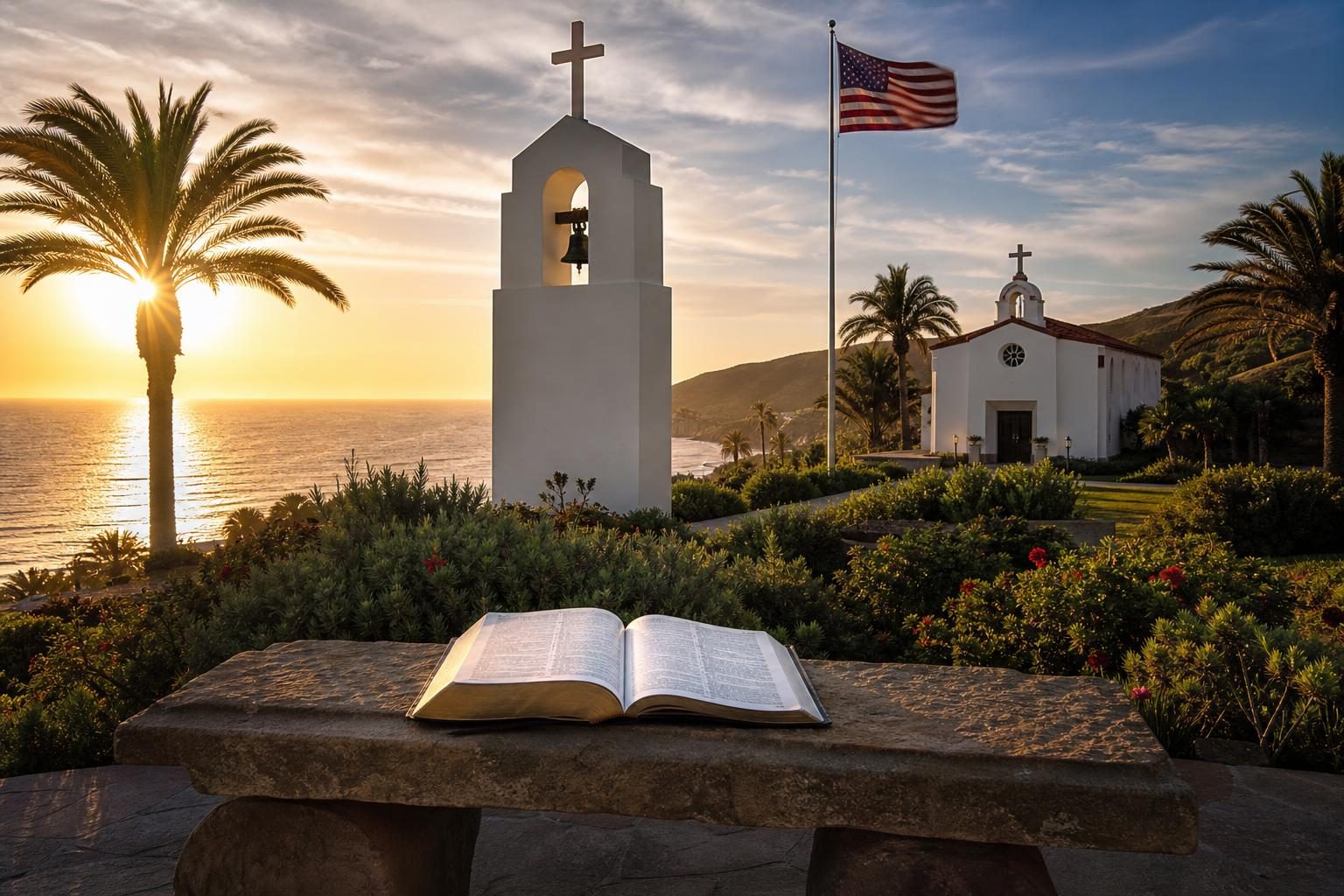
Pepperdine University has done something that should surprise no one who knows its history: it has written down what it believes. The Malibu school's new faith statement, called Pepperdine Believes, affirms that marriage unites a husband and a wife, and some alumni and faculty members are unhappy about it [1][2].
What the critics said
Fairness comes first. The College Fix reported that the statement has drawn criticism, particularly from alumni through an Instagram account called We Are Pepperdine [1]. Inside Higher Ed reported that a Facebook group called Concerned Pepperdine Alumni, with 961 members, has also rallied against it, and that associate mathematics professor Joshua Bowman described the faculty as a whole as very concerned, while saying he believes some colleagues support the statement [2]. Critics argue the document discriminates against LGBTQ+ people, and some faculty say they are unsure how it will affect their work, according to Inside Higher Ed [2]. The main point of contention is a line affirming "historic, orthodox Christian beliefs about human sexuality" [2].
Those concerns deserve a respectful hearing, and the people raising them are part of the Pepperdine family. But the statement itself is more modest, and more welcoming, than the criticism suggests.
What Pepperdine actually said
President Jim Gash announced the statement this fall, and it was unanimously approved by the Board of Regents and the university's Faith and Heritage Committee, The Christian Post reported [3]. It is the first major expansion of Pepperdine's public statement of faith since 1970 [2][3]. The board said it acted because, in a polarized moment, the phrase Christian higher education can mean very different things to different people, and leaving the school's convictions vague would not serve the community [1][2].
According to coverage of the statement, a footnote explains that the university's view of sexuality is rooted in the creation account of Genesis and that sexual relations outside marriage are inconsistent with Scripture as understood by Christian churches throughout history, including the Churches of Christ [1][2]. That is the same teaching Jesus affirmed when he pointed his listeners back to the beginning, when God made them male and female and joined husband and wife as one flesh (Matthew 19:4-6; Genesis 2:24).
Just as important is what the statement does not do. No one will be asked to sign it, and no one is required to agree with it, the board clarified in a set of answers to frequently asked questions, Inside Higher Ed reported [2]. The same FAQ says non-Christian students and employees are welcome, and the board stressed that the statement does not diminish its respect and support for community members who hold different convictions [2]. Inside Higher Ed noted that the FAQ does not explicitly address LGBTQ+ students and employees [2]. Still, that is not exclusion. It is honesty, offered with charity.
The law protects a church school's convictions
A Christian university stating Christian beliefs is not a scandal; it is exactly what American law anticipates. Title IX, the federal law barring sex discrimination in education, does not apply to an institution controlled by a religious organization to the extent that applying it would be inconsistent with that organization's religious tenets, according to the U.S. Department of Education [4]. The department notes that a school may point to Scripture, doctrinal statements and statements of faith to show those tenets [4]. A written faith statement is precisely the kind of document the law contemplates.
The Constitution adds a deeper layer of protection. In Our Lady of Guadalupe School v. Morrissey-Berru, decided 7-2 in 2020, the Supreme Court held that the First Amendment's religion clauses barred employment discrimination claims brought by two teachers at Catholic schools, building on its 2012 Hosanna-Tabor decision recognizing a ministerial exception [5]. The Court looked at what the teachers actually did in passing on the faith rather than at their job titles, and stressed the independence of religious schools in matters of faith and doctrine [5]. A university that asks its regents to articulate its theology is exercising that independence, not abusing it.
Pepperdine is also not alone. In early 2024, Abilene Christian University, another school affiliated with Churches of Christ, reaffirmed its existing policy on sexuality despite an alumni-led petition urging a more progressive stance, Religion Unplugged reported [6]. Its board paired that decision with a commitment to engage the issue with Christian care and compassion [6]. Conviction and kindness are not opposites. The best Christian colleges hold both.
What comes next at Pepperdine will likely be a long conversation rather than a quick reversal. A faculty member told Inside Higher Ed that the board had been warned the sexuality section would cause problems and chose to keep it anyway, and that the regents do not appear inclined to revise it [2]. Alumni critics show no sign of stopping either [1][2].
That conversation can be a healthy one. Students and families who choose Pepperdine deserve to know what it teaches, and those who disagree deserve to be treated with dignity. The statement offers both. In an age when many institutions drift from their founding faith one quiet edit at a time, Pepperdine chose to say plainly what it believes while keeping its doors open to those who see things differently. That is worth defending.
Sources
- [1]Opens in a new tab ↗
- [2]Inside Higher EdFaculty, Alumni Rally Against Pepperdine Faith StatementOpens in a new tab ↗
- [3]The Christian PostPepperdine University releases faith statement clarifying beliefs that shape its identityOpens in a new tab ↗
- [4]U.S. Department of EducationTitle IX ExemptionsOpens in a new tab ↗
- [5]Legal Information Institute (Cornell Law School)Our Lady of Guadalupe School v. Morrissey-BerruOpens in a new tab ↗
- [6]Religion UnpluggedAbilene Christian University Reaffirms Stance On LGBTQ RelationshipsOpens in a new tab ↗
Have you ever been censored or shadow-banned on social media?
- Yes
- I think so
- No
- I'm not on social media
More in Pushback

UC Students Rally to Keep the SAT Banned, but the Campus Math Crisis Makes the Case for Bringing It Back
Overnight on Report Card with Rebecca Hartman
Arizona Democrats Plan to Drop the State's Down Syndrome Abortion Protection. The Facts Make the Case for Keeping It
Overnight on Mother & Child with Elena Vasquez
Newsom Wants California to Hold America's AI Off Switch. The Constitution, and His Own Veto, Say Otherwise
Last night on First Principles with Benjamin Stone
Were you there?
If you were at the scene, or this story touched your life, tell us what you saw and what it was like.
Discussion 0
Sign in or create a free account to join the discussion.
No comments yet. Start the discussion.