
 This morning on The Bottom Line with Douglas Park
Nutrition Is in SNAP's Name: Why 18 States Are Right to Keep Soda and Candy Off the Taxpayer's Tab
A new class action asks a federal judge to erase state limits on buying soda and candy with SNAP benefits. The law, USDA's own data and the cost of diabetes all point the other way.
Filed November 24, 2026 · 📍 New York City, NY 10007
Were you there? Share your story
Key points
- A Nov. 18 class action by 17 SNAP recipients and a South Carolina retailers' group seeks to void USDA-approved soda and candy limits in 18 states.
- Federal law says SNAP exists to raise nutrition levels in low-income households, and USDA data ranked soft drinks the top item in SNAP carts.
- Medicare and Medicaid pay a large share of diabetes costs, so taxpayers risk paying for the soda and then for the illness.
- USDA has vowed to defend the waivers and has appealed a June ruling that voided limits in five states; the new case is before the same judge.
A coalition of food-stamp recipients and a convenience-store trade group has asked a federal judge to wipe out the nutrition rules that 18 states have adopted for the Supplemental Nutrition Assistance Program. The class action, filed Nov. 18 in federal court in Washington by the National Center for Law and Economic Justice, targets USDA-approved waivers that keep SNAP benefits from paying for items such as soda and candy [1]. The named plaintiffs are 17 SNAP recipients and the South Carolina Convenience & Petroleum Marketers Association [2].
Their case deserves to be stated fairly. The suit argues that the Agriculture Department exceeded its legal authority in approving the restrictions and failed to seek the public comment the law requires [2]. Several plaintiffs say they live with conditions such as diabetes or hypoglycemia and rely on sugary items to manage drops in blood sugar [1]. The complaint seeks to speak for more than 11 million people who receive SNAP in the affected states [1]. Those are real concerns from real families, and they should be heard with respect.
But respect for the plaintiffs does not require agreeing with them. Nothing in these waivers stops anyone from buying a soda. They decide only what a taxpayer-funded nutrition benefit will cover.
What the Law Says SNAP Is For
Start with the statute. When Congress declared the program's purpose, it said the aim was to safeguard the nation's health and well-being by "raising levels of nutrition among low-income households" [4]. The same section says the program exists to help those households obtain a more nutritious diet [4]. Nutrition is not decoration here. It is in the program's name and in its mission statement.
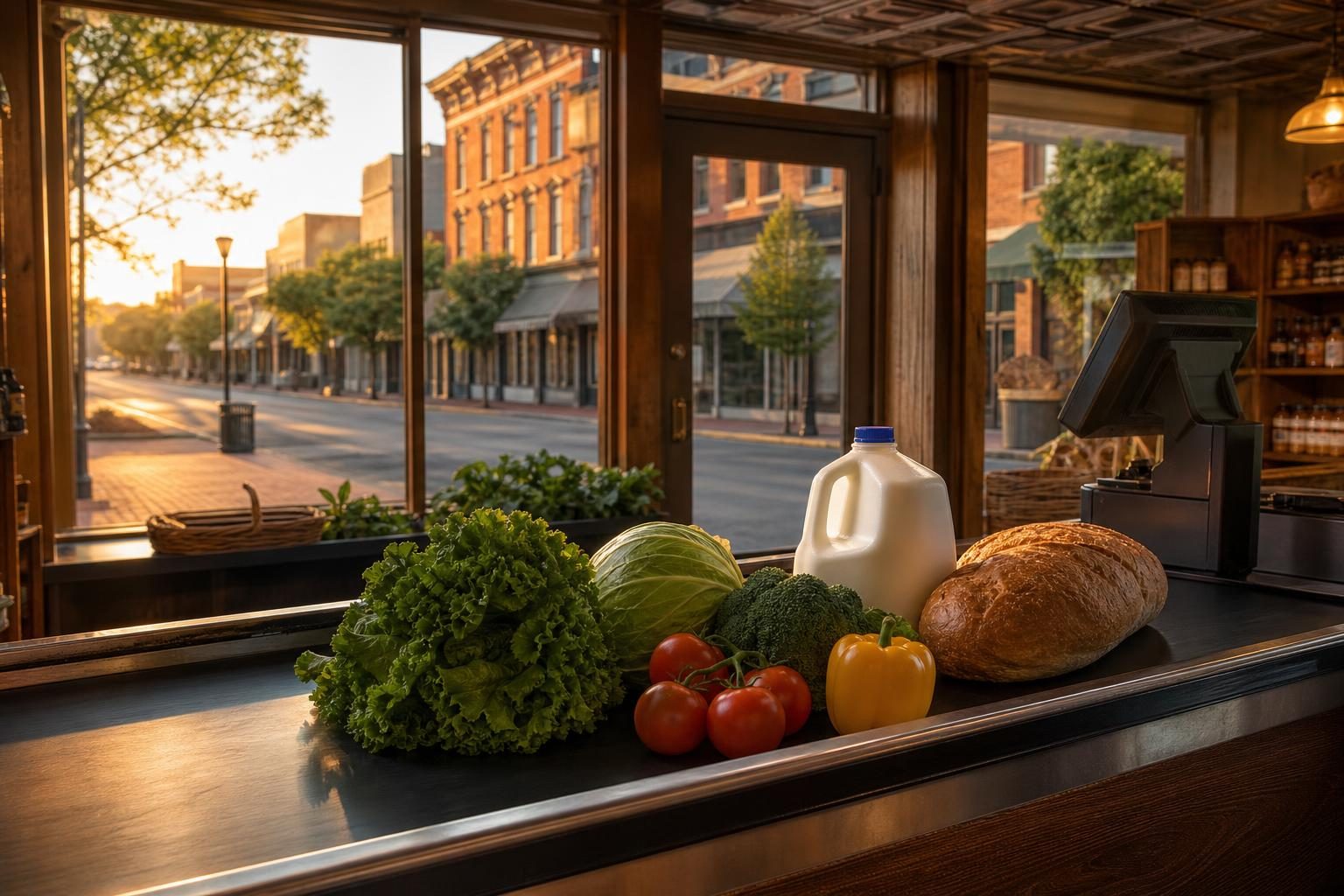
Now look at what the money buys. In the grocery transaction data USDA analyzed for its 2016 study of SNAP purchases, soft drinks ranked as the single largest commodity in the carts of SNAP households, at 5.44 percent of their food spending [3]. For households not on SNAP, soft drinks ranked second, at 4.01 percent [3]. When the top item in a nutrition program's shopping cart offers no nutrition, reform is not cruelty. It is common sense.
The bill does not stay at the checkout counter. A state-by-state analysis in the journal Diabetes Care found that, in the average state, Medicare paid roughly 35 percent of the medical costs tied to diagnosed diabetes in 2021, and Medicaid paid roughly 23 percent [5]. The federal government's position is that these limits stop public money from subsidizing purchases that worsen diabetes and other chronic illness [1]. So taxpayers risk paying twice: once for the sugary drink, and again through Medicare and Medicaid for the illnesses that follow.
This Was Never a Partisan Idea
Critics like to cast these limits as a new crusade from the right. History says otherwise. In 2010, New York City Mayor Michael Bloomberg sought federal permission to keep sugary drinks out of food-stamp purchases in his city, and the Obama-era USDA turned the request down the following year [6]. The logic crosses party lines: a program meant to nourish should not underwrite products that do the opposite.
The states now standing behind their waivers stretch from Florida and Texas to Hawaii, Idaho and Virginia [1]. The rules differ from place to place. Florida's covers soda, energy drinks, candy and prepared desserts, while Hawaii's reaches only soft drinks [1]. That variety is federalism working as designed.
Who Is Pushing Back, and What Comes Next
The Agriculture Department has said it intends to defend its approval of all 18 waivers vigorously and without delay [2]. That commitment matters. The plaintiffs are building on a June decision by U.S. District Judge Amy Berman Jackson, who vacated the approvals for Colorado, Iowa, Nebraska, Tennessee and West Virginia after finding, among other things, that USDA had relied on the wrong section of the law [2]. That relief reached only those five states, which is why the new suit seeks a broader class [1]. The department has appealed the June ruling, and the new case has been assigned to Judge Jackson as well [2].
That ruling addressed the limits of the agency's legal authority, not whether soda belongs in a nutrition program [2]. If the courts finally conclude that USDA needs clearer permission, the right answer is for Congress to provide it, not for the country to abandon the goal. Lawmakers who wrote nutrition into the program's purpose can surely write it into the program's rules.
Meanwhile, more states are still moving ahead. Several waivers, including those in Hawaii, Kansas, Missouri, Ohio and Wyoming, are not set to take effect until 2027 [1]. Their governors and legislators should hold steady while the appeal runs its course.
As a matter of budgets, this is an easy call. A program funded by working families should deliver what it promises. As a matter of values, it is easier still. Loving a neighbor means caring about his health, not only his hunger. Scripture calls the body a temple, and public policy can at least decline to pay for wearing it down.
Families who rely on SNAP deserve dignity, and part of dignity is a program that takes their well-being seriously. Keeping soda and candy off the taxpayer's tab does exactly that.
Sources
- [1]Opens in a new tab ↗
- [2]Opens in a new tab ↗
- [3]USDA Food and Nutrition ServiceFoods Typically Purchased by Supplemental Nutrition Assistance Program (SNAP) Households: AppendicesOpens in a new tab ↗
- [4]Cornell Law School Legal Information Institute7 U.S. Code § 2011 - Congressional declaration of policyOpens in a new tab ↗
- [5]Diabetes CareEconomic Costs Attributed to Diagnosed Diabetes in Each U.S. State and the District of Columbia: 2021Opens in a new tab ↗
- [6]Opens in a new tab ↗
Have you ever been censored or shadow-banned on social media?
- Yes
- I think so
- No
- I'm not on social media
More in Pushback
Gunmakers Ask Judge to Halt Maryland's Glock Ban
Today on First Principles with Benjamin Stone

No Religious Test: The Constitution and History Answer the Case Against JD Vance's Faith
This morning on Faith & Family with Ethan Calloway

Death Threats and Stolen Banners Don't Win Arguments: What the University of Idaho Owes Its Conservative Students
This morning on Report Card with Rebecca Hartman
Were you there?
If you were at the scene, or this story touched your life, tell us what you saw and what it was like.
Discussion 0
Sign in or create a free account to join the discussion.
No comments yet. Start the discussion.