
 Today on Launch Pad with Hannah Lindgren
Voyager 1 Goes Quiet on Science Data After Milestone
Days after becoming the first human-made object one light-day from Earth, the 49-year-old probe is sending home only a bare signal, and NASA engineers are working the problem from 16 billion miles away.
Filed November 24, 2026 · 📍 Washington, DC 20001
Were you there? Share your story
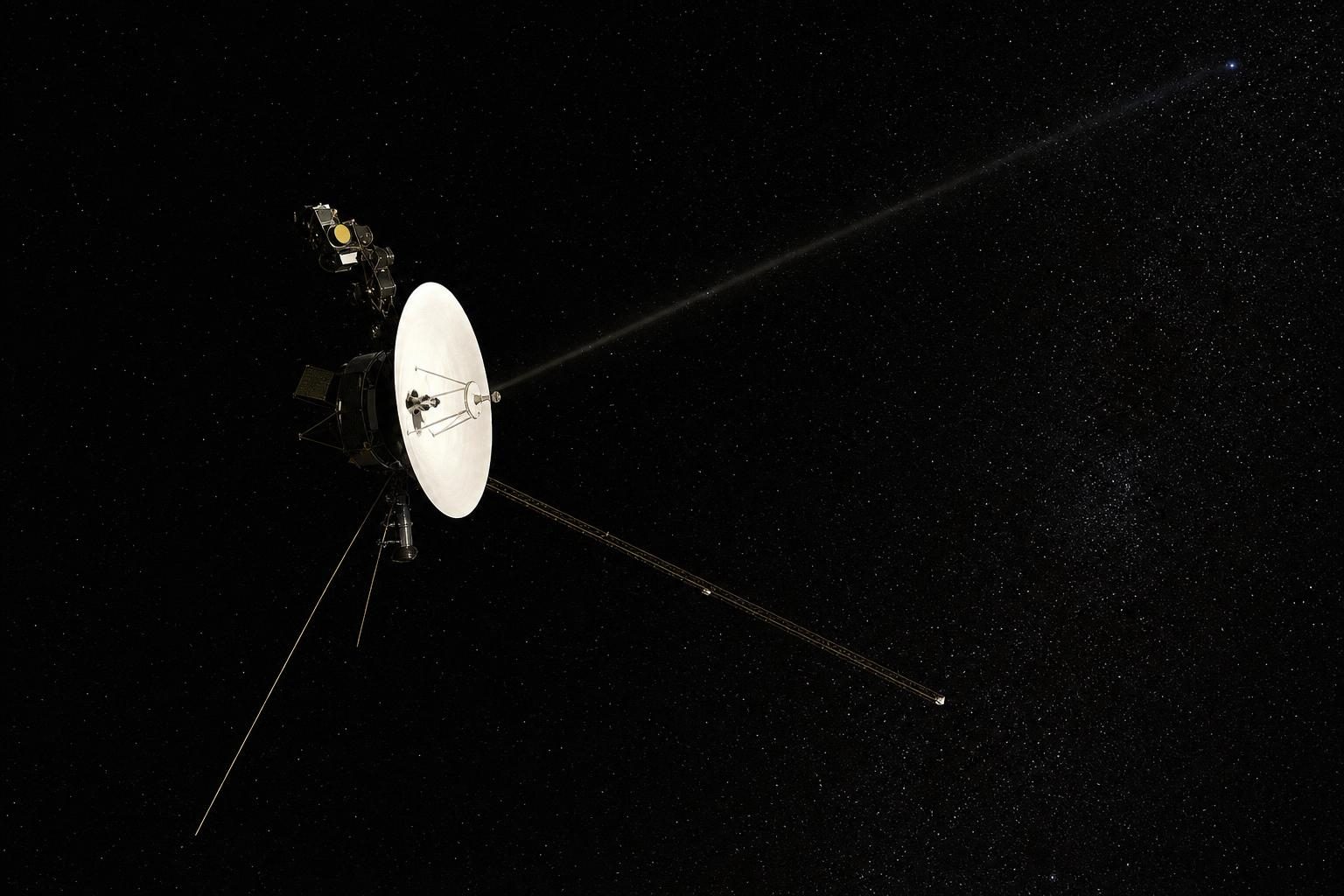
Part of our continuing coverage: One Light-Day From Home: Voyager 1, Launched in 1977, Becomes the First Human-Made Object So Far From Earth
Key points
- NASA detected the problem on Nov. 14; Voyager 1 has since sent only a carrier signal, with no science or engineering data.
- The signal shows the probe is still pointed at Earth and its radio equipment is working.
- NASA has not confirmed the cause, but the probe's data computer is the leading suspect.
- A similar glitch in 2023 took engineers until June 2024 to fix.
Voyager 1 made history last week by becoming the first human-made object to reach one light-day from Earth. Now the most distant spacecraft ever built has gone quiet on the science that made the trip worthwhile.
NASA first detected the problem on Nov. 14, and since then the probe has been sending home only a carrier signal, a steady radio tone with no science or engineering data inside it, CNN reported Tuesday [1][2]. A NASA spokesperson told CNN the issue was ongoing but gave no further details [1].
What the Signal Tells Engineers
There is good news hidden in that plain tone. The carrier signal shows that the probe's navigation computer is still keeping Voyager 1 pointed at Earth and that its antenna and transmitting equipment are working, according to CNN [1].
The trouble appears to lie in the onboard computer that gathers readings from the science instruments and packages them for the trip home, Live Science reported [3]. NASA has not confirmed that this flight data system is to blame, though the available information suggests it may be, CNN reported [1].
Engineers are also checking whether the problem is tied to a roughly 48-hour loss of all contact with the probe in October, an interruption that cleared up on its own, according to CNN and Live Science [1][3].
A Familiar Problem
The Voyager team has been here before. In November 2023, Voyager 1 began sending back unreadable data, and the problem was not solved until June 2024, Live Science reported [3]. In that case, engineers traced the fault to a corrupted memory chip in the flight data system, Space.com reported [5], and eventually worked around it from Earth.
Project manager Suzanne Dodd said at a NASA briefing that the team has seen this kind of anomaly before and is confident the science data will flow again soon, according to Live Science [3]. She also cautioned that progress will be slow, since each round of diagnosis takes about two days because of the vast distance and the probe's very low data rates [3][4].
Why It Still Matters
Voyager 1 launched in 1977 and is approaching its 50th anniversary next year. It crossed the one light-day mark on Nov. 18, meaning a radio signal traveling at the speed of light now needs a full day to reach it, Space.com reported [4].
The team celebrated that milestone even as the glitch lingered, Space.com reported [4]. And they have earned their confidence. The engineers who keep this probe alive are working with technology built before most Americans now living were born, with computers that have a tiny fraction of the memory in a modern phone, and they have rescued it again and again.
It is a story of American patience and ingenuity: a machine built in the 1970s, still reaching back across the dark, and a team on the ground that refuses to give up on it. Liberty Bell will report when Voyager 1's science data starts flowing again.
Sources
- [1]Opens in a new tab ↗
- [2]Opens in a new tab ↗
- [3]Live ScienceVoyager 1 stops sending science data ahead of its light-day milestone, but NASA has a planOpens in a new tab ↗
- [4]Space.comVoyager 1 team, unbowed by communications glitch, celebrates epic 1-light-day distance milestoneOpens in a new tab ↗
- [5]Opens in a new tab ↗
Do you trust scientific experts more or less than five years ago?
- More
- Less
- About the same
More in Science & Space
Astronomers Find the Most Distant Quasar Ever Seen
Overnight on Launch Pad with Hannah Lindgren
Kilauea Blasts 650-Foot Lava Fountains in 57th Eruption
Overnight on Launch Pad with Hannah Lindgren
China Set to Fly Pakistan's First Astronaut to Its Station
Overnight on Launch Pad with Hannah Lindgren
Were you there?
If you were at the scene, or this story touched your life, tell us what you saw and what it was like.
Discussion 0
Sign in or create a free account to join the discussion.
No comments yet. Start the discussion.