
 Overnight on The Bottom Line with Douglas Park
White House Asks Congress to Fund Golden Dome, Submarines in Next Stopgap
A 12-page anomalies request seeks billions for missile defense, Navy submarines and NASA's moon program in any continuing resolution passed before funding runs out after Dec. 11.
Filed November 24, 2026 · 📍 White House, DC 20500
Were you there? Share your story
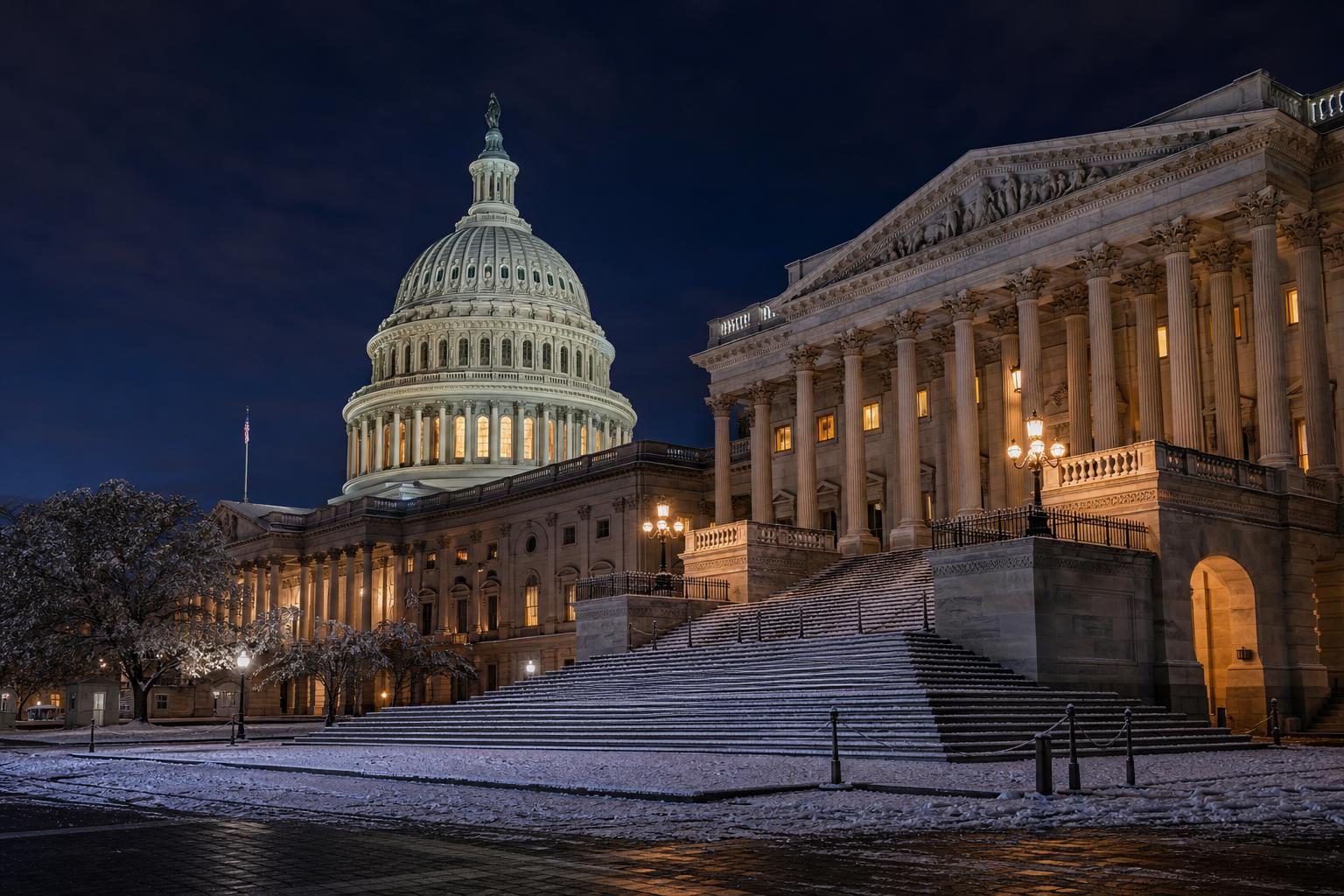
Part of our continuing coverage: All 12 Senate Spending Bills Are Finally on the Table, but With Dec. 11 Close, Congress Is Eyeing Another Stopgap
Key points
- The White House sent Congress a 12-page anomalies request for the next stopgap ahead of the Dec. 11 funding deadline.
- It seeks an annualized $5 billion for Golden Dome, about $21.3 billion more a year for Navy submarines and money for NASA's Artemis program.
- Other items include air traffic controller funding, wildfire suppression money, USAID closeout authority and a $70 million CDC surveillance increase.
- Democrats have signaled resistance, and House Democrats are split over using the stopgap to defund the Iran war.
With federal funding set to run out after Dec. 11, the White House has sent Congress a 12-page list of "anomalies," targeted exceptions it wants written into the next stopgap bill so that several of President Trump's top priorities keep moving even if lawmakers fail to finish full-year spending bills [1].
The request seeks billions of dollars for the Golden Dome missile defense shield, Navy submarine programs and NASA's Artemis effort to return American astronauts to the moon, The Hill reported [1]. NBC News reported that the list also includes more money for air traffic controllers [2].
What's in the request
The largest items are defense-related. The administration asked for an annualized funding level of $5 billion for Golden Dome, the planned missile defense system over the United States, warning that without it the program could not continue production that began with money from the One Big Beautiful Bill Act [1]. It is also seeking an increase of roughly $21.3 billion a year for Navy submarine programs, along with authority to begin buying materials for the first Trump-class battleship [1].
Beyond defense, the request covers additional money for wildfire suppression because of a possible funding shortfall, as well as added authorities to finish closing out the U.S. Agency for International Development [1]. NBC News reported that the Centers for Disease Control and Prevention is seeking a $70 million annualized increase for infectious disease surveillance programs [2].
A continuing resolution generally keeps agencies running at the prior year's spending levels rather than writing a new budget line by line. Anomalies are the exceptions to those current levels: specific accounts that get more money, or new authority, because a flat freeze would stall work already underway [1]. They are a routine feature of stopgap bills, but every one is a policy choice that Congress must approve.
This is not the first time the administration has used the tool to protect shipbuilding. In July, USNI News reported that the Office of Management and Budget asked Congress, in an earlier stopgap proposal, to let the Navy start work on the Trump-class battleship program, buy more critical munitions and fund long-lead materials for a future aircraft carrier, with no more than $1 billion for battleship advance procurement [6].
The politics
The request faces a hard road. Democrats have signaled the list is unlikely to pass as part of a stopgap, according to The Hill [1]. This is a lame-duck session, and Democrats take over the House majority when the new Congress convenes in January [3]. In the meantime, House Democrats are divided over whether to risk a shutdown in an effort to cut off funding for the Iran war [3]. Punchbowl News reported that talks over the next stopgap involve more than its length, including language restricting the war [4].
That fight carries real stakes for national security. Using a must-pass funding bill to tie the commander in chief's hands in the middle of a conflict would be an extraordinary step, and it would put the government's basic operations at risk in the process. The administration's case is that missile defense and submarines, the backbone of American deterrence, are exactly the kind of long-lead investments that should not be frozen by Washington's habit of governing by stopgap.
Regular appropriations are moving, but slowly. Senate appropriators released five fiscal 2027 spending bills on Nov. 16, Forbes reported [5]. Committee Chair Susan Collins has backed extending a provision in the current stopgap that temporarily blocks a proposed White House budget office rule on federal grantmaking, though none of those five bills carries that language [5]. That leaves the next stopgap as the likely vehicle for such side issues too, and Punchbowl News identified several non-funding items lawmakers are watching in the talks [4].
What comes next
Congress must pass another stopgap or full-year bills before funding lapses after Dec. 11 to avoid a partial shutdown [1]. The key decisions over the next two and a half weeks are how long the next stopgap runs, which of the White House's requested exceptions survive, and whether Iran war language becomes the price of Democratic votes [3][4].
For taxpayers, the lesson is familiar. Every stopgap postpones the hard work of setting priorities, and every anomaly shows which programs an administration believes cannot wait. Golden Dome, submarines and the moon program are now at the top of that list, and lawmakers have days, not months, to decide.
Sources
With Democrats taking Congress, what should Republicans focus on first?
- Blocking bad bills
- Working on prices and costs
- Winning back the House in 2028
- Confirming judges before January
More in Politics

America's Mayor Gets the Medal of Freedom Today
Overnight on The Briefing Room with Claire Donovan

Trump's Death Row Stand Draws Newsom's Pardon Counterattack
Last night on The Briefing Room with Claire Donovan

Vance, Rubio Work the Qatar Channel as Iran Stalls
Last night on The Briefing Room with Claire Donovan
Were you there?
If you were at the scene, or this story touched your life, tell us what you saw and what it was like.
Discussion 0
Sign in or create a free account to join the discussion.
No comments yet. Start the discussion.