
 Tonight on The Power Grid with Priya Desai
Eighteen Months and a First in Decades: Why a New Congress Shouldn't Put America's Nuclear Comeback on Ice
Critics warned that deadlines on nuclear reviews would endanger safety. The first big permit under the new timetable, for four advanced reactors in Texas, tells a different story.
Filed November 23, 2026 · 📍 White House, DC 20500
Were you there? Share your story
Key points
- Trump's 2025 orders set an 18-month limit for NRC decisions on new reactor applications.
- The NRC permitted Dow and X-energy's four-reactor Long Mott project in Texas on that schedule.
- It is the first permit for a high-temperature gas-cooled reactor in nearly 60 years, World Nuclear News reported.
- Democrats take over congressional oversight of the agency in January.
When President Trump signed executive orders in May 2025 to overhaul the Nuclear Regulatory Commission, he told the agency to reach final decisions on applications to build and operate new reactors within 18 months, according to the White House [2]. Democrats called the orders dangerous, and critics, including former regulators, warned that hard deadlines and staff cuts could compromise safety, NPR reported at the time [1].
Those warnings are about to carry new weight. After their midterm wins, Democrats will take over congressional oversight of the agency in January, the Daily Caller reported [5]. Before the new majority starts asking whether the NRC is moving too fast, it is worth looking at what the faster NRC has actually produced.
What Actually Happened
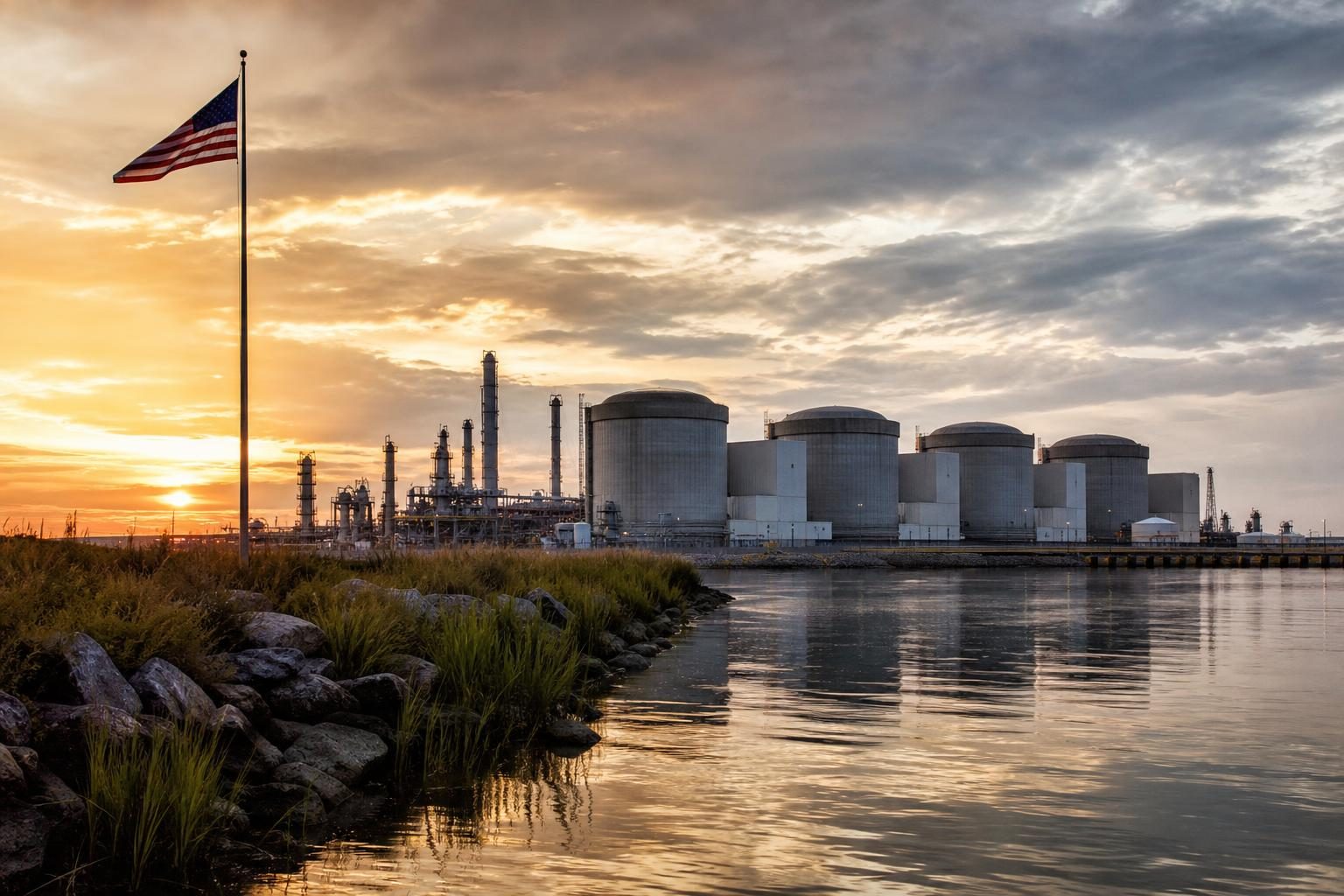
This month the NRC issued a construction permit for the Long Mott Generating Station, a project by Dow and X-energy to build four Xe-100 small modular reactors at Dow's Seadrift Operations site in Texas, the Energy Department and World Nuclear News reported [3][4]. It is the first construction permit for a high-temperature gas-cooled reactor in nearly 60 years, and the first time the NRC has issued a construction permit for a reactor at an industrial site, according to World Nuclear News [3].
The agency kept its word on timing. "We delivered on the 18-month schedule," regulators said, according to the Daily Caller, which reported that federal regulators are clearing new reactors for construction ahead of schedule [5].
Eighteen months is not a rubber stamp. It is a year and a half of review for a first-of-its-kind plant, and the permit is not the end of the process. It allows the companies to move toward construction readiness, including finishing the design and lining up the supply chain, the Energy Department said [4]. Safety work continues at every step.
The Facts Behind the Fear
The case against deadlines rested on a prediction: that a regulator told to decide on time would cut corners. The first major test of the new timetable does not show that. It shows an agency that reviewed a new reactor design, at a new kind of site, and reached a decision on schedule [3][5].
That matters for families who pay electric bills and for workers who want the jobs that come with new plants. Too many American energy projects have been stalled by uncertainty over how long approval will take. A permit process that can be predicted is not a threat to safety. It is a precondition for anyone being willing to build at all.
National Review made the broader point in a column arguing that the administration's approach to cutting red tape is starting to pay off, bringing the country its first new reactors of the century [6]. That is not a partisan boast. It is the result supporters of nuclear power in both parties have said they wanted for years.
Oversight, Yes. Obstruction, No.
Congress has every right to oversee the NRC. Under the Constitution, it writes the laws the agency carries out and controls the money it spends, and asking hard questions about safety is part of that job. Nobody should want a regulator that answers to no one.
But oversight should ask whether the rules are being followed and whether the public is protected. It should not become a back door to slowing approvals that have already met the standard. If the new majority believes a specific permit was granted improperly, it should say which one and why. Vague warnings about speed are not evidence.
What Comes Next
The companies behind Long Mott still have decisions ahead before construction begins, and other applicants are waiting in line [4][5]. In January, Democrats will hold the gavels on the committees that oversee the agency [5]. The test for the new majority will be simple: whether it treats a regulator that finally works on time as a problem to be fixed or as a success to be built on.
The early evidence from the Texas coast is that America can still build hard things, safely and on a schedule. Congress should let that record speak before it tries to rewrite it.
Sources
- [1]Opens in a new tab ↗
- [2]The White HouseFact Sheet: President Donald J. Trump Directs Reform of the Nuclear Regulatory CommissionOpens in a new tab ↗
- [3]World Nuclear NewsUS issues landmark construction permit for Texas SMR plantOpens in a new tab ↗
- [4]U.S. Department of EnergyDow, X-energy Receive Construction Permit for Advanced Nuclear Project in TexasOpens in a new tab ↗
- [5]The Daily CallerReactor Permits Pile Up Under Trump As Democrats Prepare To Take Over Nuclear OversightOpens in a new tab ↗
- [6]Opens in a new tab ↗
Have you ever been censored or shadow-banned on social media?
- Yes
- I think so
- No
- I'm not on social media
More in Pushback

Due Process and Officer Safety Can Both Win in the ICE Locator Fight
Tonight on Trending Tonight with Maya Thompson
Before Texas Buys a Bullet Train, Read California's $231 Billion Receipt
Today on The Bottom Line with Douglas Park

Minnesota Vows a Semi-Auto Ban. The Second Amendment and 32 Million Owners Say Otherwise
Today on First Principles with Benjamin Stone
Were you there?
If you were at the scene, or this story touched your life, tell us what you saw and what it was like.
Discussion 0
Sign in or create a free account to join the discussion.
No comments yet. Start the discussion.