
 Today on First Principles with Benjamin Stone
Minnesota Vows a Semi-Auto Ban. The Second Amendment and 32 Million Owners Say Otherwise
The state's new Democratic majority plans to ban AR-15-style rifles when its session opens Jan. 12, six weeks after the Supreme Court hears whether the Constitution protects them.
Filed November 23, 2026 · 📍 Supreme Court, DC 20543
Were you there? Share your story
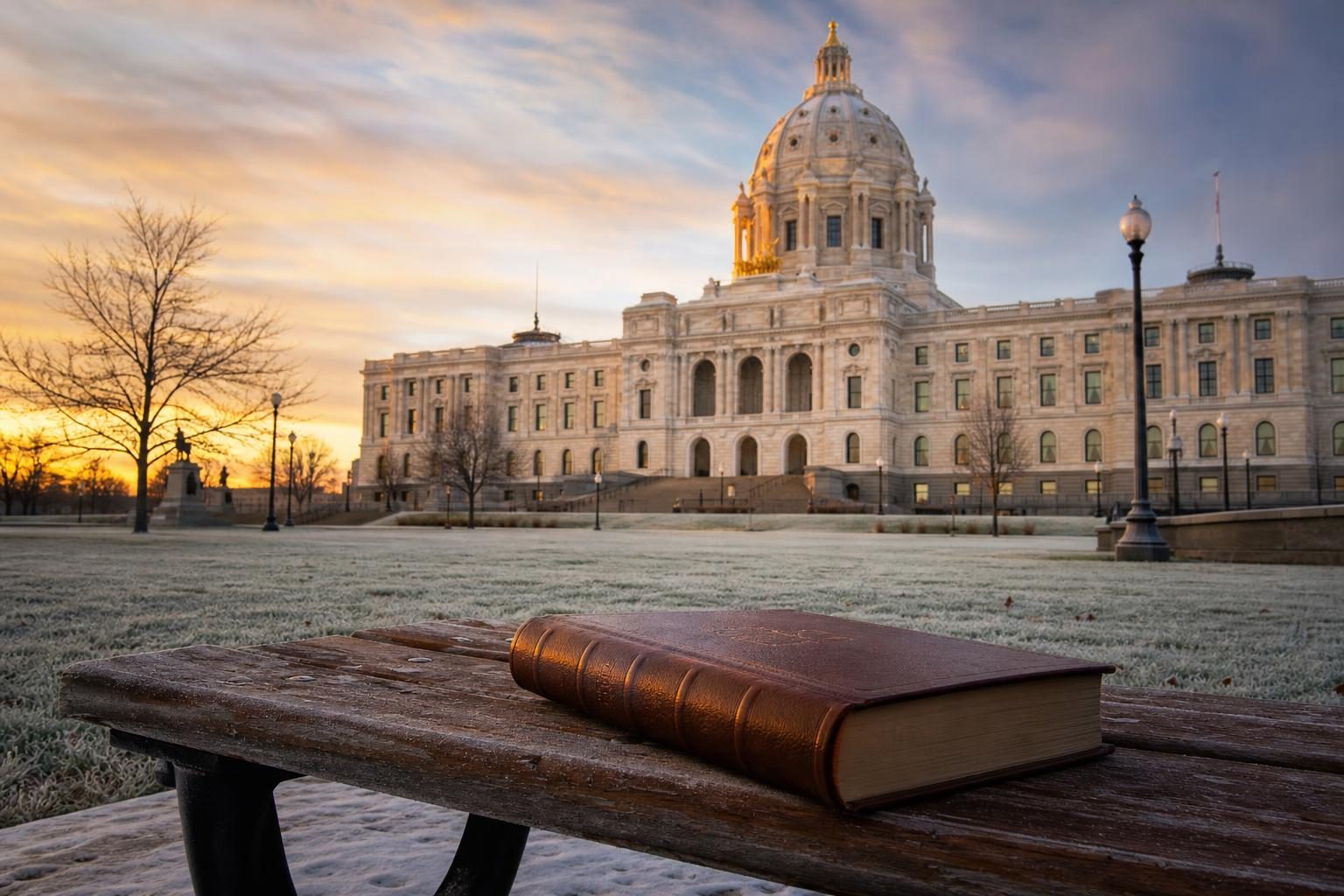
Part of our continuing coverage: The Facts Don't Back Up an AR-15 Ban: What the Constitution, the FBI and Millions of Owners Tell the Justices Before Dec. 2
Key points
- Incoming Minnesota House Speaker Zack Stephenson plans to introduce a semi-automatic weapons and magazine ban when the session opens Jan. 12.
- The Supreme Court hears Viramontes v. Cook County and Grant v. Higgins on Dec. 2 on whether AR-15-style rifles are protected.
- Industry estimates put about 32 million such rifles in circulation; FBI data listed rifles of all kinds in 364 of 13,927 murders in 2019.
- Republicans blocked a similar ban last session in an evenly divided House.
Minnesota Democrats say their midterm sweep has cleared the way for a ban on semi-automatic rifles. Rep. Zack Stephenson of Coon Rapids, the Democratic-Farmer-Labor lawmaker expected to become House speaker, has said a ban on semi-automatic weapons and on so-called high-capacity magazines will be introduced when the 2027 session opens Jan. 12, CBS Minnesota reported [1]. With the House, the Senate and the governor's office now in Democratic hands, supporters believe the votes will finally be there, and the Daily Caller reported that the party is preparing a broad gun-control push [1][2].
The effort grew out of real grief. Last spring the Minnesota Senate passed a sweeping package that included a ban on assault-style weapons on a 34-33 party-line vote, after an emotional debate shaped by a deadly school shooting, Axios reported [3]. The measure stalled in a House split evenly between the parties [2][3].
No one should doubt the sincerity of lawmakers who want to protect children. Every family in the state wants the same thing. But a good intention does not settle what the Constitution allows, and on that question the people of Minnesota are about to get an answer from a higher authority than the Legislature.
The Supreme Court Takes Up the Question First
On Dec. 2, six weeks before Minnesota's session opens, the U.S. Supreme Court is set to hear Viramontes v. Cook County together with a Connecticut challenge, Grant v. Higgins [4]. The question the justices agreed to decide is whether the Second and Fourteenth Amendments protect the right to possess AR-15 platform and similar semi-automatic rifles [4].
That is the very category of firearm Minnesota Democrats want to outlaw. The Fourteenth Amendment is what applies the Second Amendment to the states, so whatever the justices decide will bind St. Paul as surely as it binds Chicago and Hartford.
The framework they will apply is not new. In District of Columbia v. Heller in 2008, the Court held that the Second Amendment protects an individual right to keep and bear arms, and it tied that protection to the kinds of arms in common use by law-abiding citizens for lawful purposes. In New York State Rifle and Pistol Association v. Bruen in 2022, the Court said modern gun laws must be consistent with the nation's historical tradition of firearms regulation. Both cases sit at the center of the arguments now before the justices [4].
Common Use Is Not a Close Call
If the test is whether a rifle is commonly owned by ordinary Americans, the numbers are hard to wave away. The National Shooting Sports Foundation, the firearms industry's trade group, estimates that about 32 million modern sporting rifles, the industry's term for AR-15-style and similar rifles, have entered circulation in the United States since 1990 [5]. That figure is an industry estimate built from federal manufacturing and trade data, and it describes a rifle that tens of millions of ordinary Americans have chosen to buy [5].
The crime data tell the same story. In 2019, rifles of every kind were the recorded weapon in 364 of the 13,927 murders reported to the bureau [6]. Knives or other cutting instruments were listed in 1,476, and hands, fists and feet in 600 [6]. A ban aimed at the rifle least often used in murder asks millions of law-abiding owners to give up a constitutional right in exchange for very little public safety in return.
None of that diminishes the pain of a single family. It does mean that a law built on the wrong target can leave both the Constitution and the children it promises to protect worse off. Hardening schools, enforcing laws against violent offenders and getting help to people in crisis address the danger directly, and none of them requires turning a peaceful neighbor into a lawbreaker.
Who Is Pushing Back, and What Comes Next
Minnesota Republicans opposed the package as a bloc in the Senate and held the line in the evenly divided House last session [2][3]. Outside the state, the Supreme Court case has drawn friend-of-the-court briefs from groups on both sides [4]. Inside it, the new majority will have to defend its bill against the same constitutional questions the justices are about to answer.
The timeline now matters. The justices hear arguments Dec. 2, and a decision could come by the end of the Court's term next summer [4]. Minnesota's Legislature convenes Jan. 12 [1]. If lawmakers rush a ban into law before the Court rules, they risk passing a statute that the nation's highest court may soon say no state can enforce, and leaving taxpayers to fund the legal fight that follows.
The wiser course is patience. Let the Court finish its work, then let Minnesota build its school-safety plan on ground the Constitution clearly allows. The Second Amendment was written for exactly this kind of moment, when a new majority feels strongly and the rights of the minority still need protecting.
Sources
- [1]CBS MinnesotaIncoming Minnesota House Speaker Zack Stephenson vows to revive semi-automatic assault weapons banOpens in a new tab ↗
- [2]Opens in a new tab ↗
- [3]Axios Twin CitiesMinnesota Senate approves assault weapons ban after emotional debateOpens in a new tab ↗
- [4]SCOTUSblogViramontes v. Cook CountyOpens in a new tab ↗
- [5]Opens in a new tab ↗
- [6]FBI Uniform Crime ReportingExpanded Homicide Data Table 8: Murder Victims by Weapon, 2015-2019Opens in a new tab ↗
Have you ever been censored or shadow-banned on social media?
- Yes
- I think so
- No
- I'm not on social media
More in Pushback
Medicare for All Has a Europe Problem: Longer Lines, Higher Taxes and a Trust Fund Already Running Dry
Today on The Vance Edge with Sienna Vance
Fifty Rulebooks for One Federal Badge? Why Connecticut's ICE Mask Ban Ran Into the Constitution
Today on Order in the Court with Harold Whitmore
A Museum Worthy of the Republic: Why Honoring Washington Is a Win for Every Family
Today on Hollister Tonight with Jack Hollister
Were you there?
If you were at the scene, or this story touched your life, tell us what you saw and what it was like.
Discussion 0
Sign in or create a free account to join the discussion.
No comments yet. Start the discussion.