
 Today on The Power Grid with Priya Desai
Army Corps Takes a Second Look at Atlantic Shores Wind Permit as Senate Sends Permitting Overhaul to the House
The review of the 200-turbine project off Atlantic City landed days before the Senate passed a bipartisan permitting bill, renewing the fight over whether a federal permit can be reopened.
Filed November 23, 2026 · 📍 Atlantic City, NJ 08401
Were you there? Share your story
Key points
- The Army Corps confirmed Nov. 17 it will review its earlier approval for Atlantic Shores South off Atlantic City
- The project faced an invalidated EPA air permit in March and a court-cleared BOEM review in August
- The Senate passed the BAAJA permitting overhaul 62-33; its future in the House is uncertain
- Critics say the bill's permit-certainty language may not stop near-term federal actions against wind projects
The Trump administration is taking a second look at a federal approval for a large wind farm planned off the New Jersey shore, and the timing has put offshore wind back at the center of the biggest energy fight in Congress. Bloomberg reported that the administration is reassessing a permit for the project as the Senate neared a vote on legislation to overhaul how Washington approves major energy projects [1].
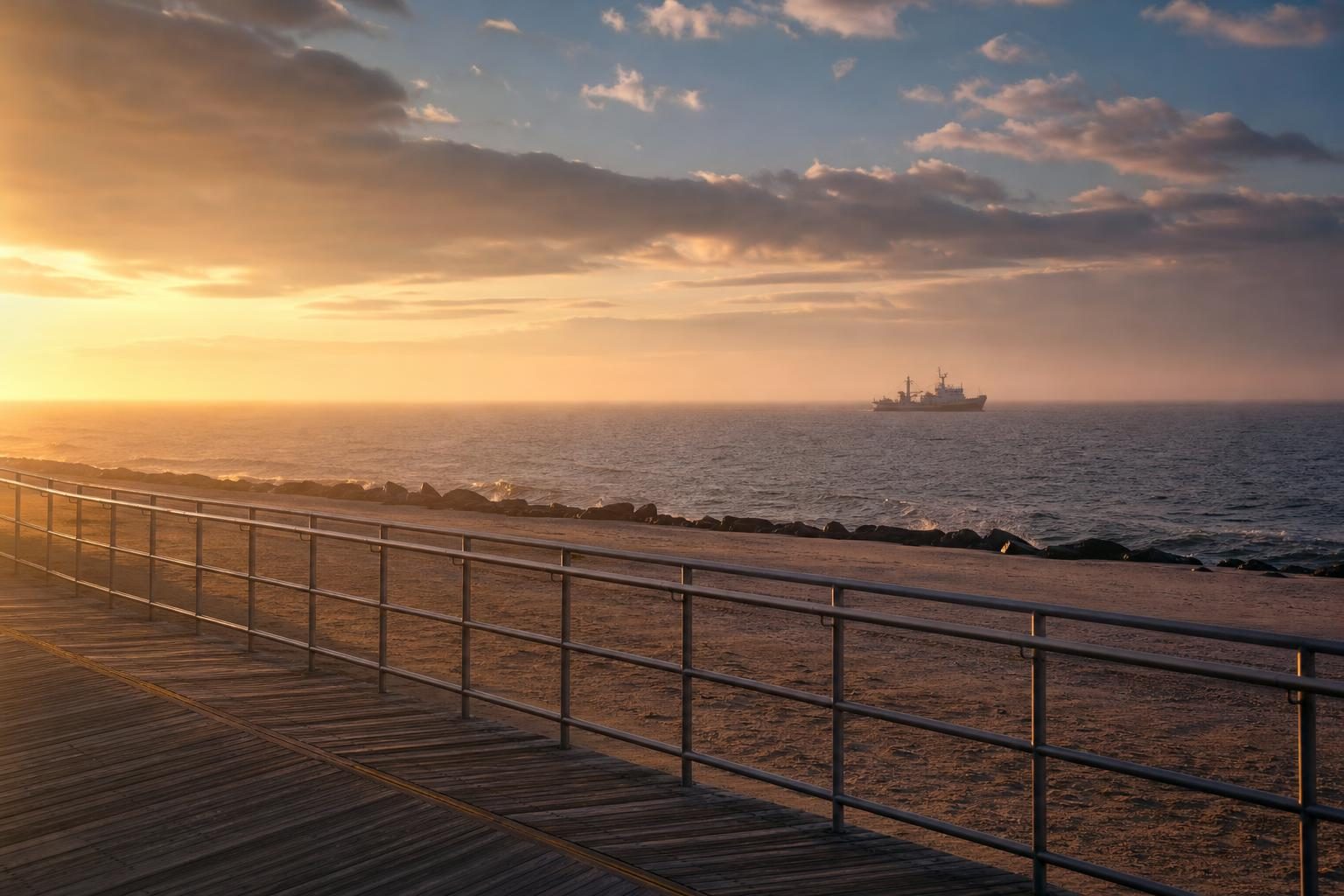
The U.S. Army Corps of Engineers confirmed on Tuesday, Nov. 17, that it plans to review the approval it previously issued for Atlantic Shores South, according to The Maritime Executive [2]. The project, which had already been postponed by its developers, would place as many as 200 wind turbines roughly nine miles off the coast of Atlantic City [2].
Two days later, the Senate passed the permitting bill anyway. Senators voted 62-33 on Thursday night to approve the sweeping measure, NBC News reported [4], sending it to the House, where Bloomberg said its future remains uncertain [5].
A Project Under Review on Several Fronts
The Army Corps review is the latest in a string of federal actions against Atlantic Shores. Bloomberg noted that the administration invalidated a key Environmental Protection Agency air permit for the project in March [1]. In August, a federal court cleared the way for the Bureau of Ocean Energy Management to reconsider the construction permits it had issued to the project under the Biden administration, E&E News reported [3].
Taken together, those steps mean the air permit, the construction approvals from the ocean energy bureau and now the Corps sign-off have all come under fresh federal scrutiny [1][2][3]. The Corps approval is one of the federal authorizations the project needs before work in the water can begin [2], so a reversal there alone could stop construction.
The administration's view is that projects approved in the previous administration deserve a careful second look before they are built, and the courts have so far allowed at least part of that review to go forward [3]. Developers and wind advocates see the same steps as an effort to undo permits that were lawfully granted.
The Wind Question in the Permitting Bill
The review came at a sensitive moment. The Bipartisan American Affordability and Jobs Act, known as BAAJA, is designed to make it easier to build pipelines, power lines and other big energy infrastructure, Bloomberg reported [5]. Fair treatment for wind projects has been key to winning Democratic support for the bill, according to Bloomberg, which also reported that a White House official said the President stands behind the bill and has worked in good faith with Senate Democrats to pass it [1].
The bill includes "permitting certainty" language meant to make approvals harder to undo once they are issued. But the Clean Air Task Force, an environmental group, argued that even after a manager's amendment, those provisions may not stop near-term federal actions against clean energy projects [6]. The group noted that the bill leaves out a House-proposed provision that would bar the government from asking a court to send a permit back for review without the permit holder's consent [6]. That is exactly the kind of tool being used against offshore wind now [3][6].
Why It Matters
For conservatives, this fight cuts two ways, and it is worth being honest about both. Offshore wind has been sold to New Jersey as an answer to rising power bills, but turbines produce power only when the wind blows, and the cost of a project that will stand in the ocean for decades ultimately lands on ratepayers. An administration that wants to keep the lights on and bills down has good reason to scrutinize a project of this size before construction starts.
At the same time, the whole point of permitting reform is that a permit should mean something. Pipelines, power plants and transmission lines need years of planning and billions of dollars in private money, and investors will not commit if every approval can be reopened when the White House changes hands. A future Democratic administration could use the same tools against a natural gas pipeline that are being used against Atlantic Shores today. A durable, predictable rulebook protects energy projects that conservatives favor as much as any other.
What Comes Next
The Army Corps has not said how long its review of Atlantic Shores South will take [2]. The permitting bill now heads to the House, where Bloomberg said its prospects are unclear [5]. Lawmakers will have to decide whether to accept the Senate's version, change it and send it back, or let the effort carry over to the next Congress, which convenes in January.
For New Jersey, the outcome will help decide whether the turbines planned off Atlantic City are ever built, and for the rest of the country, it will help settle how much a federal permit is really worth.
Sources
- [1]Opens in a new tab ↗
- [2]The Maritime ExecutiveUS Army Corps Confirms Review of NJ Offshore Wind Farm ApprovalOpens in a new tab ↗
- [3]Opens in a new tab ↗
- [4]Opens in a new tab ↗
- [5]Opens in a new tab ↗
- [6]Clean Air Task ForceEven after manager's amendment, BAAJA's permitting certainty provisions may not prevent near-term actions to stop clean energy projectsOpens in a new tab ↗
Should Congress speed up permits for pipelines and power plants?
- Yes, build more American energy
- Yes, but respect tribal and local input
- No, keep environmental reviews
More in Energy & Environment

Oil Slips Again as a Surplus Outweighs the Gulf's Dangers, Leaving Brent Far Below Its October Peak Heading Into the Holiday
This morning on The Power Grid with Priya Desai

ConocoPhillips Cashes Out of Norway in $4.4 Billion Sale
This morning on The Power Grid with Priya Desai
COP31 Runs Into a Second Day of Overtime as Turkey's Final Draft Leaves Out the Words 'Fossil Fuels'
Yesterday on The Power Grid with Priya Desai
Were you there?
If you were at the scene, or this story touched your life, tell us what you saw and what it was like.
Discussion 0
Sign in or create a free account to join the discussion.
No comments yet. Start the discussion.