
 Tonight on American Story with Joe Redhawk
Sovereignty on the Line: Tribes Take On Kalshi's Sports Bets
Two California tribes won a court order barring Kalshi's sports contracts on their lands, and tribal leaders are pressing Washington over the rules.
Filed November 20, 2026 · 📍 San Francisco, CA 94102
Were you there? Share your story
Key points
- A federal judge barred Kalshi's sports event contracts on the lands of two California tribes on Nov. 4.
- A Ninth Circuit panel found the tribes likely to win their claim under the Indian Gaming Regulatory Act.
- Kalshi says federal commodities law overrides tribal gaming law; tribal leaders say that sidesteps tribal and state gaming laws.
- Four tribes have partnered with Kalshi on prediction markets, showing Indian Country is divided.
Tribal nations are pressing their fight to keep Kalshi's sports contracts off their lands, and two California tribes now have a federal court order on their side.
A federal judge in San Francisco on Nov. 4 granted a preliminary injunction sought by the Blue Lake Rancheria and the Chicken Ranch Rancheria of Me-Wuk Indians, barring Kalshi from offering sports event contracts on those tribes' lands, The Block reported [1]. Judge Jacqueline Scott Corley of the Northern District of California issued the order, which covers contracts tied to football, basketball, baseball, soccer, tennis and UFC events, according to Legal Sports Report [2]. The tribes were told to give Kalshi maps of their boundaries by Nov. 13 so the company could geofence the land [2].
How the Tribes Won the Round
The win did not come easily. Corley first turned down the tribes' request in November 2025, Legal Sports Report reported [2]. In September, a Ninth Circuit panel found the tribes likely to succeed on their claim that Kalshi was violating the Indian Gaming Regulatory Act, the federal law that governs gaming on tribal lands, and sent the case back to her [2].
Before the order, Kalshi argued an injunction was unnecessary because it had worked with a location-checking firm to block trades from the tribes' lands [2]. The tribes answered that a member of the Blue Lake Rancheria Gaming Commission had completed a trade from tribal land anyway [2].
The Bigger Fight
Kalshi argues its sports contracts are federally regulated swaps under the Commodity Exchange Act, and that the Commodity Futures Trading Commission's authority overrides tribal gaming law, Tribal Business News reported [3]. Tribal gaming leaders say prediction-market companies are dressing up sports wagers as financial products to get around tribal and state gaming laws, and they object to new CFTC guidance that challenges geographic trading limits [3].
Indian Country is not of one mind. In October, Covers reported that four tribes had launched prediction markets in partnership with Kalshi [4]. Tribal groups and the company remain at odds over sports betting and prediction markets more broadly, Casinos.com reported [5].
Joe Redhawk's Take
This is a story about promises kept. Under the Indian Gaming Regulatory Act, tribes negotiate compacts with their states, and net gaming revenue has to go to tribal government, the general welfare of tribal members, economic development and charity [6]. By law, that money is meant to serve tribal communities [6].
When an app lets anyone with a phone place what amounts to a sports bet from inside a reservation, it goes around those compacts and the tribal governments that signed them. The tribes in California did not ask for a handout. They asked a court to enforce the law Congress wrote, and so far the courts are listening.
Some tribes will choose to partner with prediction markets, and that is their sovereign right. Others will defend the compacts that have worked for decades. Both choices belong to the tribes themselves.
What Comes Next
The case returns to Corley's court for the rest of the fight [2], and how federal regulators handle their guidance on geographic trading limits will shape how far the dispute reaches [3]. Expect more tribes to test the Ninth Circuit's reasoning in the months ahead.
Sources
- [1]Opens in a new tab ↗
- [2]Opens in a new tab ↗
- [3]Tribal Business NewsIndian Gaming Prediction Markets and Legal ChallengesOpens in a new tab ↗
- [4]Opens in a new tab ↗
- [5]Opens in a new tab ↗
- [6]Cornell Legal Information Institute25 U.S. Code 2710 - Tribal gaming ordinancesOpens in a new tab ↗
Which Native success story should American Story cover more?
- Tribal businesses
- Native veterans
- Tribal colleges
- Housing and family
More in Native America
Three Branches for the People: Sault Tribe Citizens Vote 2,697 to 990 to Separate Their Government's Powers
Tonight on American Story with Joe Redhawk
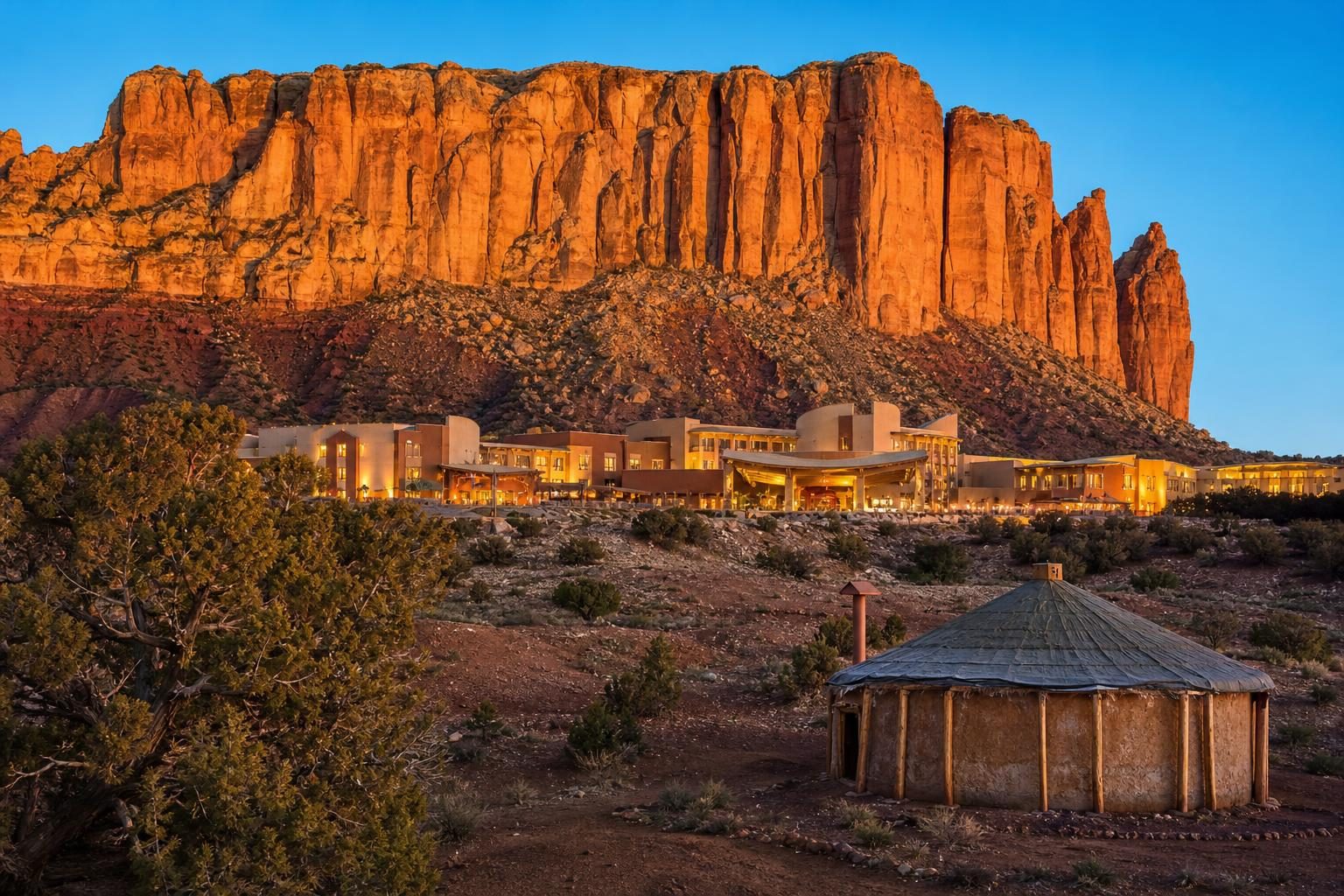
Navajo Gaming Repays $246.9 Million to the Navajo Nation, Clearing Its Debt to the Tribe Early
Yesterday on American Story with Joe Redhawk
A Degree to Carry a Language Forward: Bemidji State Will Train Fully Licensed Ojibwe Teachers as Navajo and Snoqualmie Enterprises Build for Tomorrow
On Wednesday on American Story with Joe Redhawk
Were you there?
If you were at the scene, or this story touched your life, tell us what you saw and what it was like.
Discussion 0
Sign in or create a free account to join the discussion.
No comments yet. Start the discussion.