
 Tonight on The Verdict Room with Natalie Sinclair
Judge Approves Bayer's $7.25 Billion Roundup Cancer Settlement
A St. Louis judge signs off on a two-decade payment plan for current and future Roundup cancer claims, months after the Supreme Court sided with Monsanto on warning labels.
Filed November 20, 2026 · 📍 St. Louis, MO 63101
Were you there? Share your story
Story tracker
Our anchors are following this story. New details will appear here as they come in.
Key points
- St. Louis Circuit Judge Timothy Boyer gave final approval Friday to Bayer's settlement of up to $7.25 billion.
- The deal covers current and future non-Hodgkin lymphoma claims and pays out over roughly two decades.
- Bayer denies Roundup causes cancer; some plaintiffs' lawyers say the payments are too low, and an appeal is possible.
- In June, the Supreme Court ruled 7-2 that federal law preempts state failure-to-warn claims over Roundup's label.
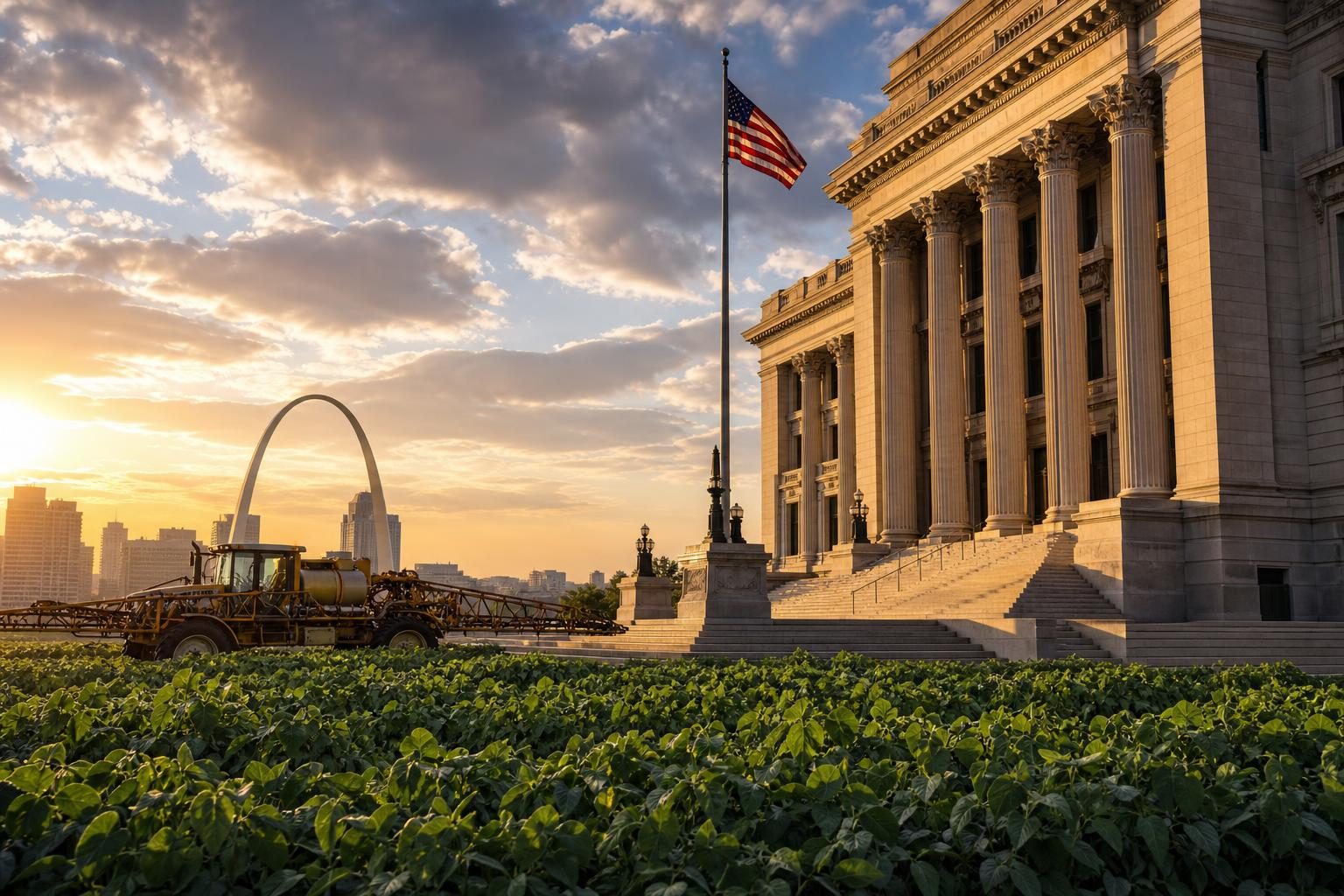
A Missouri judge on Friday gave final approval to Bayer's settlement of up to $7.25 billion over claims that its Roundup weed killer caused cancer, a ruling that could close the book on most of the litigation that has dogged the German company since it bought Monsanto [1][2].
St. Louis Circuit Judge Timothy Boyer approved the deal, first announced in February, in a written judgment, Reuters reported [5]. The money will be paid out over roughly two decades to people who say Bayer should have warned them that Roundup could cause non-Hodgkin lymphoma, PBS News reported [2].
What the Deal Covers
The settlement is designed to reach both people already diagnosed and those who may be diagnosed in the future, according to Reuters [5]. Bayer has faced roughly 65,000 claims, The Guardian reported [3]. The company continues to deny that Roundup causes cancer [5].
Bayer chief executive Bill Anderson called the approval "a decisive milestone," Reuters reported [5]. Bloomberg was among the first to report the approval on Friday [1].
Not everyone is satisfied. Deutsche Welle reported that some plaintiffs' lawyers argue the payments are too low for people living with cancer [4]. The ruling can still be appealed, according to Reuters [5].
A Long Road to Friday
The litigation has been costly for the company and its owners. The Guardian reported that Bayer shares have lost about 46 percent of their value since the 2018 Monsanto purchase [3].
The legal ground shifted in June, when the U.S. Supreme Court ruled 7-2 in Monsanto v. Durnell that federal pesticide law preempts state claims faulting the company for not putting a cancer warning on Roundup's label [6]. The case grew out of a Missouri jury's $1.25 million award to a man who said Roundup caused his cancer, NPR reported [6]. The justices pointed to the Environmental Protection Agency's determination that the product's label does not require a cancer warning [6].
Why It Matters
For years, the fight over Roundup has played out in courtrooms one jury at a time, with very different results in different states. The Supreme Court's June decision told the country that the label rules are set in Washington, by the agency Congress put in charge, not rewritten case by case in fifty state courts [6].
Friday's approval adds something the courtroom fights never offered: a fixed payment schedule for people who are sick now and for those who may be diagnosed later [2][5]. That certainty matters to families who have waited years for answers, and to farmers, who now have clearer rules about a product whose label the EPA approved [6].
What Comes Next
Objectors can still take the ruling to a higher court [5]. Bayer will now move toward carrying out the payment plan over the coming years, while critics continue to press their case that the compensation falls short [4]. We will follow any appeal as it develops.
Sources
Should the death penalty stay on the books for the worst crimes?
- Yes, for the worst murders
- Only with absolute proof like DNA
- No, life without parole is enough
More in Crime & Justice

Palisades Fire Arson Retrial Ends in Conviction for Rinderknecht
Tonight on Breaking Now with Nathan Brooks
Judge Keeps Murdaugh Murder Indictments, Clearing the Way for Retrial
Tonight on The Verdict Room with Natalie Sinclair

Feds Indict Ex-Hill Aide, Friend Over Staged Trail Attack
Tonight on Street Watch with Elijah Carter
Were you there?
If you were at the scene, or this story touched your life, tell us what you saw and what it was like.
Discussion 0
Sign in or create a free account to join the discussion.
No comments yet. Start the discussion.