
 Tonight on Health Check with Samuel Adeyemi
Trapped in a Maternity Ward for a Day: Fighting Near Congo's Ebola Epicenter Pins Down Health Workers as the WHO Pleads for Peace
The World Health Organization says clashes near a hospital in Ituri province forced staff and aid partners to shelter for more than 24 hours, as an outbreak that has killed more than 5,500 people keeps spreading.
Filed November 22, 2026 · 📍 Washington, DC 20001
Were you there? Share your story
Part of our continuing coverage: Congo's Ebola Toll Passes 5,700 as the WHO Keeps Its Global Emergency in Place and Trials Race for a Vaccine Against a Rare Strain
Key points
- WHO chief Tedros Adhanom Ghebreyesus said heavy fighting near a hospital in Ituri province disrupted the Ebola response in Congo.
- Staff and aid partners sheltered in a maternity ward for more than 24 hours, and the WHO is working to get them out safely.
- Attacks across eastern Congo have increased since late October, Tedros said, seriously affecting the response.
- More than 11,000 people have been infected and more than 5,500 have died since the outbreak was declared May 15, according to government data.
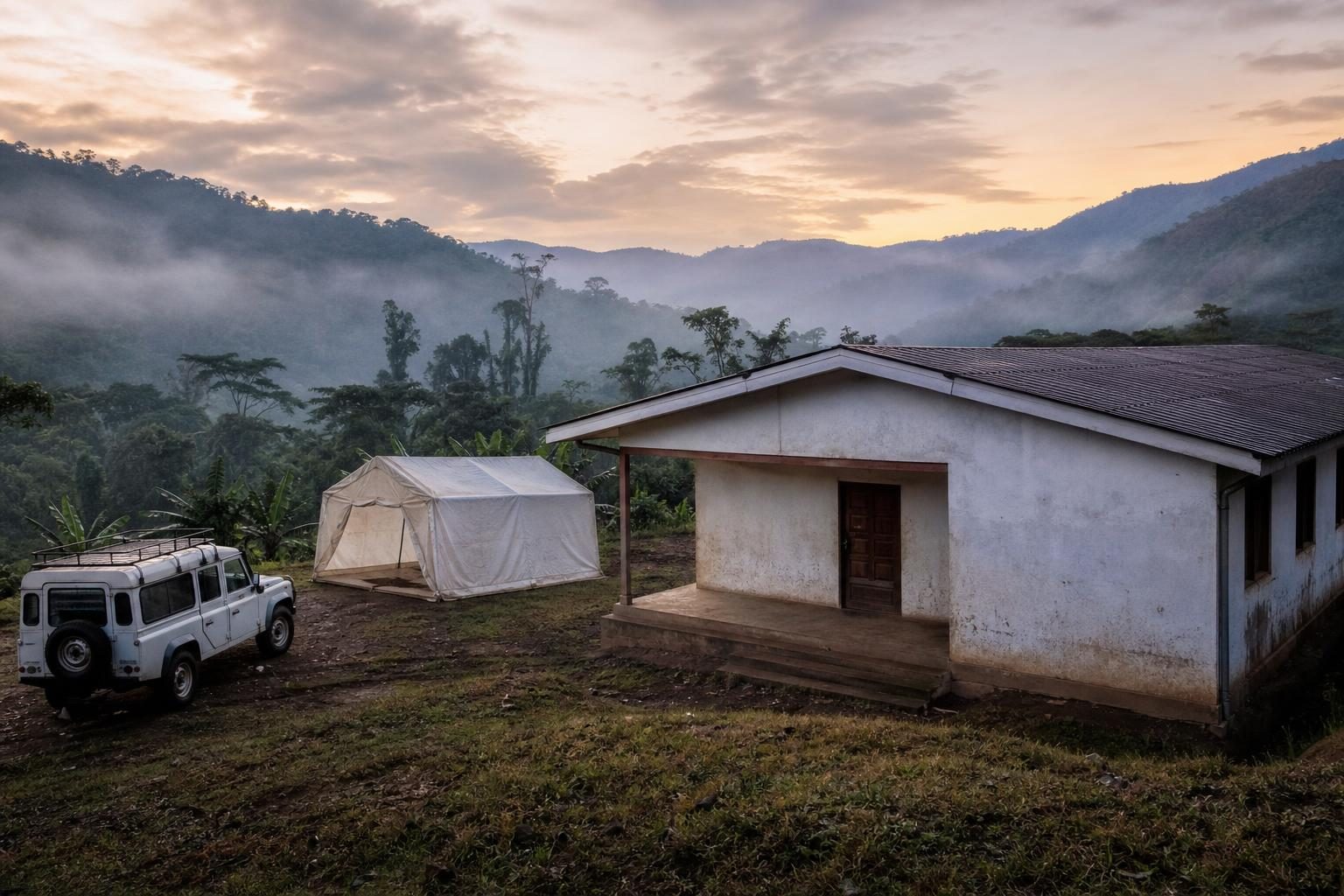
Heavy fighting near a hospital in eastern Congo forced health workers and aid partners to take shelter in a maternity ward for more than 24 hours, disrupting the response to one of the deadliest Ebola outbreaks on record, the head of the World Health Organization said Sunday [1][2].
WHO Director-General Tedros Adhanom Ghebreyesus said the clashes in Ituri province broke out near the area where the outbreak first emerged, putting patients, their families and health workers at grave risk [1][2]. The WHO is working with humanitarian partners to secure a safe exit for the staff trapped at the facility, he said [1].
A Response Under Fire
Tedros called for the protection of hospital workers, patients and health facilities, and pleaded for peace in the region [1][3][4]. He said attacks across eastern Congo have increased since late October and have seriously affected the effort to contain Ebola [1].
Ituri sits in Congo's far northeast, along the borders with Uganda and South Sudan, and armed groups have troubled the province for years. That instability has long complicated efforts to deliver basic health care there, and an epidemic only raises the stakes.
Fighting is one of the worst enemies of an Ebola response. Stopping the virus depends on finding the sick quickly, isolating them, tracing everyone they have been in contact with and making sure the dead are buried safely. Every one of those steps requires health teams to move freely and communities to trust them. When gunfire pins workers inside a hospital for a day, that whole chain breaks down.
The Scale of the Outbreak
The outbreak is enormous. More than 11,000 people have been infected and more than 5,500 have died since it was declared on May 15, according to government data cited by Reuters [1]. In an update on Saturday, the WHO said some areas had seen a slight decline in cases, but that high-level transmission was continuing across the country overall [1].
As Liberty Bell Report reported on Saturday, the WHO has kept its global health emergency in place as researchers race to test a vaccine against the rare strain behind this outbreak. Other counts of the death toll have run higher, and figures in a fast-moving epidemic in a conflict zone are often revised as more information comes in.
Why It Matters to Americans
An epidemic of this size anywhere is a concern everywhere. Ebola has reached the United States before through travel, and every week the virus spreads unchecked in eastern Congo raises the risk that it moves into new places. Containing it at the source is the most effective way to keep Americans safe.
There is also a moral dimension that should not be missed. The people sheltering in that maternity ward were doctors, nurses and aid workers who chose to stay in one of the most dangerous places on earth to care for the sick. Many health workers in Congo, including those at church-run hospitals and clinics, have done the same through outbreak after outbreak. They deserve protection, and the armed groups that put them in harm's way deserve condemnation.
For Christians, the image of caregivers sheltering among mothers and newborns while bullets fly outside is a call to prayer. It is also a reminder that the work of healing has always gone hand in hand with the work of peace.
What Comes Next
The immediate priority is getting the trapped staff out safely and resuming care for patients in Ituri [1]. Beyond that, the course of the outbreak will depend on whether the violence in eastern Congo eases enough for health teams to do their work. The WHO's next updates on case counts, and on whether the slight declines in some areas hold, will show whether the response can regain the ground the fighting has cost it [1].
Sources
- [1]U.S. News & World Report (Reuters)WHO Chief Says Fighting Near Congo Ebola Outbreak Area Disrupts Response EffortsOpens in a new tab ↗
- [2]Opens in a new tab ↗
- [3]Opens in a new tab ↗
- [4]The Sun (Malaysia)WHO chief pleads for peace in Ebola-hit DR Congo areaOpens in a new tab ↗
What worries you most about health care?
- Cost
- Getting an appointment
- Quality of care
- Government getting more involved
More in Health & Medicine

Federal Scientists Reopen the Roundup Question: What NIH's New Glyphosate Reviews Found, and Why the EPA Still Has the Final Word
Tonight on Health Check with Samuel Adeyemi
Kennedy to El-Sayed on Medicare for All: 'The Numbers Don't Work'
Tonight on Health Check with Samuel Adeyemi

'No Longer Viable': Wisconsin Gov.-Elect David Crowley Sets Aside Full Medicaid Expansion as New Federal Rules Change the Math
This morning on Health Check with Samuel Adeyemi
Were you there?
If you were at the scene, or this story touched your life, tell us what you saw and what it was like.
Discussion 0
Sign in or create a free account to join the discussion.
No comments yet. Start the discussion.