
 Today on The Power Grid with Priya Desai
U.S.-Backed Buyers Sign Deal for Lukoil's Global Oil Empire
A group led by Todd Boehly's Eldridge, with Washington's development bank as a partner, would swap frozen Russian shares for 2,000 stations and a global trading arm. Treasury still has to sign off.
Filed November 25, 2026 · 📍 Washington, DC 20001
Were you there? Share your story
Key points
- A Boehly-led consortium signed a share-swap deal for Lukoil's international business
- The U.S. International Development Finance Corp. is a partner and would share in future profits
- About $10 billion in frozen Russian securities would go into escrow, not to Lukoil
- Treasury's OFAC must approve; closing could take up to a year
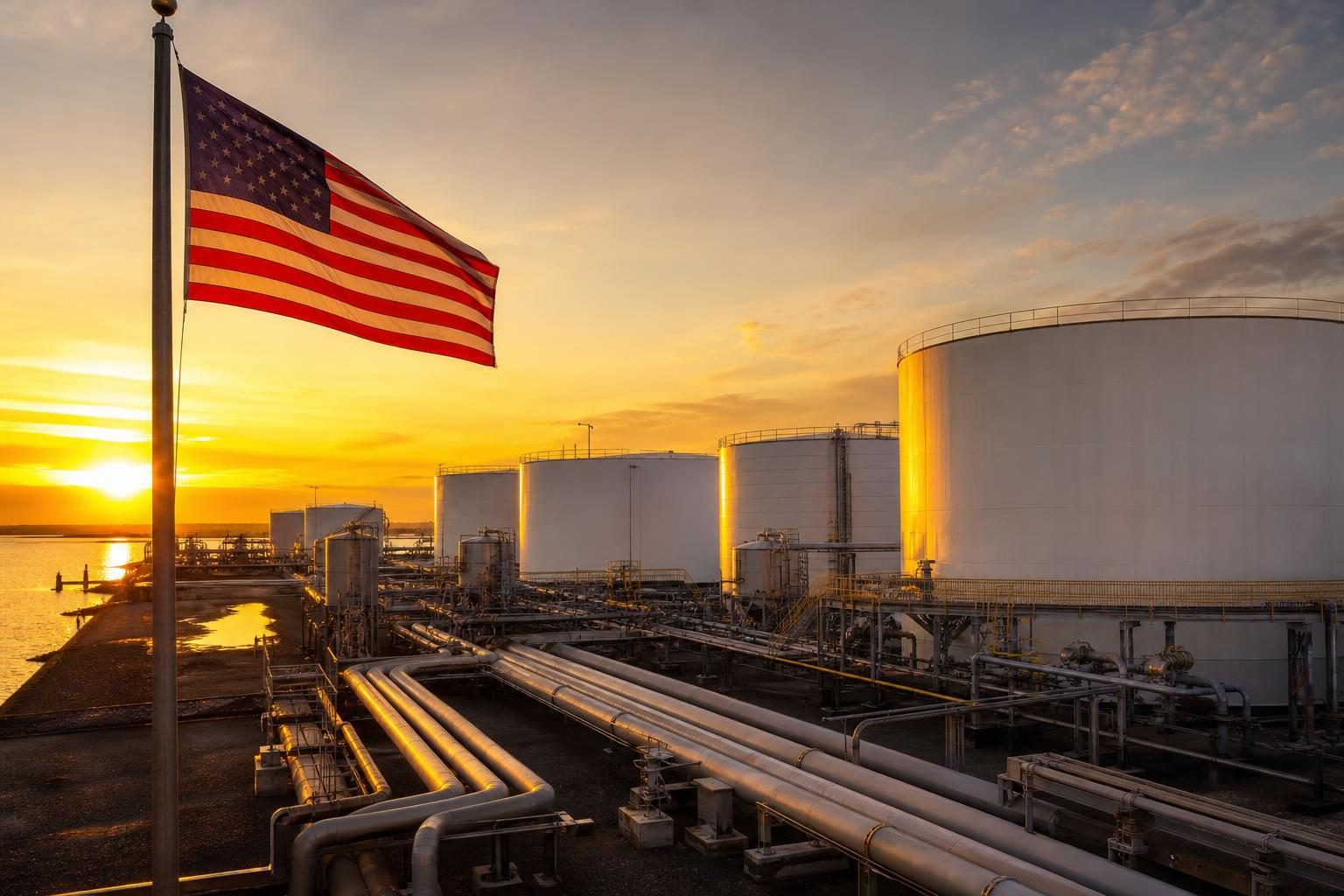
An American-led group has signed a deal to take over the international business of Russian oil giant Lukoil, a move that would put more than 2,000 fuel stations and a worldwide oil trading arm under Western ownership while keeping the payment out of the Kremlin's reach, according to the buyers and Reuters [1][2].
Billionaire investor Todd Boehly said Wednesday that he had signed the agreement with Lukoil on behalf of a consortium that includes the U.S. International Development Finance Corporation, Washington's development bank, Reuters and CNBC reported [1][3]. The deal still needs approval from the Treasury Department's Office of Foreign Assets Control, and Boehly told Reuters that closing could take up to a year [1].
How the Swap Works
No cash would go to Moscow. Instead, the consortium would hand over restricted Russian securities, shares of Lukoil and other Russian companies, in exchange for 100% of Lukoil International GmbH, the unit that holds the company's foreign business, according to the consortium's announcement [2]. Reuters reported that those securities are worth about $10 billion [1].
The shares would go into an escrow account in the United Arab Emirates rather than to Lukoil itself, an arrangement meant to satisfy Treasury, which has barred the Russian company from collecting a windfall from the sale, Reuters reported [1]. Once the deal closes, the international business would be fully separated from its Russian parent, the consortium said [2]. The Russian securities in the swap have been frozen and written down since 2022, according to the reports [1][4].
The announcement said the group is led by Eldridge, Boehly's investment firm, and includes UAE-based Catena Investment Holding and Xtellus Partners alongside the DFC [2]. Two earlier partners, the Al-Khayyat brothers and Abu Dhabi's International Holding Company, left the group the week before, according to Reuters, which said Boehly described the lineup as fluid but said the current members are the ones moving forward [1].
What Is for Sale
Lukoil International owns the oil trading company LITASCO and more than 2,000 retail fuel stations in 16 countries across Europe, North America and Central Asia, the consortium said [2]. Reuters reported that two people familiar with the terms valued the portfolio at about $16 billion, with production of roughly 350,000 barrels of oil a day [1].
Washington would receive a share of the future profits, according to Boehly and a DFC official [1][4]. The DFC said it had approached Chevron, Glencore and Carlyle about the assets and found that private buyers wanted a U.S. government partner as a "security blanket," Reuters reported [1].
A Long Road to Wednesday
The sale traces back to October 2025, when the United States sanctioned Lukoil as part of its pressure on Moscow over the war in Ukraine [5]. Lukoil has been looking for a buyer ever since. Private equity firm Carlyle signed an agreement in January to buy most of the international assets, but that deal lapsed without U.S. approval, and Carlyle told S&P Global it was no longer actively pursuing the purchase [5].
That history is why Wednesday's signing matters, and also why it is not the finish line. A full review could take a while given how many international assets are involved, a source told Reuters [1].
Why It Matters
This is what pressure looks like when it works. The sanctions did more than punish a Russian company on paper: they pushed it to give up its overseas business, and the plan now on the table would hand that business to American-led owners, park the payment in escrow where Moscow cannot spend it, and give the American people a share of the upside through the DFC [1][2].
There are fair questions to ask before Treasury signs off. A government development bank taking a stake in oil assets is unusual, and taxpayers deserve a clear accounting of how much risk they would carry alongside the profit share. Reviewers will also need to be sure that no part of the value finds its way back to the Kremlin, which is the whole point of the escrow arrangement [1]. Those are questions about getting the details right, not reasons to walk away from a deal that moves a large piece of the world's fuel business out of a sanctioned Russian company's hands.
For families filling up this Thanksgiving week, nothing in the announcement changes anything right away: the deal cannot close without Treasury's approval, and Boehly himself put the timeline at up to a year [1]. What would change, if it closes, is who owns thousands of stations and a major trading desk: American-led investors working alongside Washington instead of a Russian giant under sanctions. Energy strength is national strength, and this is a trade that favors America.
What to watch next: OFAC's review of the deal, any further changes to the consortium's lineup, and the reaction from European governments where Lukoil's refineries and stations operate.
Sources
- [1]Reuters (via The Edge Malaysia)Boehly signs US-backed share swap deal to buy Lukoil global assetsOpens in a new tab ↗
- [2]Business Wire (via FinancialContent)American-Led Consortium Announces Agreement to Acquire LUKOIL International's Global Energy PortfolioOpens in a new tab ↗
- [3]Opens in a new tab ↗
- [4]Opens in a new tab ↗
- [5]Opens in a new tab ↗
Should Congress speed up permits for pipelines and power plants?
- Yes, build more American energy
- Yes, but respect tribal and local input
- No, keep environmental reviews
More in Energy & Environment
Baghdad Moves to Seize Kurdish Oil Fields, Border Posts
Yesterday on The Power Grid with Priya Desai
Factories Are Footing the Bill for the AI Boom's Power Hunger. The Answer Is to Build More Power Plants
Yesterday on The Power Grid with Priya Desai
Europe Shivers, America Supplies: Gas Prices Jump on a Long Cold Snap While U.S. Stays Awash in Cheap Fuel
Yesterday on The Power Grid with Priya Desai
Were you there?
If you were at the scene, or this story touched your life, tell us what you saw and what it was like.
Discussion 0
Sign in or create a free account to join the discussion.
No comments yet. Start the discussion.