
 This morning on The Power Grid with Priya Desai
Europe Shivers, America Supplies: Gas Prices Jump on a Long Cold Snap While U.S. Stays Awash in Cheap Fuel
European gas futures spiked as forecasts turned colder and storage sat well below normal, while Britain's grid operator warned of tight power supplies, a fresh reminder of why American natural gas matters to allies.
Filed November 24, 2026 · 📍 Austin, TX 78701
Were you there? Share your story
Key points
- European TTF gas futures spiked as much as 8.6% on Monday and kept rising Tuesday on a prolonged cold-snap forecast.
- EU storage sits near 69%, well below the seasonal average of about 80%.
- Britain's grid operator warned of tight power supplies during the cold snap.
- The U.S. remains awash in cheap natural gas, a strategic advantage for allies.
Winter is arriving early and hard in Europe, and the continent's energy markets are feeling it. Dutch TTF gas futures, Europe's benchmark, spiked as much as 8.6% to about 96 euros per megawatt-hour on Monday before settling roughly 4% higher, according to figures from The Guardian reported by Archyde [3]. On Tuesday, European gas kept climbing even as the broader energy complex sold off, Investing.com reported, as updated forecasts pointed to a prolonged cold spell [1][2].
In Britain, the grid operator warned of tight power supplies during the cold snap as bottlenecks limit how much electricity can be moved where it is needed, Bloomberg reported [5]. The U.K. gas benchmark rose to about 233 pence per therm, touching an intraday high near 239 pence [3].
Why the Cold Hits So Hard
The problem is not only the weather. It is what Europe has in the tank. EU gas storage sites were about 69% full, well below the seasonal average of roughly 80%, according to the market reports [3]. Forecasts call for temperatures 3 to 5 degrees Celsius below the 30-year average this week, widening to 5 to 8 degrees below normal by early December [3].
Cold, still weather is a double blow. When the wind dies down, wind farms produce less power, and grid operators turn to gas-fired plants to fill the gap, adding even more demand at the worst possible moment [3]. That is the trap Europe built for itself by leaning heavily on intermittent sources while shutting down reliable plants.
Supply from the Middle East is also squeezed. QatarEnergy has extended a force majeure on deliveries until at least the end of December, as the conflict in the region disrupts shipping, according to the reports [3]. With tankers under threat in the Strait of Hormuz, Europe cannot count on the steady flow of liquefied natural gas it had planned on.
America's Advantage
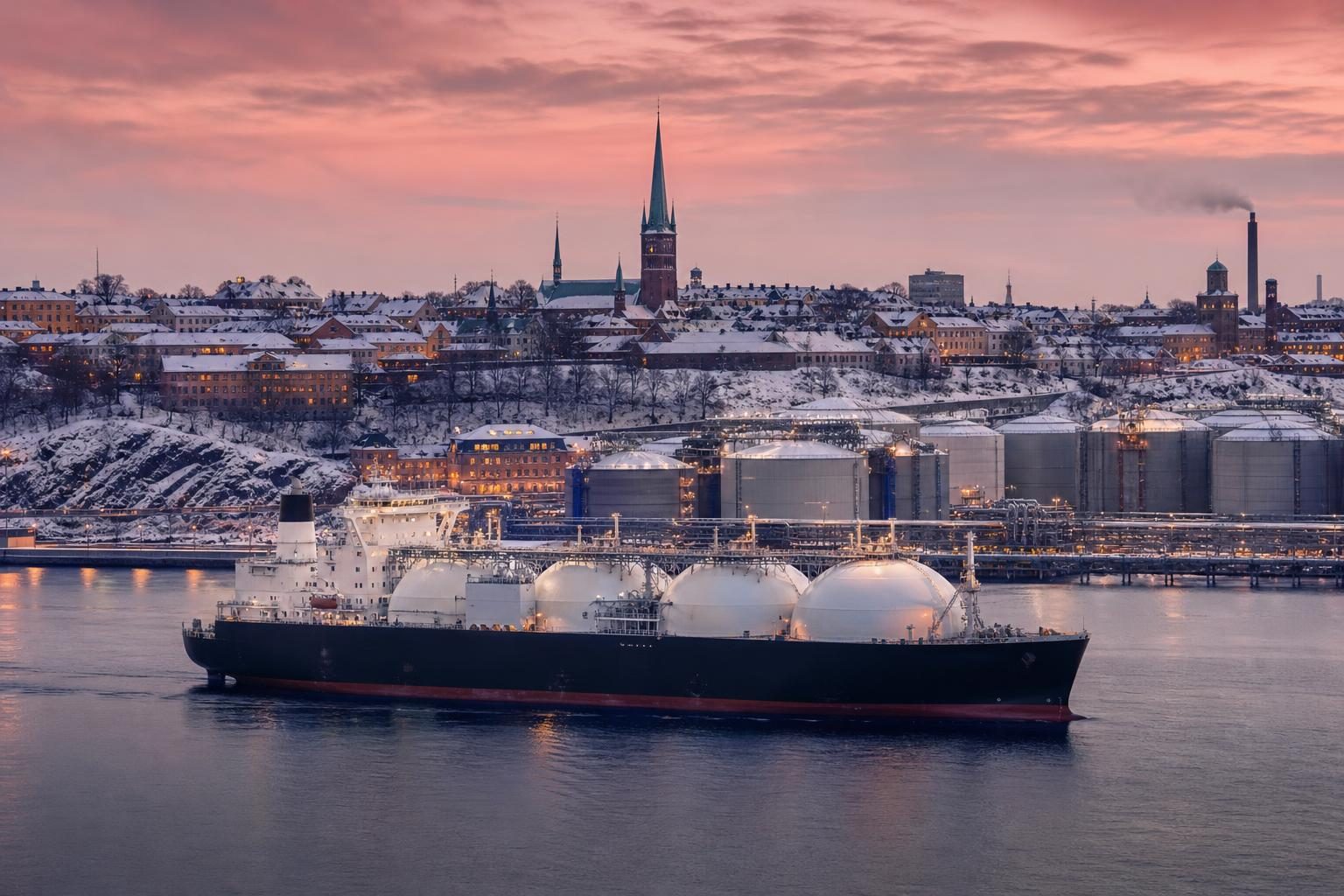
Across the Atlantic, the picture is very different. The United States remains awash in cheap natural gas, ZeroHedge noted in its market coverage, even as European prices jump [4]. American shale production, built over two decades of drilling and innovation, has made the U.S. the world's largest producer and a top exporter of liquefied natural gas.
That abundance is a strategic asset. Every cargo of American LNG that sails to Europe is one less reason for allies to depend on Russia or to be held hostage by turmoil in the Gulf. It also supports American jobs from the Texas and Louisiana coasts to the gas fields of Pennsylvania and Appalachia.
For American families, the lesson is worth remembering heading into winter. Policies that encourage domestic production, pipelines and export terminals keep home heating bills lower and give the country leverage abroad. Policies that restrict drilling and block pipelines do the opposite, and Europe's scramble shows where that road leads.
Britain shows how quickly the pressure moves from markets to households. Its grid operator warned that bottlenecks on the network limit how much power can be moved from where it is generated to where it is needed during the cold spell [5]. When a country leans on imported gas and weather-dependent power at the same time, a few still, freezing days can turn into a test of whether the lights and the heat stay on.
That is not a reason for Americans to gloat. Europe's families are our friends and allies, and many of them are facing painful heating bills for the second winter in a row. It is a reason to learn the lesson and to keep American energy flowing to them.
What It Means for Prices Here
U.S. gas prices are not immune to global markets, especially as export capacity grows, but domestic supply has kept American benchmarks far below Europe's [4]. Analysts will be watching whether a prolonged European freeze pulls more U.S. cargoes across the Atlantic and how that affects prices here as American winter demand builds.
What Comes Next
The coming two weeks will test Europe's thin storage cushion [3]. If the cold lingers into December as forecast, governments may face hard choices about industrial demand and power rationing. For the United States, the opportunity is clear: keep producing, keep building, and keep supplying friends who need reliable energy.
Sources
Should Congress speed up permits for pipelines and power plants?
- Yes, build more American energy
- Yes, but respect tribal and local input
- No, keep environmental reviews
More in Energy & Environment
Factories Are Footing the Bill for the AI Boom's Power Hunger. The Answer Is to Build More Power Plants
This morning on The Power Grid with Priya Desai
China and India on Pace for Record Russian Oil Haul
This morning on The Power Grid with Priya Desai
Petrobras Lifts Five-Year Plan to $122 Billion on War Windfall as Oil Slips Toward Three-Month Low
Overnight on The Power Grid with Priya Desai
Were you there?
If you were at the scene, or this story touched your life, tell us what you saw and what it was like.
Discussion 0
Sign in or create a free account to join the discussion.
No comments yet. Start the discussion.