
 Overnight on The Power Grid with Priya Desai
Petrobras Lifts Five-Year Plan to $122 Billion on War Windfall as Oil Slips Toward Three-Month Low
Brazil's state oil giant is pouring war-fattened profits into new wells and refineries, even as crude prices sag on rising supply despite fresh Iranian mine claims in the Strait of Hormuz.
Filed November 24, 2026 · 📍 Austin, TX 78701
Were you there? Share your story
Key points
- Petrobras raised its 2027-2031 investment plan to about $122 billion, up roughly 12 percent from $109 billion.
- More than 70 percent goes to exploration and production; refining and related businesses get $24 billion.
- The plan assumes Brent at $74 in 2027 and $70 after, while Brent sat near $89, close to a three-month low.
- U.S. gasoline averaged about $3.64 a gallon Monday, falling but still above the 2022 Thanksgiving record.
Petrobras, Brazil's state-controlled oil company, has raised its five-year investment plan to about $122 billion for 2027 through 2031, roughly 12 percent above the $109 billion in its previous plan, according to a Monday filing reported by Bloomberg [1]. The increase follows a cash windfall from the run-up in crude prices tied to the war with Iran [1].
The company also declared 15.6 billion reais, about $2.6 billion, in extraordinary dividends and lifted its estimate for ordinary payouts over the five years to between $55 billion and $60 billion [1].
Where the Money Goes
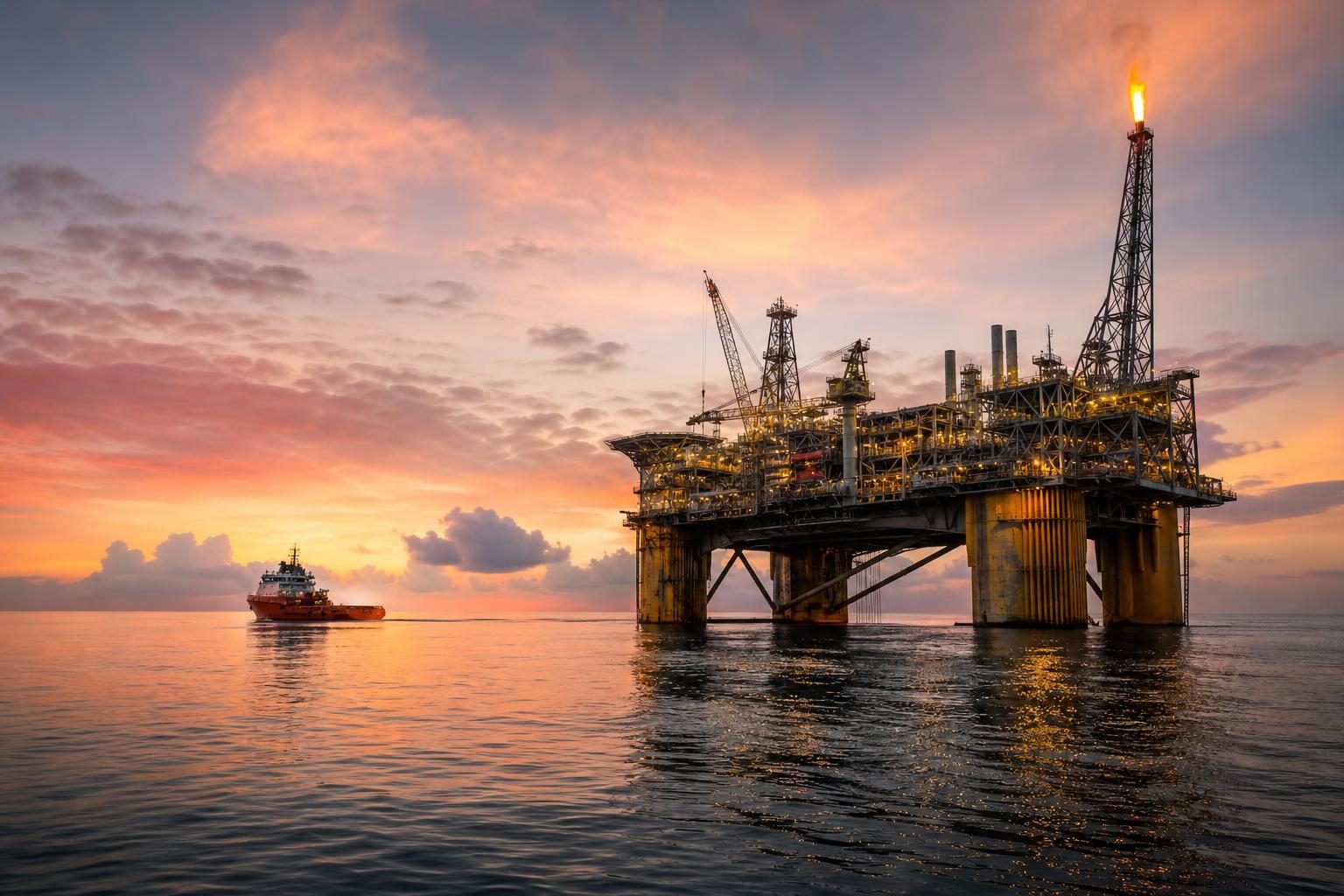
Most of the spending is headed offshore. Exploration and production will take more than 70 percent of the budget [1], or about $86.5 billion, with priority given to the deepwater pre-salt fields, according to Brazilian coverage of the filing [2]. Of the total, $113 billion is tied to projects already underway and $9 billion to projects still under evaluation [2].
Refining, transportation, marketing, petrochemicals and fertilizers will get $24 billion, up from about $20 billion in the prior plan [1]. Petrobras aims to lift refining capacity from 1.813 million barrels a day to 2.173 million by 2031, a gain of 360,000 barrels a day [2]. The plan also calls for 50 new exploration wells between 2027 and 2031, including 15 in the Equatorial Margin along Brazil's northern coast [2].
On output, the company is targeting oil production of about 2.9 million barrels a day [1]. Including natural gas, total commercial production is projected at 3.1 million barrels of oil equivalent a day in 2027 and 3.2 million a day from 2028 through 2031, which would be a company record [2]. The plan keeps a $75 billion ceiling on gross debt, tightening to $65 billion over the period [2].
The math rests on Brent crude averaging $74 a barrel in 2027 and $70 from 2028 on [1]. Chief Executive Magda Chambriard has cautioned that war-driven profits can fade and that prices could eventually drop below $60 a barrel [1].
An Oil Market Shrugging Off Hormuz
That caution looks well placed. Oil prices hovered near three-month lows this week as worries about rising global supply and a possible glut outweighed shipping risks in the Strait of Hormuz, Al Jazeera reported [3]. Brent crude futures fell 0.45 percent to $88.97 a barrel, while U.S. West Texas Intermediate slipped 0.29 percent to $79.94 [3].
The soft prices came even as Iran's Revolutionary Guards claimed that three tankers caught fire after striking naval mines in the strait [3]. The Guards said the ships were sailing under U.S. escort and air cover when they were hit, CNBC reported, and Iranian state media did not name the vessels [4]. The Treasury Department, meanwhile, widened sanctions, targeting 22 entities and eight people tied to the shadow banking networks Iran uses to move money abroad [4].
One market analyst said the muted response suggests most of the war risk premium has already drained out of crude [5]. Brent traded around $72 a barrel in late February, before the U.S. war with Iran began [5], so even this week's slump leaves oil well above prewar levels.
What It Means for American Drivers
For American families, cheaper crude is finally reaching the pump. AAA put the national average for regular gasoline at about $3.64 a gallon on Monday, well below where it stood a month earlier but still above the Thanksgiving record of $3.58 set in 2022, The Daily Caller reported [6]. Whether holiday travelers dodge a new record depends on how far prices fall before Thursday [6].
Brazil's expansion matters for that picture. Every barrel pumped from the South Atlantic rather than the Persian Gulf is a barrel that never has to pass through a mined chokepoint. Rising supply from outside the Gulf is exactly what has kept prices from spiking with each new attack [3], and a record-setting Brazilian output target adds to that cushion over the next five years [2].
There is a lesson here for Washington as well. Petrobras is betting tens of billions of dollars on more drilling and more refining because demand for affordable fuel is not going away [1]. The United States, blessed with its own enormous reserves, is best protected when it produces more at home and buys from reliable partners in its own hemisphere, rather than leaving family budgets hostage to a strait that a hostile regime can threaten at will.
Investors will be watching whether Brent holds near the $74 assumption built into the Petrobras plan [1], or sinks toward the sub-$60 level its chief executive has warned about [1]. Much depends on Hormuz, where Iran's mine claims and the widening U.S. sanctions campaign keep the risk of a sudden shock alive [4]. For now, the market is betting that supply wins [5].
Sources
Should Congress speed up permits for pipelines and power plants?
- Yes, build more American energy
- Yes, but respect tribal and local input
- No, keep environmental reviews
More in Energy & Environment

Army Corps Takes a Second Look at Atlantic Shores Wind Permit as Senate Sends Permitting Overhaul to the House
Yesterday on The Power Grid with Priya Desai
Oil Slips Again as a Surplus Outweighs the Gulf's Dangers, Leaving Brent Far Below Its October Peak Heading Into the Holiday
Yesterday on The Power Grid with Priya Desai

ConocoPhillips Cashes Out of Norway in $4.4 Billion Sale
Yesterday on The Power Grid with Priya Desai
Were you there?
If you were at the scene, or this story touched your life, tell us what you saw and what it was like.
Discussion 0
Sign in or create a free account to join the discussion.
No comments yet. Start the discussion.