
 Today on Border Watch with Cole Brennan
FCC Clears State Prisons to Jam Smuggled Cellphones After Years of Pleas From Corrections Officials
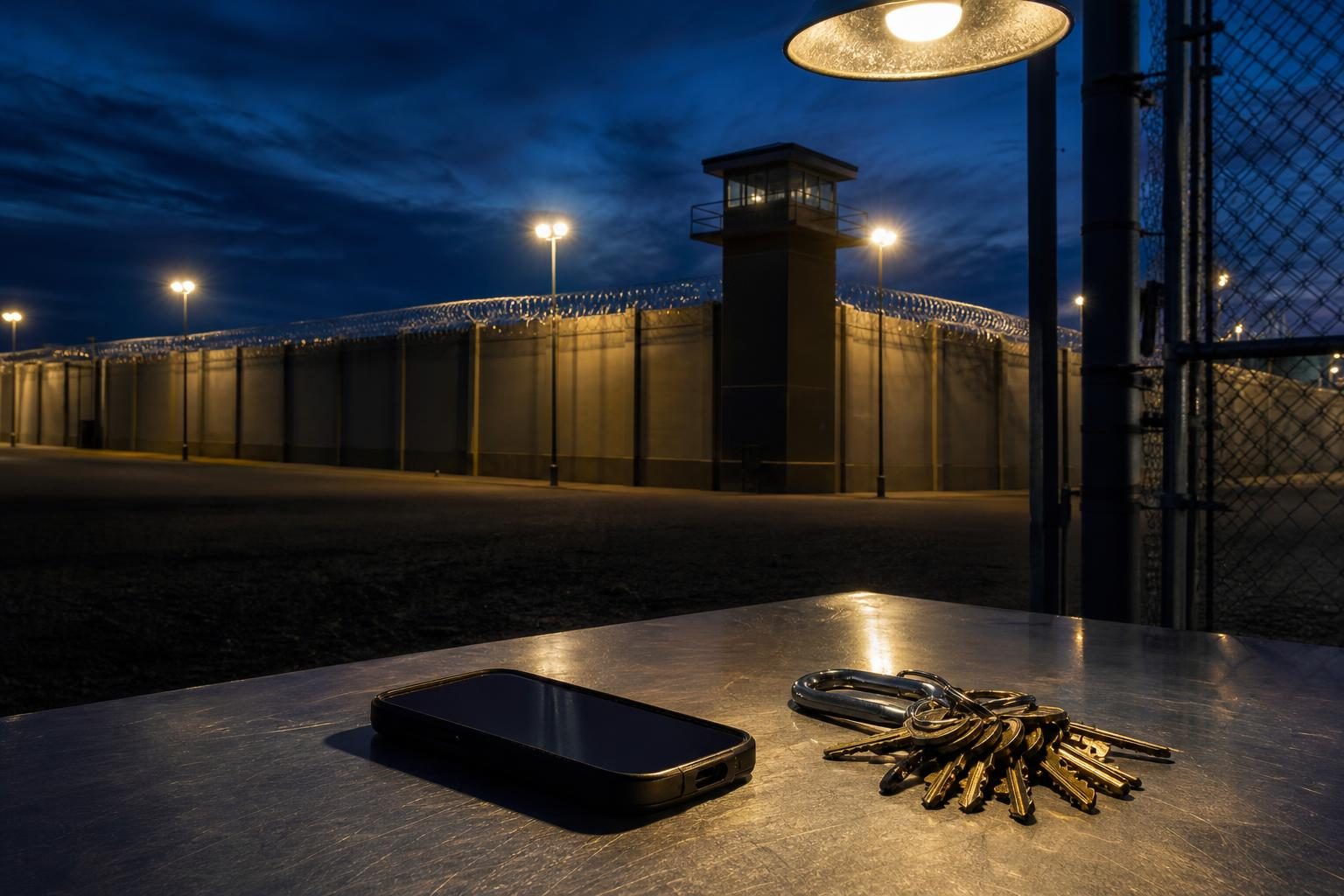
The FCC voted Thursday to let state and local prisons jam contraband cellphone signals, a long-sought tool against inmate crime, over objections from the wireless industry.
Filed November 19, 2026 · 📍 SC 29201
Were you there? Share your story
Key points
- The FCC voted Thursday to let state and local prisons jam contraband cellphone signals.
- Jamming is optional, and facilities must test systems and file plans to protect outside service.
- South Carolina pushed for years; officials expect Broad River Correctional to seek approval first.
- Wireless group CTIA warned jamming can block lawful calls, including 911.
The Federal Communications Commission voted Thursday to let state and local prisons jam the signals of cellphones smuggled to inmates, handing corrections officials a tool they have sought for years, NBC News reported [1]. Just the News reported that the vote was unanimous [2].
Federal prisons have been permitted to use jamming technology, but state facilities needed the FCC's permission because of a communications law that dates back nearly a century, according to NBC News [1]. FCC Chairman Brendan Carr has said about 25,000 contraband phones are confiscated each year in the nation's state and local prisons, and he estimated that as many as 500,000 inmates nationwide have access to one [1].
Prison officials have argued for years that smuggled phones let inmates coordinate drug smuggling, attacks and riots from behind bars, Just the News reported [2].
How the New Rule Works
The rule does not force any prison to install jammers. Facilities that choose to use the technology must run multiple tests to make sure cell service outside prison walls is not affected, according to Just the News [2]. Columbia, South Carolina, station WIS reported that the order lets states seek authorization from the FCC and that agencies must submit plans describing how their systems would work and how they would avoid disrupting commercial service beyond prison grounds [3]. The station reported that the order also reaches local jails [3].
Carr has said the commission is not considering jamming anywhere outside prisons, according to NBC News [1].
The legal reasoning behind the change goes back to the FCC's first step on Sept. 30, 2025, when the commission voted to advance the proposal and open it for public comment, the SC Daily Gazette reported at the time [4]. Carr argued then that the 1934 law barring interference with authorized communications should not protect contraband phones, because those phones are not authorized in the first place [4]. Commissioner Anna Gomez raised concerns at that meeting about jamming by non-federal agencies and about jamming equipment making its way into the wider market [4].
South Carolina's Long Fight
Few states pushed harder than South Carolina. The FCC allowed the state a one-time test of a jamming system at a maximum-security prison in 2008, according to the SC Daily Gazette [5]. The state's corrections director, Joel Anderson, has said he plans to seek permission to install jamming equipment across South Carolina's 21 prisons [5]. An existing system already installed at six of those prisons stops between 75% and 80% of cellphone use, the Gazette reported [5].
Carr traveled to Columbia this week to support the effort [5]. He has repeatedly pointed to the case of Capt. Robert Johnson, a South Carolina corrections officer who was nearly killed at his home in 2010 in an attack that, Carr said, was ordered by an inmate using a contraband phone [4][5].
WIS reported that Broad River Correctional Institution in Columbia would likely be the first South Carolina prison for which the state seeks authorization [3].
The Industry and Advocates Object
The wireless industry fought the plan to the end. CTIA, the trade group for wireless carriers, sent the commission a letter on Nov. 12 urging changes to the draft order, citing testing at a South Carolina prison that it said showed jamming can interfere with lawful communications both inside and outside correctional facilities, Broadband Breakfast reported [6]. The group has long argued that jamming blocks every call in range, including 911 calls, that the FCC lacks authority to permit it, and that alternatives such as managed-access systems, which block unauthorized phones from connecting to the network, are a better answer [4][6].
Advocates for inmates also oppose jamming. They argue that high prices for prison phone calls push inmates toward contraband devices simply to stay connected with their families, NBC News reported [1].
Those concerns deserve a fair hearing, and the rule's testing and approval requirements are meant to address the worry about spillover onto nearby cell service [2][3]. But for corrections officers who have been threatened, and for communities harmed by crimes planned from inside prison cells, the commission's decision answers a simple question of public safety: no one serving a sentence has a right to run a criminal operation over a smuggled phone.
The vote does not mean jammers will be switched on right away. Each state that wants the technology must still apply, submit its plan and complete the required testing before a system can operate [2][3].
For South Carolina officials who spent years asking for this tool, Thursday's vote was the answer they had been waiting for [3][5].
Sources
- [1]Opens in a new tab ↗
- [2]Opens in a new tab ↗
- [3]Opens in a new tab ↗
- [4]SC Daily GazetteFCC votes to move forward with cellphone jamming, a longtime priority for SC prisonsOpens in a new tab ↗
- [5]SC Daily GazetteAfter years of advocacy in SC, FCC poised to allow cellphone jamming in state prisonsOpens in a new tab ↗
- [6]Broadband BreakfastCTIA Reiterates Opposition to FCC Prison Jamming PlanOpens in a new tab ↗
Should the death penalty stay on the books for the worst crimes?
- Yes, for the worst murders
- Only with absolute proof like DNA
- No, life without parole is enough
More in Crime & Justice
Full Appeals Court Won't Rehear Rep. McIver's Bid to Toss Charges From the Delaney Hall Clash
Tonight on The Verdict Room with Natalie Sinclair

Four Found Dead in West Lafayette Home; State Police Investigate
Today on Street Watch with Elijah Carter

Unanimous Again: Parole Board Keeps Susan Smith Behind Bars
Today on Street Watch with Elijah Carter
Were you there?
If you were at the scene, or this story touched your life, tell us what you saw and what it was like.
Discussion 0
Sign in or create a free account to join the discussion.
No comments yet. Start the discussion.