
 Yesterday on First Principles with Benjamin Stone
Prince William Makes Historic Downing Street Visit as Farage Escalates Fight Over Burnham's Brexit Reset
The heir to the throne met Prime Minister Andy Burnham inside No. 10, a rare break with custom, as Nigel Farage and the Conservatives stepped up their attack on an EU deal they say surrenders British self-government.
Filed November 24, 2026 · 📍 World desk · Washington, DC
Were you there? Share your story
Part of our continuing coverage: Brexit Reset Sealed in Brussels as Farage Cries Betrayal
Key points
- Prince William held a 56-minute meeting with Prime Minister Andy Burnham at 10 Downing Street, the first senior royal visit there since 2012.
- Talks centered on homelessness, the Earthshot Prize and women in the armed forces, not the Brexit dispute.
- Burnham's Brussels deal ends most food export checks from 2028 in return for following some EU rules, links carbon markets and creates a youth mobility scheme.
- Badenoch calls the deal terrible and vows to scrap it; Farage says Burnham has no mandate for it and accuses the Tory front bench of being Remainers.
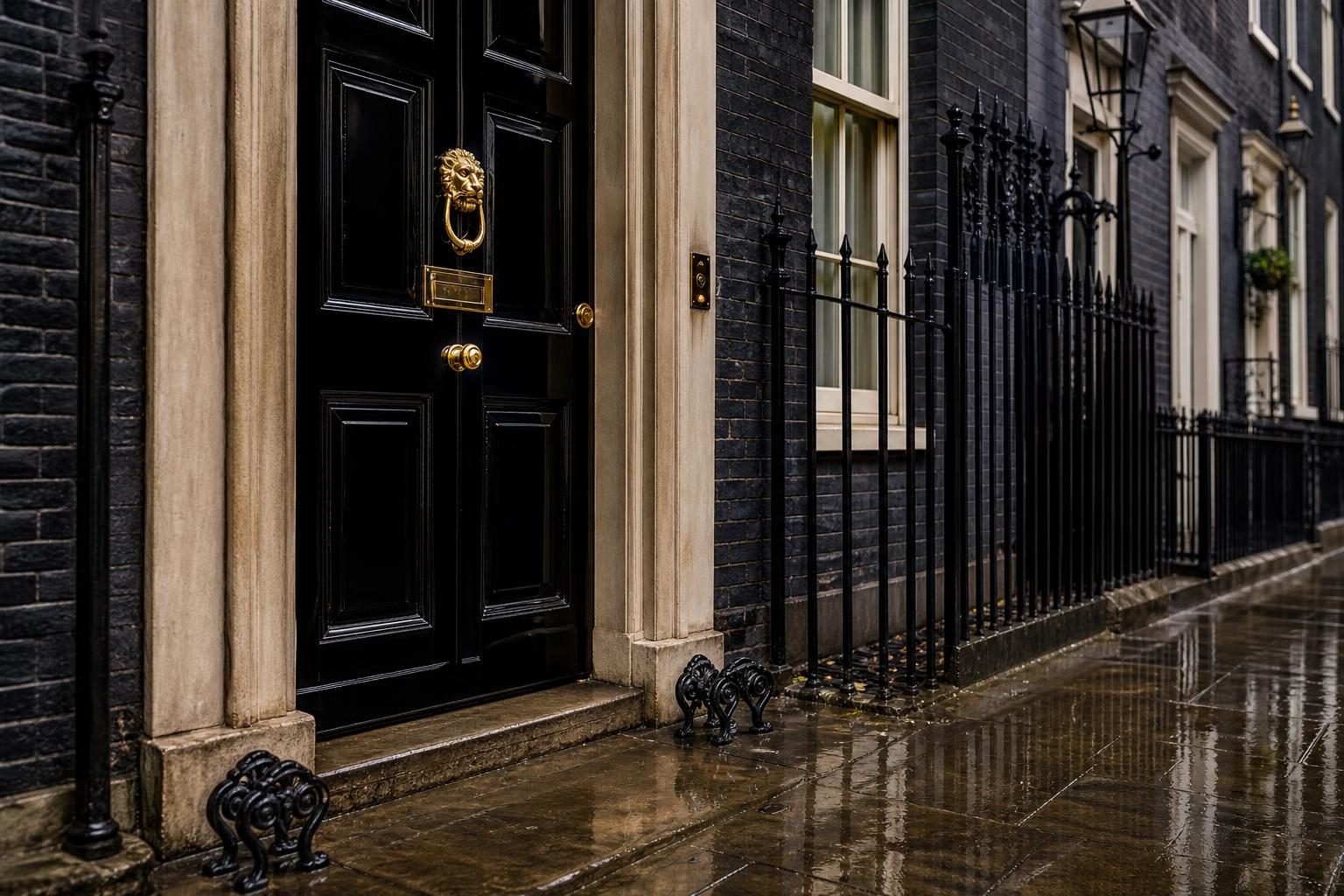
Prince William stepped through the black door of 10 Downing Street on Tuesday for an official meeting with Prime Minister Andy Burnham, a visit GB News called a surprise and a historic moment [1]. Burnham welcomed the Prince of Wales on the doorstep before the two men sat down for talks that lasted 56 minutes, Royal Central reported [1][2].
The same day, Reform UK leader Nigel Farage used a Brexit speech to press his charge that Burnham's new agreement with the European Union pulls Britain back toward Brussels without the voters' consent [6]. The events were unconnected, but together they framed a telling day for Britain.
A Rare Visit Inside No. 10
According to Royal Central, the two focused on shared priorities, chief among them homelessness, and also discussed William's Earthshot Prize environmental awards and the role of women in the armed forces [2]. The outlet said William is the first senior royal to visit the prime minister's residence since the late Queen Elizabeth II attended a Cabinet meeting there in 2012, her Diamond Jubilee year [2]. She had also dined there on the eve of Winston Churchill's departure from office and returned in 1985 for the address's 250th anniversary as the prime minister's home [2].
The rarity says something about Britain's unwritten constitution. The heir to the throne holds no governing office; he prepares and serves while the elected government answers to Parliament. By convention, Royal Central noted, the Prince of Wales meets the sitting prime minister about once a year, but usually elsewhere; William met Burnham's predecessor, Sir Keir Starmer, at Kensington Palace last year [2].
By the accounts published so far, the talk stayed with charitable and social causes rather than the Brexit quarrel [2]. That is as it should be. The Crown endures because it stands apart from the fights of the day.
Burnham's Deal and the Backlash
The agreement Burnham sealed with European leaders in Brussels last Friday rests on three pillars: a youth mobility scheme, the removal of most checks on British food exports, and a link between the British and European emissions trading systems [4]. Most food checks would end from 2028 in return for Britain following some EU regulations, according to an account of the prime minister's Commons statement [3]. The youth scheme, due to start no later than January 2030, would let up to 100,000 young Europeans live, work and study in Britain for as long as three years, with the same number of young Britons able to go the other way [3].
Burnham told MPs the country faced a 'choice between a broken status quo or change' [3]. He argues the package will help lower food prices and energy bills and could add as much as £17 billion to the economy, while conceding it is near the limit of what can be achieved in this Parliament [4].
Conservative leader Kemi Badenoch told business leaders at the CBI conference she will not back what she called a 'terrible' deal, warning that Britain would follow Brussels' rules with no seat at the table where they are written [5]. She also disputed the promised growth [5]. She argued Europe is 'not market of the future' and that Britain should look to faster-growing economies such as India, Indonesia and the United States [4]. Her party has said it would scrap the agreement [4].
Farage went further on Tuesday. The National Pulse reported that he accused Burnham of having 'absolutely no mandate' to take Britain back into part of the EU single market despite Labour's own manifesto [6]. He also turned on the Conservatives, naming members of Badenoch's front bench as former Remainers and casting the coming contest as forward with Reform or backward with Burnham [6]. Earlier he had told the CBI gathering that closer alignment would be a disaster for small businesses [4].
The Sovereignty Question Ahead
Reform and the Conservatives have both vowed to oppose the deal [3], and its main provisions do not take effect until 2028 and 2030 [3]. That all but guarantees the fight runs through the next general election, with the Conservatives promising repeal [4] and Farage insisting the voters never signed off [6].
Burnham presents his agreement as pragmatic relief for exporters and households [3][4], and border red tape is a real burden worth fixing. But the deeper question is consent. A nation that agrees to follow another body's rules, with no vote on how they change, gives away a measure of self-government, which is the heart of Badenoch's warning [5].
Americans know the principle. The founders broke with London over the idea that a free people should not be bound by laws they had no voice in making. Britain's voters settled their version of that question in 2016, and any government that wants to revisit it owes them a plain choice at the ballot box, not a gradual drift.
Tuesday offered a fitting contrast. The heir to an ancient throne kept a custom that ties the nation's past to its future, while politicians argued over whether that nation will keep writing its own laws. A people that remembers who it is will be slow to give away the right to govern itself.
Sources
- [1]GB NewsPrince William makes surprise historic visit to 10 Downing Street as Andy Burnham greets future KingOpens in a new tab ↗
- [2]Opens in a new tab ↗
- [3]Opens in a new tab ↗
- [4]Opens in a new tab ↗
- [5]Opens in a new tab ↗
- [6]The National PulseFarage Names and Shames Kemi Badenoch's Top Remainer Team.Opens in a new tab ↗
Israel's new parliament is sworn in. Who would you rather see lead Israel?
- Benjamin Netanyahu
- Gadi Eisenkot
- Someone new
- That's for Israelis to decide
More in World News
Judges to Prosecutors: Drop Netanyahu's Bribery Case
This morning on World Watch with Grace Whitfield

Nine More Children Home: The First Lady's Quiet Diplomacy Reaches Its Seventh Reunion
This morning on The Briefing Room with Claire Donovan
Pro-Life House Members Press Rubio to Veto the U.N. Front-Runner Over Her Abortion Record
This morning on The Sterling Report with Ava Sterling
Were you there?
If you were at the scene, or this story touched your life, tell us what you saw and what it was like.
Discussion 0
Sign in or create a free account to join the discussion.
No comments yet. Start the discussion.