
 This morning on World Watch with Grace Whitfield
Iran Shuts the Door on U.N. Inspectors Until Its 'Conditions' Are Met, Leaving 440 Kilograms of Near-Bomb-Grade Uranium Unaccounted For
Tehran told the International Atomic Energy Agency that monitoring cannot go on while it faces military threats, a day after the agency warned it cannot verify what is inside a new underground enrichment plant.
Filed November 14, 2026 · 📍 Los Angeles, CA 90012
Were you there? Share your story
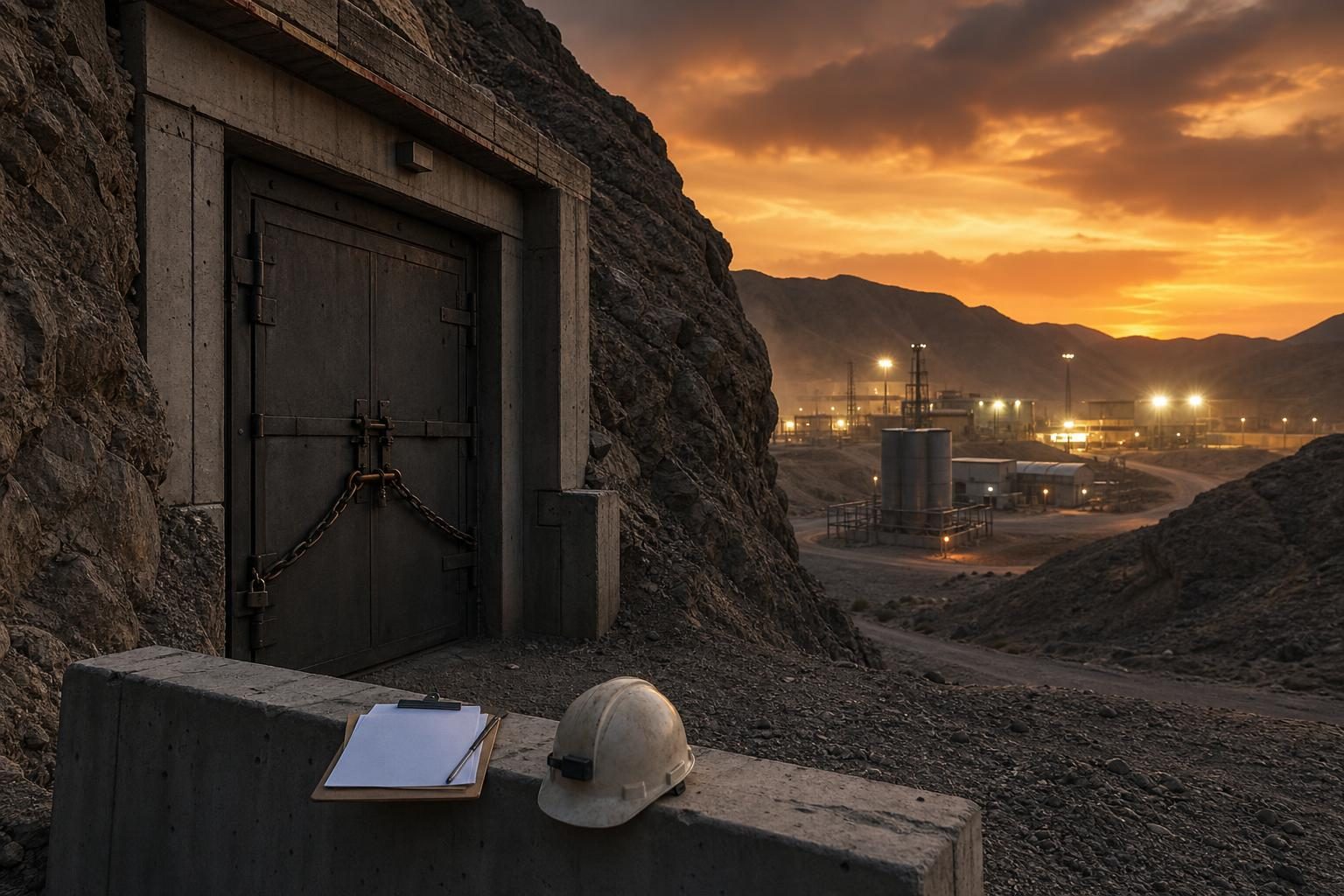
Part of our continuing coverage: U.N. Inspectors Don't Know Where Iran's Underground Enrichment Plant Is, as Its Guards Claim a Hit on a U.S. Radar in Bahrain
Key points
- Iran says inspectors will not return to its nuclear sites until its conditions are met.
- The IAEA says it cannot verify whether an underground enrichment plant holds nuclear material.
- Agency monitors have been kept out of enrichment sites since the June 2025 U.S.-Israeli strikes.
- Iran had about 440.9 kilograms of 60% enriched uranium before the strikes, the IAEA says.
Iran has told the United Nations' nuclear watchdog that it will not let inspectors back into its nuclear facilities until its own conditions are met, hardening a standoff that leaves the world unable to account for Tehran's most dangerous material [6].
The message, reported Saturday, followed Iran's statement to the International Atomic Energy Agency that talks on nuclear monitoring cannot move forward while the country faces military threats, according to the Associated Press account carried by the Los Angeles Times [1]. It came a day after the agency issued a sharp warning of its own.
What the Inspectors Cannot See
In its latest report, the IAEA said it cannot verify whether an underground uranium-enrichment plant in Iran contains nuclear material, Al Jazeera reported [2]. The agency called the gap in its knowledge a serious proliferation concern that requires urgent action [2][4].
The Washington Times reported that the U.N. report shows Iran will not allow inspectors into the facility it has built underground, the site at the center of the agency's concern [3]. The National reported that the agency is pressing Tehran for access to the plant and for information on what it holds [4].
The blackout is not new. Iran has barred agency monitors from its uranium-enrichment sites since the joint U.S.-Israeli strikes in June 2025, Al Jazeera reported [2]. Inspectors were able to visit the Bushehr nuclear power plant in September, but have had no access to the other facilities [2]. Earlier this year Iran told the agency that the attacks and the threats that followed had made normal safeguards impossible to carry out, according to the same report [2].
The Number That Matters
The material in question is not a small amount. The IAEA's June 2026 report to its Board of Governors said Iran had built up 440.9 kilograms of uranium enriched to 60% by the time of the June 2025 attacks [5]. That is a short technical step from the roughly 90% purity used in weapons, and the agency has not been able to confirm where all of it is or what has happened to it since.
The agency's director general has asked Iran to consider technical and gradual measures that would allow inspectors to return, Al Jazeera reported [2]. Tehran's answer, for now, is that it sets the terms.
Why It Matters
For Americans, the standoff is the clearest argument yet for the hard line the administration has taken. A regime that will not let inspectors count its uranium is asking the world to take its word on the one question that matters most: whether it is building a bomb. The IAEA's own words, a "serious proliferation concern," come from a body that cannot be accused of carrying Washington's water [2].
The concern is practical, not theoretical. Without inspectors on the ground, the agency cannot confirm whether any of the stockpile was moved after the strikes or whether enrichment is under way at the underground plant [2][5].
Iran's position is that its program is peaceful and that it is the victim of aggression. But a peaceful program has every reason to welcome inspectors, and the longer the doors stay shut, the harder it becomes for anyone to verify Tehran's claims.
The standoff also lands days before President Trump is scheduled to sit down with Chinese leader Xi Jinping and Russian President Vladimir Putin in Shenzhen, China, where the White House says the war with Iran will be on the agenda [6]. China and Russia have been Iran's most important diplomatic partners, and whether either is willing to press Tehran to reopen its sites will be one test of that meeting.
What Comes Next
The IAEA has not said when it might next be allowed into Iran's enrichment sites, and Iran has not spelled out publicly what conditions would satisfy it [1][6]. The report now goes before the agency's Board of Governors, the 35-member body that decides what action to take when a country falls short of its safeguards obligations.
Until inspectors are back inside, the world is left with satellite photos, intelligence estimates and Tehran's assurances. On a question this grave, that is not enough.
Sources
- [1]Los Angeles TimesIran tells U.N. nuclear agency that monitoring cannot proceed while it is under threatOpens in a new tab ↗
- [2]Opens in a new tab ↗
- [3]The Washington TimesU.N. report: Iran won't allow inspectors at uranium bunkerOpens in a new tab ↗
- [4]Opens in a new tab ↗
- [5]Opens in a new tab ↗
- [6]Al JazeeraIran will 'not allow IAEA inspectors access to their nuclear facilities until conditions met'Opens in a new tab ↗
Israel's new parliament is sworn in. Who would you rather see lead Israel?
- Benjamin Netanyahu
- Gadi Eisenkot
- Someone new
- That's for Israelis to decide
More in World News
Zelenskyy Says U.S. Envoys Asked Whether Ukraine Would Leave the Donbas in Exchange for NATO Membership
This morning on World Watch with Grace Whitfield
El Hierro's Emergency: A Tiny Canary Island Takes In Thousands in Days as Europe's Atlantic Route Roars Back
Overnight on World Watch with Grace Whitfield
Lebanese Army Raids Hidden Arms Depot in Hezbollah's Beirut Stronghold
Overnight on World Watch with Grace Whitfield
Were you there?
If you were at the scene, or this story touched your life, tell us what you saw and what it was like.
Discussion 0
Sign in or create a free account to join the discussion.
No comments yet. Start the discussion.