
 This morning on The Vance Edge with Sienna Vance
Somerville Wants Its Own Foreign Policy on Israel. Massachusetts Already Learned at the Supreme Court Why City Halls Shouldn't Have One
A 10-1 council vote to cut off city business with companies tied to Israel was sold as a stand for human rights. Its lone dissenter, local Jewish residents and a unanimous 2000 Supreme Court ruling point to a different lesson.
Filed November 14, 2026 · 📍 Supreme Court, DC 20543
Were you there? Share your story
Key points
- Somerville's council voted 10-1 to bar city business with companies it deems complicit in abuses in 'Israel and Palestine.'
- The lone 'no' vote warned the measure would make Jewish and Israeli residents feel less welcome.
- In 2000 a unanimous Supreme Court struck down Massachusetts' own foreign-policy purchasing law in Crosby.
- About 38 states have laws or orders against the boycott-Israel movement, starting with Illinois in 2015.
The city council in Somerville, Massachusetts, voted 10-1 on Thursday to bar the city from doing business with companies it considers complicit in human-rights violations, naming firms that operate in "Israel and Palestine," the Jewish Telegraphic Agency reported [1]. Supporters call it a moral stand. It is worth looking at what the measure actually does, who it singles out and what the Constitution says about cities writing their own foreign policy.
What Somerville Did
The ordinance grew out of a nonbinding 2025 ballot question that passed with 55.7% of the vote, Boston.com reported [2]. Councilors Ben Ewen-Campen and Ben Wheeler introduced it in June, and the mayor's office said that because it passed with a veto-proof majority, it is now final [2]. Neighboring Cambridge narrowly approved a similar divestment policy last month while rejecting a separate boycott measure [1][4].
The only councilor to vote no, Kristen Strezo, warned that the measure would make Jewish people and Israelis feel less welcome in city spaces, the Jerusalem Post reported [3]. Before the vote, Sam Gechter of the group Shalom Somerville argued that the ordinance singles out Jews who support Israel, the Times of Israel reported [4].
The Facts Point the Other Way
Start with the obvious problem. Of all the conflicts on earth, the ordinance names just one region, and the democracy at its center is an American ally [1]. When a policy framed around human rights names only one place, and that place is home to the world's only Jewish state, residents like Strezo and Gechter are right to ask why [3][4].
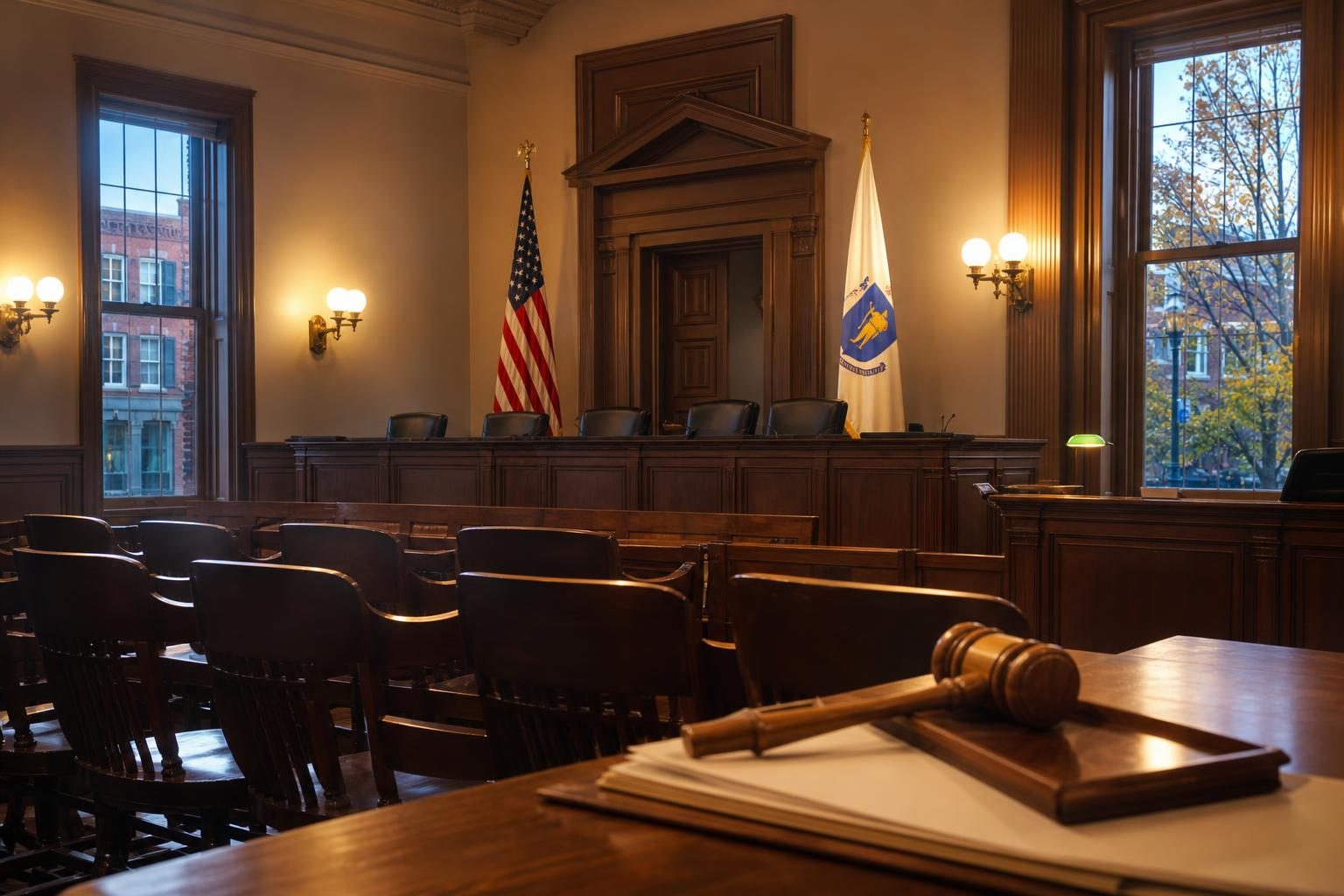
Then there is the law. Massachusetts has been here before. In the 1990s the commonwealth passed a law restricting state purchases from companies that did business in Burma [5]. In Crosby v. National Foreign Trade Council in 2000, a unanimous Supreme Court struck it down. Writing for the Court, Justice David Souter held that the state law was preempted because it stood in the way of the national sanctions scheme Congress had built, which gave the President flexibility to calibrate pressure on a foreign government [5].
The Court decided that case on narrow statutory grounds and did not rule on the broader question of whether states may make foreign policy at all [5]. But the principle behind it is the Founders' principle: the nation speaks to the world with one voice. A city council in Middlesex County was never meant to run its own sanctions program, and ordinances like Somerville's invite exactly the kind of patchwork the Court warned against.
Common sense points the same way. Somerville's purchasing power will not change events in the Middle East. What it can do is tell Jewish neighbors that their city has picked a side against the country many of them love, and tell contractors that their bids will be judged by geopolitics instead of price and quality. Taxpayers deserve the best deal for their money, not a political screening test.
Who Is Pushing Back
Most of the country has gone the other direction. About 38 states have adopted laws or executive orders against the boycott-Israel movement, beginning with Illinois in 2015, according to the American Jewish Committee [6]. Those measures generally deal with state contracts and investments, the same tools Somerville is now turning the other way [6].
In Somerville itself the opposition has come from residents and Jewish groups who spoke against the measure and from the one councilor who voted no [3][4]. They lost the vote, but they made the argument that matters: a city that wants to be welcoming cannot do it by singling out one community's homeland.
What Comes Next
With the ordinance now final, the next questions are practical ones: which companies the city will place on its list and how it will decide [2]. Those decisions will show whether the measure is a symbolic gesture or a working blacklist. Either way, Somerville's voters, its Jewish residents and its contractors deserve a clear answer to the question the Supreme Court has already raised. Who gave a city council the job of running foreign policy?
Sources
- [1]Jewish Telegraphic AgencySomerville city council votes to divest from IsraelOpens in a new tab ↗
- [2]Opens in a new tab ↗
- [3]The Jerusalem PostSomerville city council votes to divest from Israel as lone dissenter warns Jews feel targetedOpens in a new tab ↗
- [4]Opens in a new tab ↗
- [5]Cornell Law School, Legal Information InstituteCrosby v. National Foreign Trade Council, 530 U.S. 363 (2000)Opens in a new tab ↗
- [6]American Jewish CommitteeWhat to know about one state's efforts to revive boycott, divestment, sanctionsOpens in a new tab ↗
Have you ever been censored or shadow-banned on social media?
- Yes
- I think so
- No
- I'm not on social media
More in Pushback

Twelve States Refuse to Let One Judge Shut the Door on Trackable Mail Ballots for 2028
Overnight on Hollister Tonight with Jack Hollister

Chicago's Third CFO in a Year Walks Out Over 'Integrity' as Johnson's Budget Stalls
Overnight on The Bottom Line with Douglas Park
The Court America Never Joined Backs Off: ICC Drops U.S. Troops From Afghanistan Probe as Rubio Draws a Constitutional Line
Overnight on First Principles with Benjamin Stone
Were you there?
If you were at the scene, or this story touched your life, tell us what you saw and what it was like.
Discussion 0
Sign in or create a free account to join the discussion.
No comments yet. Start the discussion.