
 Tonight on The Vance Edge with Sienna Vance
Congress Can Investigate, but the Constitution Sets the Terms
Incoming House Democrats promise sweeping probes of President Trump, but a century of Supreme Court precedent ties Congress's subpoena power to a real legislative purpose, not exposure for its own sake.
Filed November 12, 2026 · 📍 Supreme Court, DC 20543
Were you there? Share your story
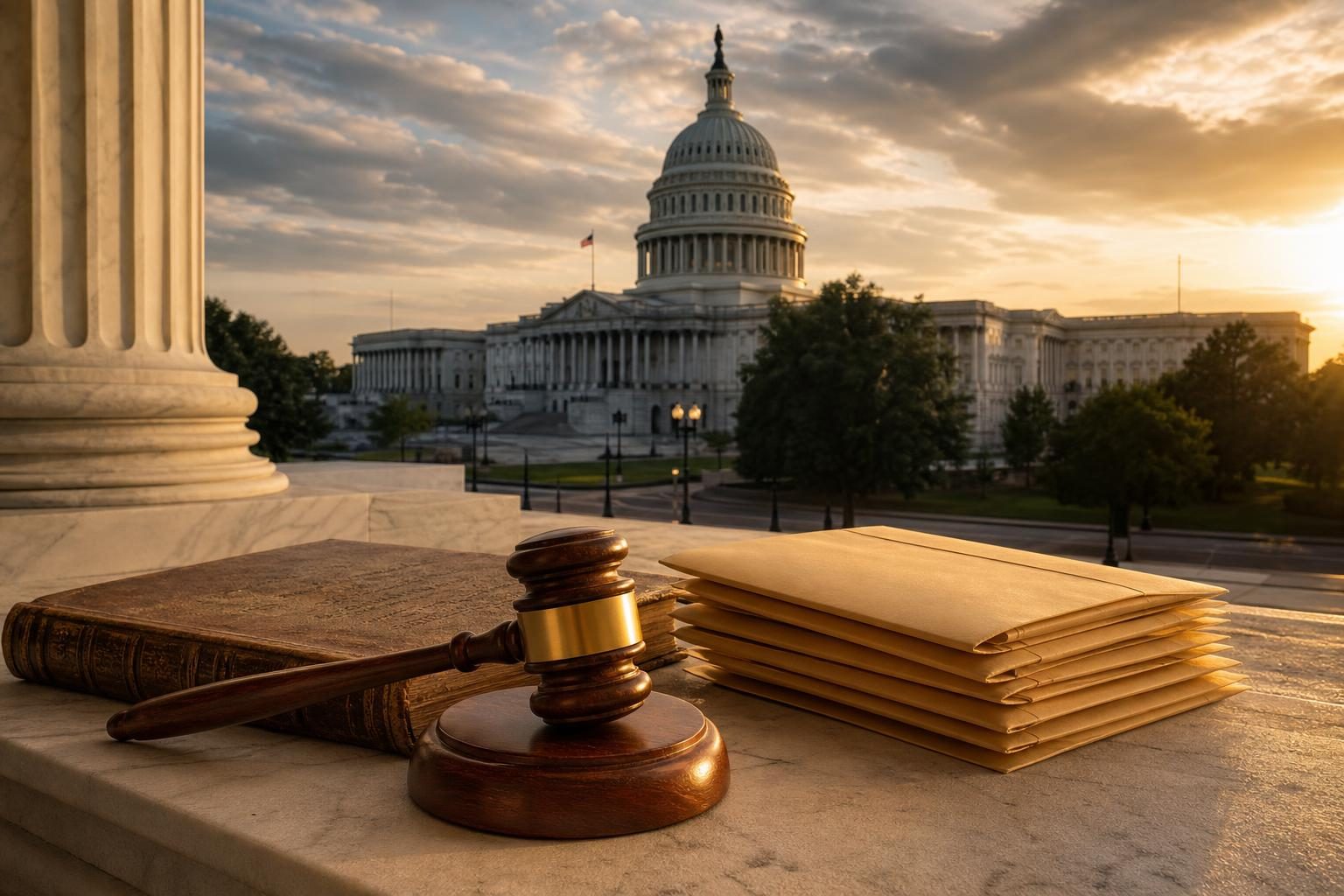
Part of our continuing coverage: White House Counsel Warns House Democrats Their Coming Probes Could Cross Into Criminality
Key points
- Democrats taking the House in January plan probes of Trump family wealth, Epstein records, ICE and White House construction projects.
- White House Counsel Will Scharf told Rep. Robert Garcia that subpoena power exists only for legitimate oversight, warning abusive process could turn criminal.
- McGrain v. Daugherty (1927) affirmed Congress's power to investigate; Trump v. Mazars (2020) reaffirmed there is no power to expose for exposure's sake and set tests for subpoenas of a president's records.
- Peter Navarro's Supreme Court petition on contempt of Congress is pending, with the government's response due Dec. 9.
When Democrats take control of the House in January, they plan to use their new power to investigate President Trump, his family and his administration, the Associated Press reported [1]. That is their right. The better question is narrower: oversight of what, and for what purpose?
The Agenda Democrats Have Announced
According to the AP, Democrats intend to examine how the president and his family have grown wealthier since he returned to office, the handling of the Jeffrey Epstein investigation, immigration enforcement, the White House ballroom and other construction, family mineral deals and the president's crypto dealings [1]. The administration denies wrongdoing [1].
NPR reported that Democrats say Epstein records were improperly redacted or withheld and accuse the Justice Department of shielding Trump, which department leadership denies [2]. They also target overseas projects involving the president's sons and construction from the East Wing remodel to a monumental arch, which NPR tied to a fight over rescinded spending [2]. Rep. Robert Garcia of California, the expected Oversight chairman, was blunt: "LAWYER UP" [2].
Then came a letter dated Monday from White House Counsel Will Scharf to Garcia. ABC News reported that it argued Congress holds subpoena power "only for oversight functions" and that talk of indiscriminate subpoenas signals harassment rather than a legitimate legislative end [3]. The AP reported he also warned that threats meant to deter public service, or process meant merely to intimidate, could become criminal [1]. Garcia replied that Congress has wide latitude to investigate, an authority inherent in the power to legislate, and will not be deterred [3].
The Constitution's Guardrails
Garcia's answer goes to the heart of it. Congress's investigative power is real, but it flows from, and is bounded by, the power to make laws.
The Supreme Court said so nearly a century ago. In McGrain v. Daugherty, decided in January 1927, the Court upheld the Senate's power to compel a witness in its inquiry into Attorney General Harry Daugherty's management of the Justice Department, calling the power of inquiry "an essential and appropriate auxiliary to the legislative function" [4]. The justices stressed that the subject was one on which Congress could legislate [4].
The limits are just as clear. In Trump v. Mazars, decided 7-2 in July 2020, Chief Justice John Roberts relied on Watkins v. United States (1957) to restate that "there is no congressional power to expose for the sake of exposure" [5]. The Court added that probes meant only to aggrandize investigators or punish targets are indefensible, and that Congress may not subpoena for law enforcement, a job the Constitution gives the executive and the courts [5].
Mazars itself arose from four subpoenas issued by three House committees in April 2019 for financial records of Trump, his family and his businesses held by his accounting firm and two banks [5]. The Court set aside rulings that treated a president's papers like anyone else's and told judges to weigh whether the legislative purpose justifies reaching the president's records, whether a subpoena is no broader than reasonably necessary, what evidence Congress offers of a valid purpose, and the burden on the president [5].
The opinion also recounts how such clashes were usually negotiated rather than litigated, from the 1792 House inquiry into General St. Clair's failed campaign, when Thomas Jefferson persuaded lawmakers to narrow their request, to a 1995 Senate subpoena involving President Clinton's lawyers [5].
Applied evenhandedly, those rules leave Democrats ample room. How taxpayer money is spent and how agencies carry out the law go to the core of Congress's work. A sweeping hunt through a president's family finances, launched with a warning to lawyer up, is what the justices cautioned against. The same rules governed Rep. James Comer's wide-ranging investigation of President Biden and his family [1]. Principles that bind one party bind the other.
Who Is Pushing Back, and What Comes Next
Republicans have responded with restraint. Comer, the current Oversight chairman, called Garcia's remark in bad taste but said Democrats won and their members would likely rein him in if needed [1]. Rep. Thomas Massie of Kentucky, an outgoing Republican and Trump critic, said he hopes for "real hearings about real things" rather than a replay of the Russia investigation, while acknowledging some corruption around the fringes [1].
Critics do have a point on one score. ABC News observed that the Speech or Debate Clause gives lawmakers sweeping protection and that it is unclear how the statements cited in the letter could break federal criminal law [3]. The White House's firmer ground is the legislative-purpose test the Supreme Court has already written.
Former Trump adviser Peter Navarro, who served four months in prison for contempt after defying the January 6 committee's subpoena, has asked the Supreme Court to revisit the willfulness standard used against him, the Washington Examiner reported [6]. Twelve states led by Oklahoma back him, and the government's response is due Dec. 9; the justices have not yet agreed to hear the case [6]. A ruling for Navarro could make future contempt convictions harder to win [6].
Scripture holds rulers to account, and so does our founding charter. If the new majority ties each subpoena to a law it could actually write, it will have the law on its side. If it seeks exposure for its own sake, the Supreme Court has already given the answer.
Sources
- [1]Associated Press (via WRAL)White House confronts Democrats over planned probes, claiming possible 'criminality'Opens in a new tab ↗
- [2]Opens in a new tab ↗
- [3]Opens in a new tab ↗
- [4]Justia U.S. Supreme Court CenterMcGrain v. Daugherty, 273 U.S. 135 (1927)Opens in a new tab ↗
- [5]Justia U.S. Supreme Court CenterTrump v. Mazars USA, LLP, 591 U.S. ___ (2020)Opens in a new tab ↗
- [6]Washington Examiner (via Colorado Politics)Supreme Court could hand lifeline to Trump officials facing subpoenasOpens in a new tab ↗
Have you ever been censored or shadow-banned on social media?
- Yes
- I think so
- No
- I'm not on social media
More in Pushback
A Poll Dip Is Not a Verdict: The Constitution and the States Still Stand Behind Capital Justice
Tonight on Order in the Court with Harold Whitmore
A Veterans' Arch at Memorial Circle Stands in a Proud American Tradition
Today on First Principles with Benjamin Stone
Leverage Abroad, Honest Books at Home: Why the Trump-Vance Plan Puts Taxpayers First
Today on World Watch with Grace Whitfield
Were you there?
If you were at the scene, or this story touched your life, tell us what you saw and what it was like.
Discussion 0
Sign in or create a free account to join the discussion.
No comments yet. Start the discussion.