
 This morning on Main Street Money with Marcus Hale
Choke the Oil, Hold the Bombers: Inside the President's Bet That Economic Pressure, Not New Strikes, Can End the Iran War
Rubio told the G7 the president chose a third way between war and a deal, and a new report says he still favors tightening the economic vise. Here is how the blockade works, what it costs and why patience may be the winning strategy.
Filed November 22, 2026 · 📍 Washington, DC 20001
Were you there? Share your story
Story tracker
- Claire Donovan
President Trump told Fox News on Sunday that he is inclined to resume major strikes on Iran after the New Year if negotiations fail to produce a deal, The Jerusalem Post reported. He called Iran's negotiators "professional tap dancers" and warned that Iranian vessels trying to breach the U.S. blockade would be sunk, though he has not announced a final decision on new strikes. Full story: article #1749.
Key points
- Rubio told G7 ministers the president chose economic pressure over resuming war or cutting a deal
- Israel Hayom, as relayed by Breitbart, says the president still favors widening the economic campaign; limited strikes remain possible
- A Treasury report found Iran had loaded no oil onto tankers since Aug. 25
- The Pentagon puts the war's cost at $48.3 billion, not counting base damage
For most of the autumn, the debate in Washington over Iran has been framed as a choice between two roads: go back to war or sign a deal. President Trump has chosen a third one, and every week it is costing Tehran more.
Secretary of State Marco Rubio laid out the approach to fellow G7 foreign ministers in Paris earlier this month. The president, he told them, had weighed resuming the war and had weighed a negotiated settlement, and instead chose to keep squeezing the regime economically, Axios reported [1]. "The third option we have is to continue to do what we do now," Rubio said [1].
A new report suggests the president still prefers that road. Citing a Saturday report in Israel Hayom based on three diplomatic sources, Breitbart reported that Mr. Trump favors expanding the economic campaign over renewed major strikes, with Washington working to choke off Tehran's remaining oil-export routes [2]. Limited strikes remain under consideration, according to that report [2].
What follows is a look at how the squeeze works, what it has achieved, what it costs, and why the president's patience is a strategy rather than a delay.
The Four Options on the Table
According to the Israel Hayom account relayed by Breitbart, the president's advisers presented four paths: negotiating a deal, launching a major offensive, carrying out limited strikes on nuclear and military sites, or widening the economic campaign [2]. The economic option reportedly has the backing of Rubio, Treasury Secretary Scott Bessent and Commerce Secretary Howard Lutnick [2].
Axios, reporting on the same choice earlier this month, said U.S. officials described Rubio as pushing the strategy of strangling the regime financially alongside Bessent, CIA Director John Ratcliffe and Jared Kushner [1]. The names differ slightly between the two accounts, but the picture is the same: the president's senior economic and national security team has largely lined up behind pressure first.
That does not mean the military option is gone. The New York Times reported this week that the president is weighing plans for further strikes and has not made a decision, while Israeli Prime Minister Benjamin Netanyahu is pressing him to join a four- to seven-day campaign, according to a Bloomberg report carried by Energy Connects [4]. Oil prices steadied on that news after a slide, the report said [4].
In other words, the president is keeping every card in his hand while playing the economic one hardest.
How the Squeeze Works
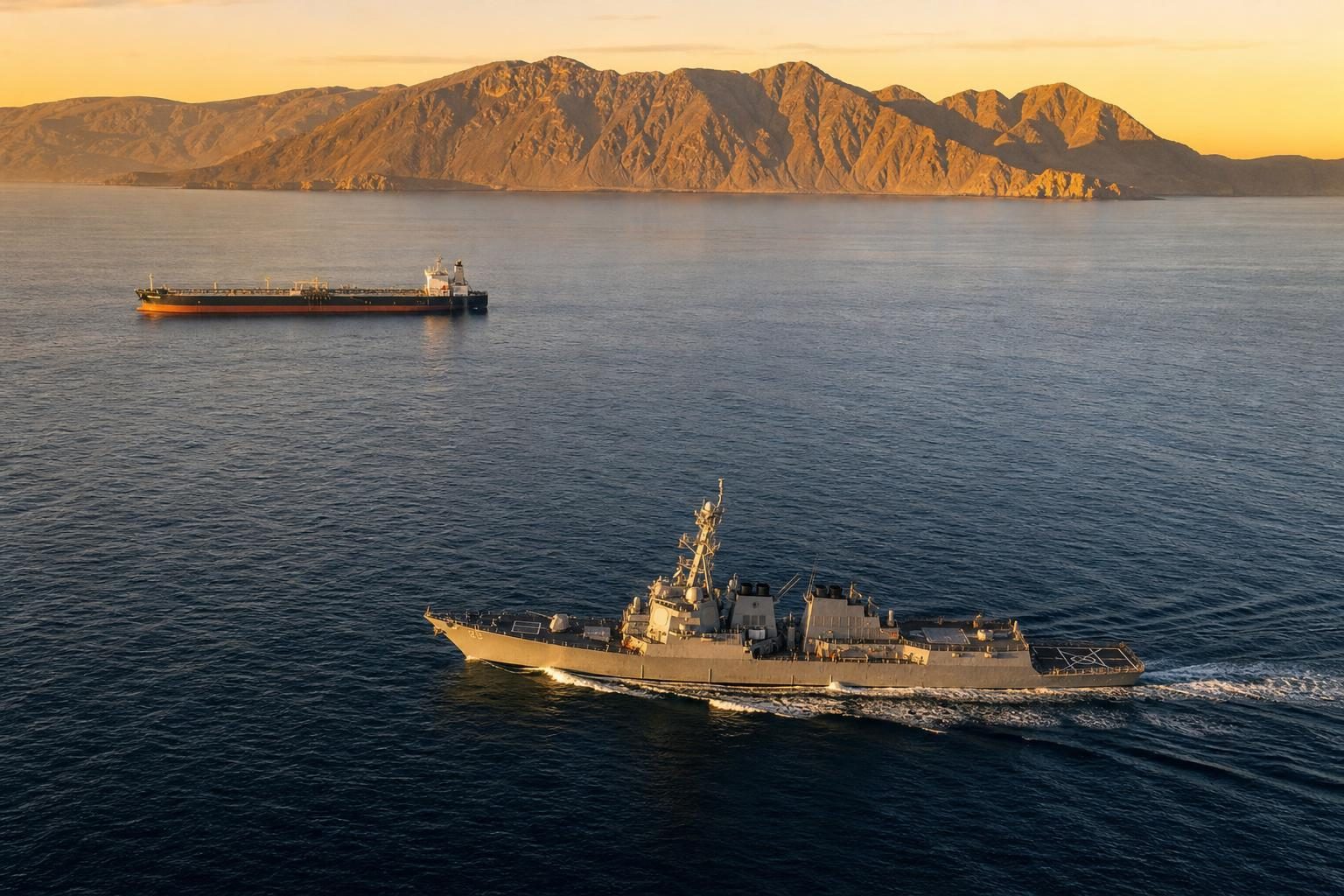
The centerpiece is the naval blockade. When the administration shifted to economic warfare in late summer, CNBC reported that the U.S. Navy's blockade had sharply cut Iran's oil exports [6]. By late October, a Treasury Department report obtained by Axios found that Iran had not loaded any oil onto tankers since Aug. 25 because of the blockade and sanctions [3].
That is a remarkable result. Oil money has long underwritten the Islamic Republic and its network of proxies. Cutting it off does not require a single American pilot to fly over Iranian air defenses.
Rubio argued at the G7 that the sanctions and blockade are disrupting Iran's economy and limiting its ability to fund terrorist groups or rebuild its armed forces, Axios reported [1]. Rubio also told his counterparts that the president is under no false time pressure and that Iran is doing major damage to its own economy, Axios reported [1]. The Breitbart account says the next phase is aimed at the export routes Tehran still has [2].
The same Treasury report described the blockade and sanctions as crippling Iran's economy [3]. That is the pressure reaching a regime whose rulers have long told their people that defiance of America costs nothing.
The Case for Patience
Critics on both sides argue the president should either strike harder or settle faster. There is a strong case that he has it right.
First, economic pressure spares American lives. Every day the Navy enforces a blockade instead of flying strike missions is a day fewer families wait by the phone. For a commander in chief, that is not a small consideration. It is the first one.
Second, it preserves America's strength for the threats beyond Iran. Bombing campaigns burn through munitions that take years to replace. A blockade wears down an adversary while keeping the arsenal ready for a far larger contingency in the Pacific.
Third, it keeps the pressure on the regime rather than on the Iranian people's patriotism. Airstrikes can rally a population around its rulers. Shortages and hardship tend to raise harder questions about the men who led the country into a war it cannot win.
And fourth, it keeps the initiative with Washington. Tehran wants a deal on its terms or a crisis it can use. The president is offering neither. He is simply making time work against the regime.
The Bill at Home
None of this is free, and Americans deserve a clear accounting. The Pentagon's latest estimate puts the cost of the Iran war at $48.3 billion as of Nov. 13, a figure that does not include damage to U.S. bases in the Middle East, according to an Associated Press report carried by WSB-TV [5]. Pentagon budget official Arthur Miller gave that estimate to the Senate Armed Services Committee, which is considering his nomination to be Navy comptroller, and lawmakers are pressing for the base-damage numbers the department has not released [5].
Those are real dollars, and Congress is right to ask for the full picture. But the honest comparison is not between the blockade and nothing. It is between the blockade and a wider air war, which would cost far more in munitions, aircraft hours and, most important, risk to American service members.
Congress has a role beyond the ledger, too. Lawmakers who want the war to end sooner should welcome a strategy built on sanctions and a blockade, tools that keep the fight economic rather than kinetic and give American diplomats real leverage if Tehran ever decides to negotiate in good faith.
Transparency will strengthen the president's hand, not weaken it. If the economic strategy is working, as the Treasury's own reporting suggests [3], a full public accounting of what it costs will only make the case more convincing.
What to Watch
Three things will tell Americans whether the third way is working.
The first is Iran's oil. If the remaining export routes the administration is targeting are closed, as the Israel Hayom account describes, Tehran's hard-currency lifeline will narrow further [2].
The second is the strike decision. The New York Times account makes clear that the military option is still live and that Israel wants action [4]. A limited strike would not necessarily mean the end of the economic campaign; the two can work together. But it would mark a new phase.
The third is the price at the pump. Oil markets have been swinging between hopes for an end to the war and fears of a new round of fighting [4]. A strategy that wins without sending American gasoline prices soaring is a strategy worth sticking with.
The Bottom Line
The president has been criticized for not ending the war quickly enough and, in the same breath, for not fighting it hard enough. The truth is that he has chosen the path that asks the least of American troops and the most of Iran's rulers.
Patience is not weakness. It is the discipline to let pressure do its work. If the reports are right, the president intends to keep tightening the vise, and the regime in Tehran is running out of room.
Sources
Israel's new parliament is sworn in. Who would you rather see lead Israel?
- Benjamin Netanyahu
- Gadi Eisenkot
- Someone new
- That's for Israelis to decide
More in World News
Trump Puts Iran on Notice: No Deal by the New Year Could Bring Renewed Strikes, as Tehran's Allies Keep Firing at the Gulf
Today on The Briefing Room with Claire Donovan
Still Burning Off Finland: The Kaliningrad-Bound Ship Fights a Sinking Risk as Russia's Baltic Enclave Sounds a Rare Air Alert
This morning on Command Post with Dan Whitaker
'The Water Was on Fire': Swimmer Braves Hormuz War Zone
This morning on Launch Pad with Hannah Lindgren
Were you there?
If you were at the scene, or this story touched your life, tell us what you saw and what it was like.
Discussion 0
Sign in or create a free account to join the discussion.
No comments yet. Start the discussion.