
 This morning on Main Street Money with Marcus Hale
No People on the Night Shift: P&G Bets Big on Robots
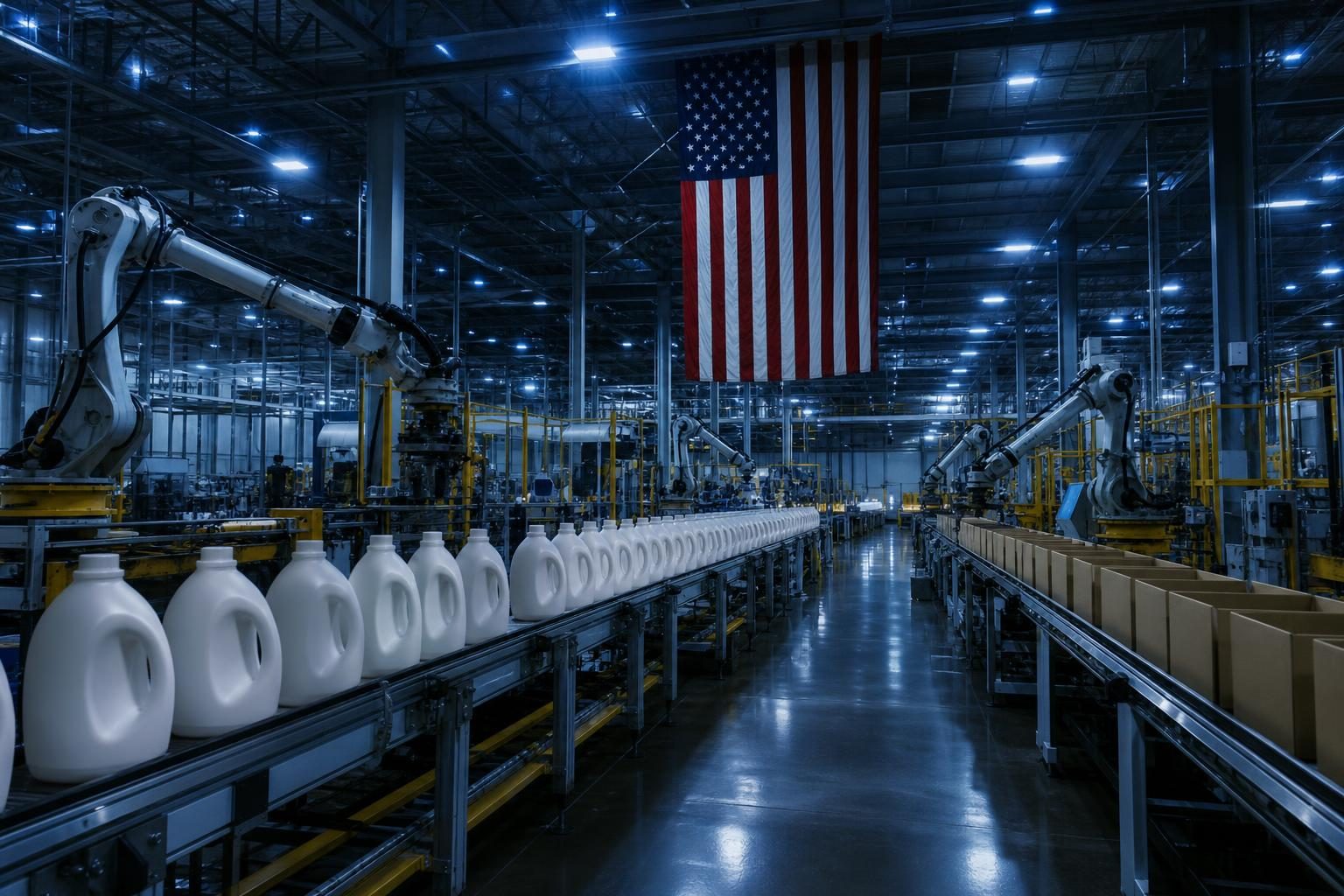
The maker of Tide and Pampers is expanding factory shifts that run with no workers on site and aims to cut its supply workforce by as much as 30 percent by 2030.
Filed November 22, 2026 · 📍 Cincinnati, OH 45202
Were you there? Share your story
Key points
- P&G aims to cut its product-supply workforce, contractors included, by 20 to 30 percent by 2030.
- Unattended, fully automated shifts already run at more than 15 sites and will expand in fiscal 2027.
- The company targets up to $10 billion in productivity savings from fiscal 2027 through 2030.
- P&G has not said how many workers or which plants will be affected.
Procter & Gamble, the Cincinnati company behind Tide, Pampers and Gillette, is running more of its factory shifts with no people on the floor, The New York Times reported Sunday [1]. The move is the centerpiece of a plan that could shrink the company's manufacturing and logistics workforce by as much as 30 percent by the end of the decade.
What P&G Told Investors
At its investor day on Nov. 19, P&G set a goal of cutting its product-supply workforce, contractors included, by 20 to 30 percent by 2030, Quartz reported [2]. The target was laid out by Chief Product Supply Officer Luc Reynaert as part of a program the company calls Supply 3.0. Coverage of the presentation noted that P&G gave no headcount for the target [2].
The so-called unattended shifts are automated manufacturing and warehouse lines that keep running for long stretches, often overnight, with no staff on site. P&G already runs them at more than 15 sites, plans to expand them in fiscal 2027, and expects them to lift productivity by 20 percent by 2030, according to Quartz [2].
Chief Financial Officer Andre Schulten told investors the plan includes up to $1.8 billion a year in savings on the cost of making goods [2]. Across the company, P&G is targeting up to $10 billion in productivity savings over fiscal years 2027 through 2030, 24/7 Wall St. reported [3].
Where It Started
The first unattended shift ran on July 1, 2024, at a Gillette plant in Berlin, a four-hour overnight stretch in which robots and automated systems moved materials from raw ingredients to finished product, Consumer Goods Technology reported [4]. P&G executives have said such shifts deliver productivity gains of 15 to 60 percent [4]. Manufacturing Dive has reported that big American manufacturers increasingly pitch automation as a way to cut costs and shorten work weeks [5].
The supply-chain plan comes on top of a restructuring P&G announced in June 2025 to cut up to 7,000 non-manufacturing jobs over two years, NBC News reported at the time [6]. The company has also raised its dividend for 70 straight years [3].
Why It Matters
P&G is not a struggling firm cutting to survive. It is one of the most reliable companies in America, and shareholders, including millions of retirement savers, will welcome lower costs and steadier prices on household staples.
But work is more than a line on a spreadsheet. Scripture calls labor a calling, and a factory job has carried generations of American families into the middle class. Towns that depend on a single plant will want to know which sites are affected and when. P&G has not published a plant-by-plant schedule. The fair test now is whether the company invests in retraining the people who built its success as aggressively as it invests in the robots that will take their shifts.
Sources
- [1]Opens in a new tab ↗
- [2]Opens in a new tab ↗
- [3]Opens in a new tab ↗
- [4]Consumer Goods TechnologyP&G's Dark Shift Factories Gaining TractionOpens in a new tab ↗
- [5]Manufacturing DiveCranky the robot and shorter work weeks: What manufacturers see as the value of AIOpens in a new tab ↗
- [6]Opens in a new tab ↗
Should towns welcome AI data centers?
- Yes, they bring jobs and tax money
- Only if they pay their own power costs
- No, they strain water and the grid
More in Business & Economy

Kalshi Faces Monday Court Fight Over James' $36 Billion Suit
This morning on The Verdict Room with Natalie Sinclair

Degree in Hand, Job Out of Reach: Half of the Class of 2025 Is Underemployed as the Entry-Level Door Narrows
This morning on The Hart of the Economy with Evelyn Hart

Paolo Bulgari, Who Built His Grandfather's Roman Shop Into a Global Jewelry House, Dies at 89
Last night on Main Street Money with Marcus Hale
Were you there?
If you were at the scene, or this story touched your life, tell us what you saw and what it was like.
Discussion 0
Sign in or create a free account to join the discussion.
No comments yet. Start the discussion.