
 Overnight on Cross-Examination with Dominic Kane
A NATO Ally Pledges to Defend Qatar: The Hard Questions America Should Ask About the Türkiye-Qatar Pact
Erdogan and Qatar's emir signed a mutual defence agreement in Istanbul, raising pointed questions about NATO, U.S. forces at Al Udeid, Israel and the Iran war.
Filed November 14, 2026 · 📍 Washington, DC 20001
Were you there? Share your story
Key points
- Türkiye and Qatar signed a mutual defence pact in Istanbul on Nov. 13, pledging a unified stance against any external armed attack.
- The text has not been detailed publicly, and it is unclear whether it includes an automatic collective-defence clause.
- The leaders' joint statement accused Israel of violating the Gaza peace plan.
- Qatar already holds a U.S. security pledge issued by executive order in 2025, not a Senate-ratified treaty.
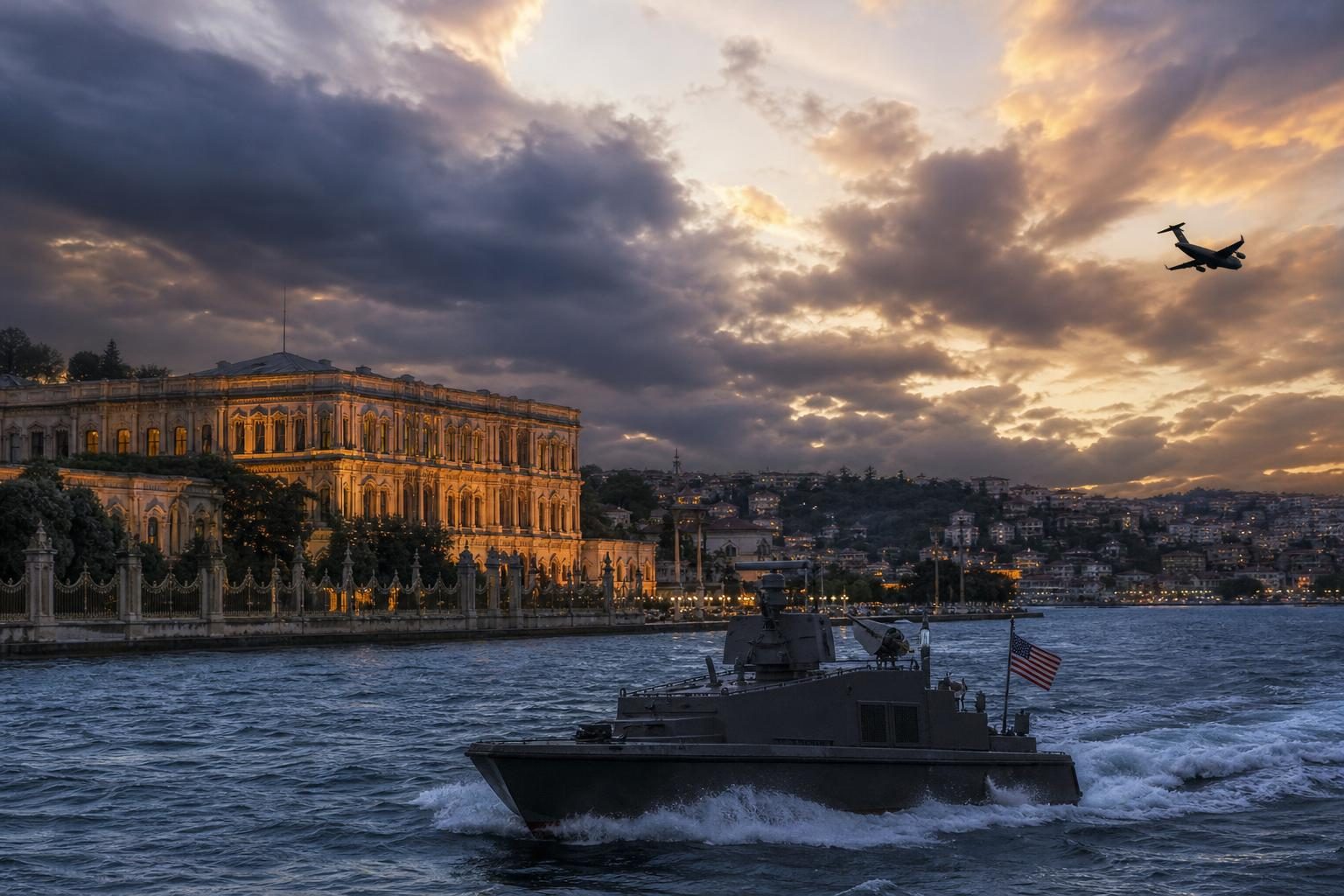
Türkiye and Qatar signed a mutual defence agreement in Istanbul on Friday, tying a NATO member to a Gulf state that hosts American forces and sits in the shadow of the Iran war. President Recep Tayyip Erdogan and Qatar's emir, Sheikh Tamim bin Hamad Al Thani, pledged a unified stance against any external armed attack on either country, Al Jazeera reported [1].
The Turkish presidency described the agreement as a new dimension in relations between the two nations [1]. Erdogan also said the two countries were working to develop and diversify their energy partnership and that their defence-industry cooperation would keep growing, according to a presidency statement reported by The Hindu [4]. Qatar's emir praised what he called a "strategic partnership," Al Jazeera reported [1].
What was actually signed
The Times of Israel reported that the two sides agreed to consult on threats to their security and to expand joint military exercises, defence-industry cooperation and exchanges of personnel for training, but that the official statement gave no further detail on the agreement's contents [3]. Gulf News noted that the joint statement does not say whether the pact contains an automatic collective-defence clause, and that it was not immediately clear how the commitments would be carried out [5]. Ankara says the deal is not directed at any other country [5].
The signing also carried a political message aimed at Israel. The leaders' joint statement accused Israel of violating the Gaza peace plan and called on it to honor the ceasefire, The Jerusalem Post reported [2]. Qatar's Foreign Ministry separately charged that ongoing Israeli violations were undermining the Comprehensive Plan to End the Gaza Conflict, according to The Times of Israel [3]. Erdogan's office said both sides would keep working to prevent a renewed war in the Gulf [3].
A 2014 agreement underpinned the stationing of Turkish troops at a base in Doha [1]. In August, Türkiye joined Saudi Arabia and Pakistan in a regional defence pact under which the three would come to one another's aid if attacked [1], and Friday's deal followed Turkey's ratification of that earlier agreement [5]. In October, Qatar, Türkiye, Pakistan and Indonesia also signed a memorandum on defence cooperation [5].
The hard questions for Americans
Start with the alliance. Türkiye is a NATO member. If Qatar is attacked and Ankara answers, what pressure falls on Washington and the rest of the alliance to stand behind a member that went to war in the Gulf? The pact's details have not been laid out [3].
Second, Al Udeid. Washington has already made its own promise to Qatar. After Israel's failed strike on Hamas officials in Doha in 2025, President Trump signed an executive order declaring that the United States would treat any armed attack on Qatar as a threat to American peace and security, and directing joint contingency planning with Doha, Axios reported [6]. Qatar now holds security pledges from two capitals. If missiles fly, who leads, who coordinates air defences, and how do Turkish and American forces avoid working at cross purposes near the U.S. troops stationed at Al Udeid? Security analyst Yusuf Alabarda told Al Jazeera that Turkish weapons and air defences could be deployed to Qatar in the near term [1].
Third, the message behind the move. Alabarda argued that Gulf states, Qatar above all, have concluded that American security guarantees are not working as they should [1]. Other experts who spoke to Al Jazeera framed the pact as a deterrent rather than preparation for an imminent fight [1]. Either way, a partner that hosts U.S. forces is hedging, and Americans deserve to know why.
Fourth, Israel. On the same day Qatar and Türkiye pledged to stand together against any external attack, they publicly accused Israel of breaking the Gaza deal [2]. Would Ankara treat an Israeli operation against Hamas figures on Qatari soil, like the 2025 strike that preceded Trump's order [6], as an attack that triggers this pact? No one has said.
Fifth, Iran. The region is still at war. Shipping through the Strait of Hormuz remains about 65 percent below pre-war levels, according to U.K. Maritime Trade Operations figures cited by Gulf News, and President Trump has said he will hold off on fresh strikes on Iran after appeals from Gulf states, including Qatar, while keeping a naval blockade in place [5]. Iran fired missiles at an American base in Qatar in June 2025, Axios noted [6]. A pact that names no enemy still has to reckon with the one across the water.
What comes next
The key tests ahead are whether the text is published, whether Turkish air defences arrive in Qatar [1], and how the pact fits alongside Washington's own pledge.
That pledge carries its own warning. Axios reported that the U.S. guarantee to Qatar rests on an executive order, not Senate ratification [6]. What one president signs, another can undo. Americans who believe commitments of war and peace belong before the people's representatives should take note: security promises in the Gulf are multiplying, and too few have faced a vote.
Peace in the region is worth praying for and working toward. It will not come from signing ceremonies alone, nor if Washington is the last to read the details.
Sources
- [1]Opens in a new tab ↗
- [2]Opens in a new tab ↗
- [3]The Times of IsraelTurkey, Qatar sign mutual defense agreementOpens in a new tab ↗
- [4]Opens in a new tab ↗
- [5]Gulf NewsUS-Israel-Iran war: Turkey, Qatar sign defence pact as Trump warns Tehran, Hormuz risks persistOpens in a new tab ↗
- [6]Opens in a new tab ↗
Israel's new parliament is sworn in. Who would you rather see lead Israel?
- Benjamin Netanyahu
- Gadi Eisenkot
- Someone new
- That's for Israelis to decide
More in World News
Israel's Coalition Standoff: Netanyahu Holds His Ground as Eisenkot Hunts for 61 Seats
Last night on World Watch with Grace Whitfield
Israel's Spy Chief Heads to Washington as Netanyahu Presses Trump to Finish the Job in Iran
Last night on World Watch with Grace Whitfield

Dutch Government Survives a 'Millionaire Tax' Revolt, for Now, as the VVD Refuses to Let the Left Write the Budget
Yesterday on World Watch with Grace Whitfield
Were you there?
If you were at the scene, or this story touched your life, tell us what you saw and what it was like.
Discussion 0
Sign in or create a free account to join the discussion.
No comments yet. Start the discussion.