
 Last night on Free Speech Frontline with Ryan Mercer
Trump Administration Keeps Pushing to Shut Chinese Gear Out of America's AI Data Centers as Big Tech Warns of Delays
The White House is moving ahead with an FCC plan to bar new Chinese optical transceivers from U.S. data centers, even as Amazon, Google, Meta and Microsoft warn the switch could take years.
Filed November 17, 2026 · 📍 White House, DC 20500
Were you there? Share your story
Part of our continuing coverage: Microsoft Reportedly Lobbies Trump Administration Not to Ban Chinese Data Center Parts
Key points
- Reuters reports the White House is advancing an FCC plan to bar new Chinese optical transceivers from U.S. data centers.
- Amazon, Google, Meta, CoreWeave, Cisco and Microsoft warned compliance could take up to a decade and invite Chinese retaliation.
- Chinese makers hold about two-thirds of the global market; lawmakers in both parties call the dependence a security risk.
- The move follows a Commerce rule this week curbing Chinese access to AI chips through overseas data centers.
The Trump administration is moving forward with a plan to keep new Chinese-made networking parts out of America's artificial intelligence data centers, even after Amazon, Google, Meta and other major technology companies pressed the White House to drop it, Reuters reported Tuesday in an exclusive account citing people familiar with the matter [1].
The industry's lobbying had raised doubts about whether the measure would survive [1]. Amazon, Google, Meta, cloud provider CoreWeave and networking giant Cisco joined Microsoft earlier this year in a meeting with White House officials to object, according to Reuters [1]. The people who spoke to the news agency cautioned that the effort could still be shelved if sentiment inside the administration changes [1].
A White House official declined to discuss the lobbying or where the measure stands, but pointed to recent Federal Communications Commission actions against Chinese and other foreign technology, which the official said had brought billions of dollars in new U.S. manufacturing investment and thousands of American jobs [1].
What the Plan Would Do
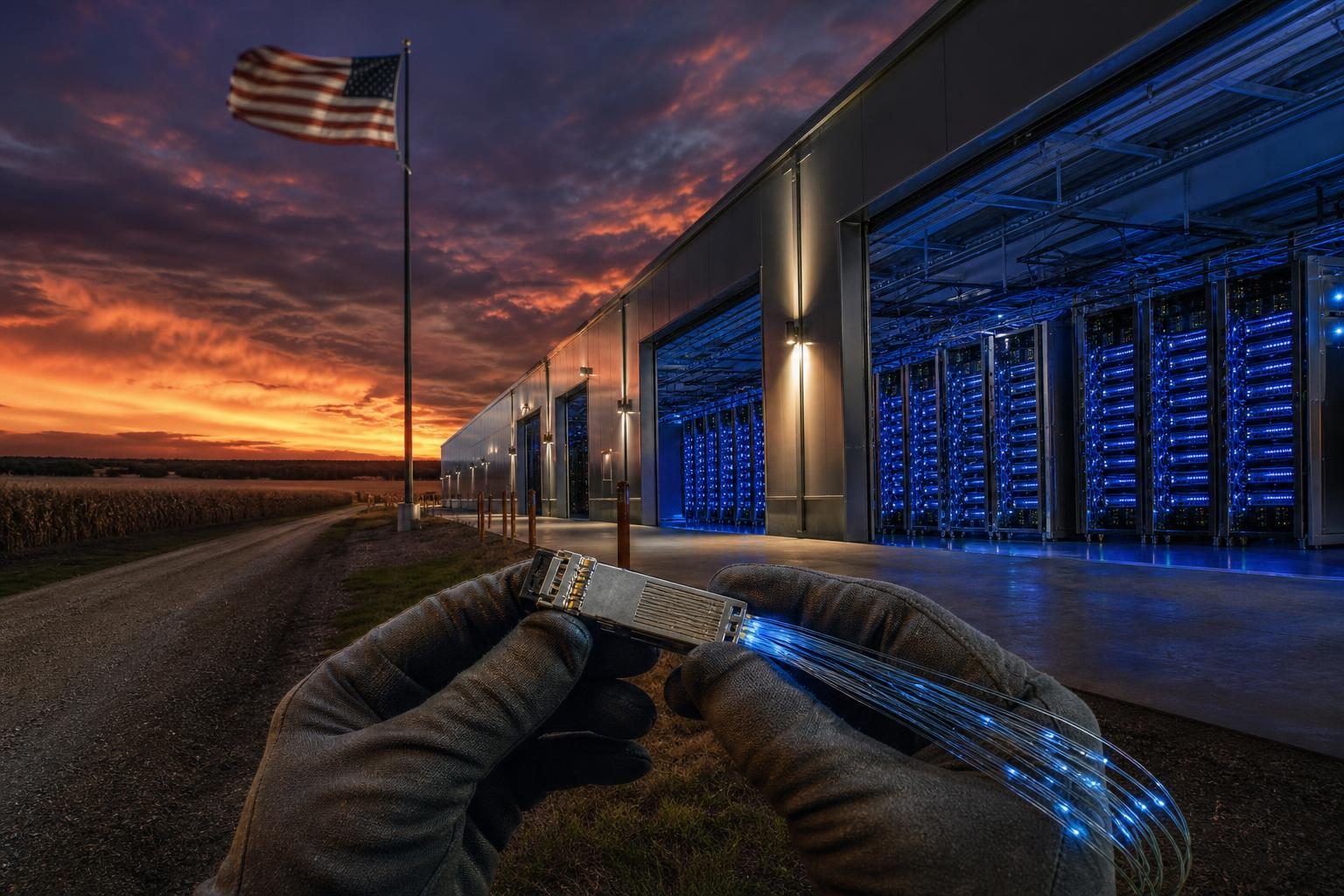
The measure is being drafted by the Federal Communications Commission. Reuters first reported in August that the commission was seeking to ban imports of new models of Chinese optical transceivers, the components that carry data over fiber-optic cables inside data centers [1]. At the time, Tom's Hardware reported, officials wanted restrictions in place during 2026, while China signaled it would respond if necessary [3].
U.S. officials fear Beijing could use the devices to steal data, install malicious software or disrupt service at American data centers [1]. Earlier Reuters reporting indicated the ban under discussion might be limited to the newest and fastest class of transceivers, those able to move 3.2 terabits of data per second [2].
The supply-chain stakes are just as large. Chinese manufacturers hold about two-thirds of the global optical transceiver market, according to Counterpoint Research figures cited by Reuters [1].
The House Select Committee on China, led by Republican Rep. John Moolenaar of Michigan, has urged the FCC to proceed, saying that Pentagon-listed Chinese military companies such as Zhongji Innolight "should not be wiring America's data centers" [2]. The concern crosses party lines. In September, Republican Sen. Dave McCormick of Pennsylvania and Democratic Sen. Ruben Gallego of Arizona, joined by Republican Sen. John Cornyn of Texas and Democratic Sen. John Fetterman of Pennsylvania, introduced a bill to keep Chinese transceivers out of U.S. national security systems [4]. The senators said no government-wide ban currently targets adversary-linked transceivers in those sensitive networks [4].
Big Tech's Case for Caution
The companies' objections are serious and deserve a fair hearing. According to Reuters, industry representatives told the White House that complying could take as long as a decade, because so little manufacturing capacity exists outside China [1]. They also warned that Beijing could retaliate by halting exports of indium phosphide, a mineral American firms need to build their own transceivers [1]. A Foundation for American Innovation report cited by Reuters found that U.S. makers Coherent and Lumentum compete with Chinese suppliers but lack the scale to replace them [1].
Microsoft and its allies have argued that a ban could slow the data center buildout and weaken America's lead over China in AI, Reuters reported last week [2]. The Information Technology Industry Council, a trade group, wrote to the FCC in August asking it not to add optical transceivers to its list of blacklisted equipment [2].
That urgency was on display Tuesday. Amazon chief executive Andy Jassy told Semafor's Silicon Valley & The World gathering that pulling back on AI infrastructure after a voter backlash against data centers in the midterm elections would be a "historic mistake" [6]. He said he could not imagine the United States halting construction and letting a country like China set the rules for AI, while conceding that tech companies must do better and work more closely with the communities where they build [6].
Both points can be true. A nation that means to lead in AI has to build quickly, but what it builds with matters as much as how fast, and a supply chain running through Beijing hands a rival leverage over systems Americans will depend on.
A Month of Tightening on China
Tuesday's report came one day after the Commerce Department moved to close a separate gap. On Monday, its Bureau of Industry and Security issued an interim final rule requiring licenses for chips headed to overseas data centers that provide significant computing power to companies headquartered in China and other restricted countries, The Hill reported [5]. The rule takes effect in 90 days and also requires licenses for advanced chip exports to Indonesia, Malaysia, Singapore, Thailand and Brazil [5].
That rule followed scrutiny of Singapore-based data center firm Megaspeed, which was reportedly under Commerce investigation over whether it helped smuggle Nvidia chips into China; the company has denied wrongdoing [5]. Commerce Secretary Howard Lutnick has agreed to appear before the Senate Banking Committee [5].
Taken together, the two moves target China's reach into American AI from both ends: the chips that compute and the parts that carry the data. Whether the FCC measure is finalized, narrowed or set aside is still unsettled, Reuters' sources indicated [1]. For now, the White House appears unwilling to let the pace of construction outrun the security of what is being built.
Sources
- [1]Reuters (via Yahoo Finance)Exclusive-Trump's China data center curb advances despite Amazon, Google, Meta lobbyingOpens in a new tab ↗
- [2]Reuters (via Cyprus Mail)Microsoft urges Trump to rethink China AI component banOpens in a new tab ↗
- [3]Opens in a new tab ↗
- [4]Office of Sen. Dave McCormickSenators McCormick, Gallego, Cornyn, Fetterman Introduce Bill to Keep Chinese Transceivers Out of U.S. National Security SystemsOpens in a new tab ↗
- [5]Opens in a new tab ↗
- [6]Opens in a new tab ↗
Do you trust AI chatbots to give straight answers on politics?
- Yes
- Sometimes
- No, they lean left
- I don't use them
More in Technology
Nvidia Halts Its Licensed Hopper Chip Shipments to China as Beijing Threatens to Answer America's New Remote-Access Rule
Today on Free Speech Frontline with Ryan Mercer
Facts Over Fear: Steady, Evidence-First Leadership Is Carrying America Through a Week of Outages
This morning on Free Speech Frontline with Ryan Mercer
Congress's Watchdog Got Four Top Chatbots to Plan Attacks, Including on the Power Grid. Protecting Americans Without Handing China the Lead Is the Next Test
This morning on Free Speech Frontline with Ryan Mercer
Were you there?
If you were at the scene, or this story touched your life, tell us what you saw and what it was like.
Discussion 0
Sign in or create a free account to join the discussion.
No comments yet. Start the discussion.