
 Today on Free Speech Frontline with Ryan Mercer
Nvidia Halts Its Licensed Hopper Chip Shipments to China as Beijing Threatens to Answer America's New Remote-Access Rule
Interim CEO Colette Kress walks away from roughly $2.4 billion in Chinese sales the government had approved, two days after Washington shut the data-center loophole.
Filed November 18, 2026 · 📍 Washington, DC 20001
Were you there? Share your story
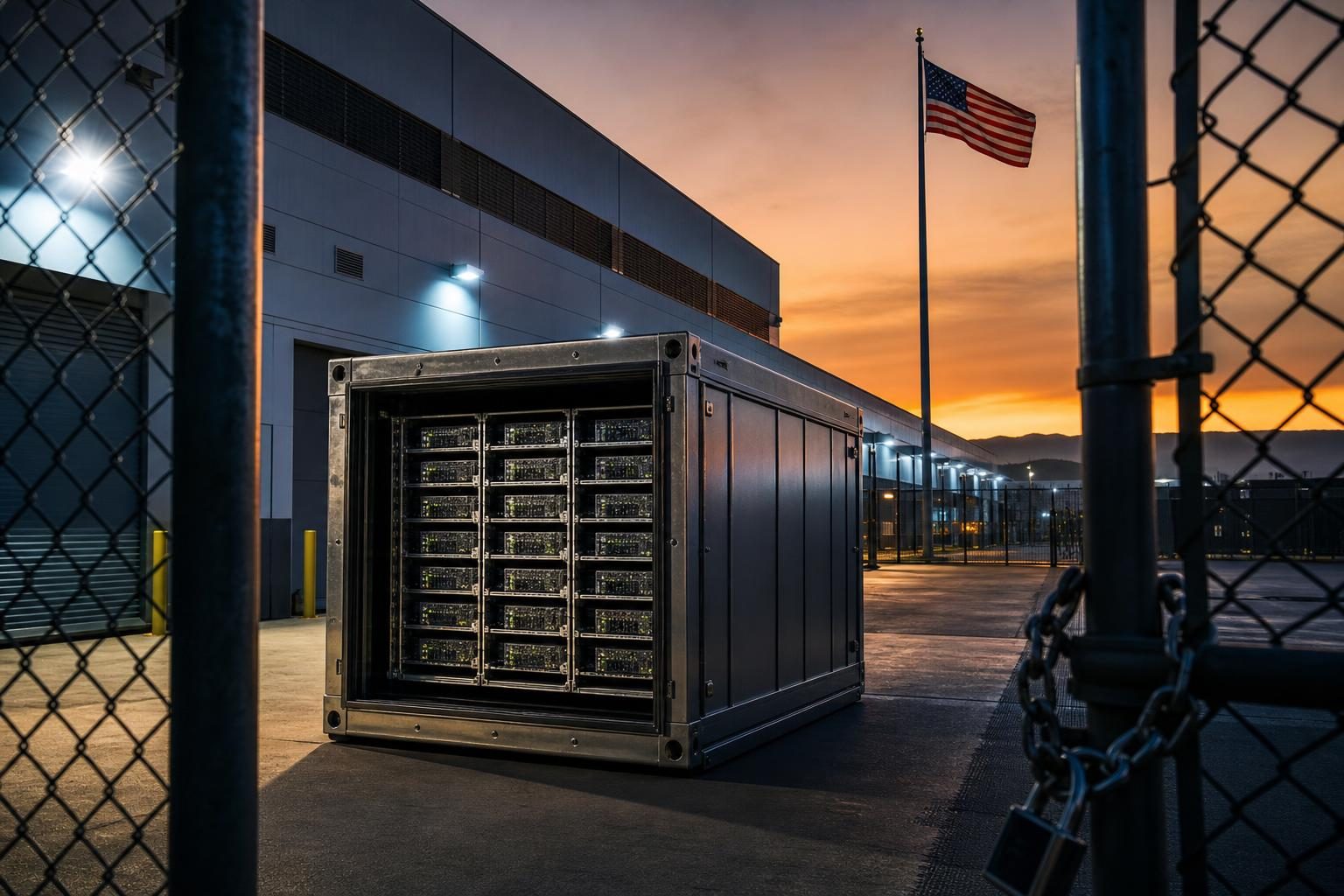
Part of our continuing coverage: Trump Administration Moves to Shut the Cloud Back Door That Let Chinese Firms Rent America's Best AI Chips
Story tracker
Our anchors are following this story. New details will appear here as they come in.
Key points
- Nvidia has stopped shipping licensed Hopper AI chips to China, even sales Washington had approved.
- The halt reportedly leaves about $2.4 billion in Chinese sales on the table.
- It follows Monday's U.S. rule closing the remote-access loophole for Chinese firms.
- China has threatened to retaliate against the new U.S. curbs.
Nvidia has stopped shipping its licensed Hopper-generation artificial intelligence processors to China, Fox Business reported Wednesday, even though Washington had cleared those sales [1]. The decision, announced by interim chief executive Colette Kress, marks a sharp break from founder Jensen Huang's long effort to keep the Chinese market open, according to The Times of India [2].
The pullback means the world's leading AI chipmaker is walking away from about $2.4 billion in Chinese sales, The Daily Caller reported, only days after Huang resigned over an affair with a woman suspected of ties to Chinese intelligence [3].
The timing matters. The move comes two days after the Trump administration closed a loophole that let Chinese companies use America's best AI chips remotely, through data centers in other countries, without ever importing the hardware, NPR reported [4]. And it lands as Beijing warns that it may answer Washington's new rules with curbs of its own [5].
What Nvidia Is Leaving on the Table
Hopper is the chip family that powered the first great wave of the AI boom, and the versions Nvidia was licensed to sell in China were a prize the company fought hard to keep. Under Huang, Nvidia had supported access to the Chinese market, The Times of India noted [2]. Kress has now taken the opposite course, halting even the shipments the government had approved, The Times of India reported, a step the outlet said lines up with Washington's tighter rules on advanced AI chips [2].
Fox Business likewise reported that the halt covers processors that had already received U.S. approval [1]. In other words, this was not a ban imposed on Nvidia. It was a choice the company made for itself.
That choice has a price. The Daily Caller put the lost business at roughly $2.4 billion [3]. For shareholders, that is real money. For a company whose new leadership is trying to rebuild trust with Washington after a week of damaging headlines about its former chief, it may also be the cost of credibility.
The Back Door Washington Just Shut
For years, American export controls focused mostly on where a physical chip ended up. A Chinese firm barred from buying Nvidia's top processors could instead rent computing time on them in a third country and reach that power over the internet. NPR reported that Monday's rule closes that gap, which had allowed Chinese companies to keep using advanced AI chips remotely despite the limits on selling the chips themselves [4]. We reported the details of that rule when it was issued on Monday.
Beijing did not take it quietly. China threatened to retaliate against the U.S. rules on remote access to advanced semiconductors, Semafor reported Tuesday, raising the risk of a new round of tit-for-tat restrictions between the world's two largest economies [5].
At home, the pressure is coming from the other direction. Rep. Bill Huizenga, a Michigan Republican on the House Foreign Affairs Committee, said it was "inexcusable" that the Commerce Department had not already closed the loopholes that let China reach advanced AI chips, The Daily Signal reported [6]. Huizenga pointed to a slate of bills in Congress aimed at chip security, including measures known as OVERWATCH and the Chip Security Act, according to the outlet [6].
Why It Matters to Our Readers
The chips that train the most powerful AI systems are not ordinary consumer goods. They will help decide who leads in medicine, manufacturing, intelligence and warfare for a generation. A dollar of sales to a rival today is a poor trade if it helps that rival's military tomorrow, and that has been the heart of the case for tougher controls.
Nvidia's decision puts the company on the same side of that line as its own government. It also gives Congress and the administration something they rarely get from a major technology company: a voluntary step that goes further than the law requires.
The trade-off is real. Chinese buyers will now lean harder on homegrown alternatives, and American investors will feel the lost revenue. But a country that wants to stay ahead cannot rent out its lead to the competitors it is trying to stay ahead of.
What Comes Next
The questions now are whether Beijing follows through on its threat, and what form any response takes [5]. Lawmakers will keep pressing for permanent chip-security rules rather than case-by-case enforcement [6], and investors will be watching whether other American chipmakers follow Nvidia's lead. We will keep tracking the fallout.
Sources
- [1]Opens in a new tab ↗
- [2]The Times of IndiaNvidia stops shipping US-approved AI chips to ChinaOpens in a new tab ↗
- [3]Opens in a new tab ↗
- [4]Opens in a new tab ↗
- [5]Opens in a new tab ↗
- [6]The Daily Signal'INEXCUSABLE': China Committee Member Slams Commerce Dept for Allowing Chip SmugglingOpens in a new tab ↗
Do you trust AI chatbots to give straight answers on politics?
- Yes
- Sometimes
- No, they lean left
- I don't use them
More in Technology
Facts Over Fear: Steady, Evidence-First Leadership Is Carrying America Through a Week of Outages
This morning on Free Speech Frontline with Ryan Mercer
Congress's Watchdog Got Four Top Chatbots to Plan Attacks, Including on the Power Grid. Protecting Americans Without Handing China the Lead Is the Next Test
This morning on Free Speech Frontline with Ryan Mercer
Roblox's CEO Skips the Senate's First Hearing on Child Predators in Online Games as Hawley and Durbin Move to Open the Courthouse Doors to Families
Overnight on The Sterling Report with Ava Sterling
Were you there?
If you were at the scene, or this story touched your life, tell us what you saw and what it was like.
Discussion 0
Sign in or create a free account to join the discussion.
No comments yet. Start the discussion.