
 Today on Launch Pad with Hannah Lindgren
Voyager 1 Nears One Light-Day From Earth, a First for Humanity
Launched in 1977, NASA's farthest spacecraft is days from a distance so great that its signals need a full day to reach home, and it is still sending data.
Filed November 14, 2026 · 📍 Tallahassee, FL 32301
Were you there? Share your story
Key points
- Voyager 1 is set to reach one light-day from Earth, roughly 16 billion miles, at 5:16 a.m. Eastern on Nov. 18.
- Commands now take about a day to reach the probe, and replies take another day to return.
- Shrinking power has left Voyager 1 with two working science instruments after an April 2026 shutdown and a September power swap.
- NASA says both Voyagers could stay in contact with Earth through about 2036.
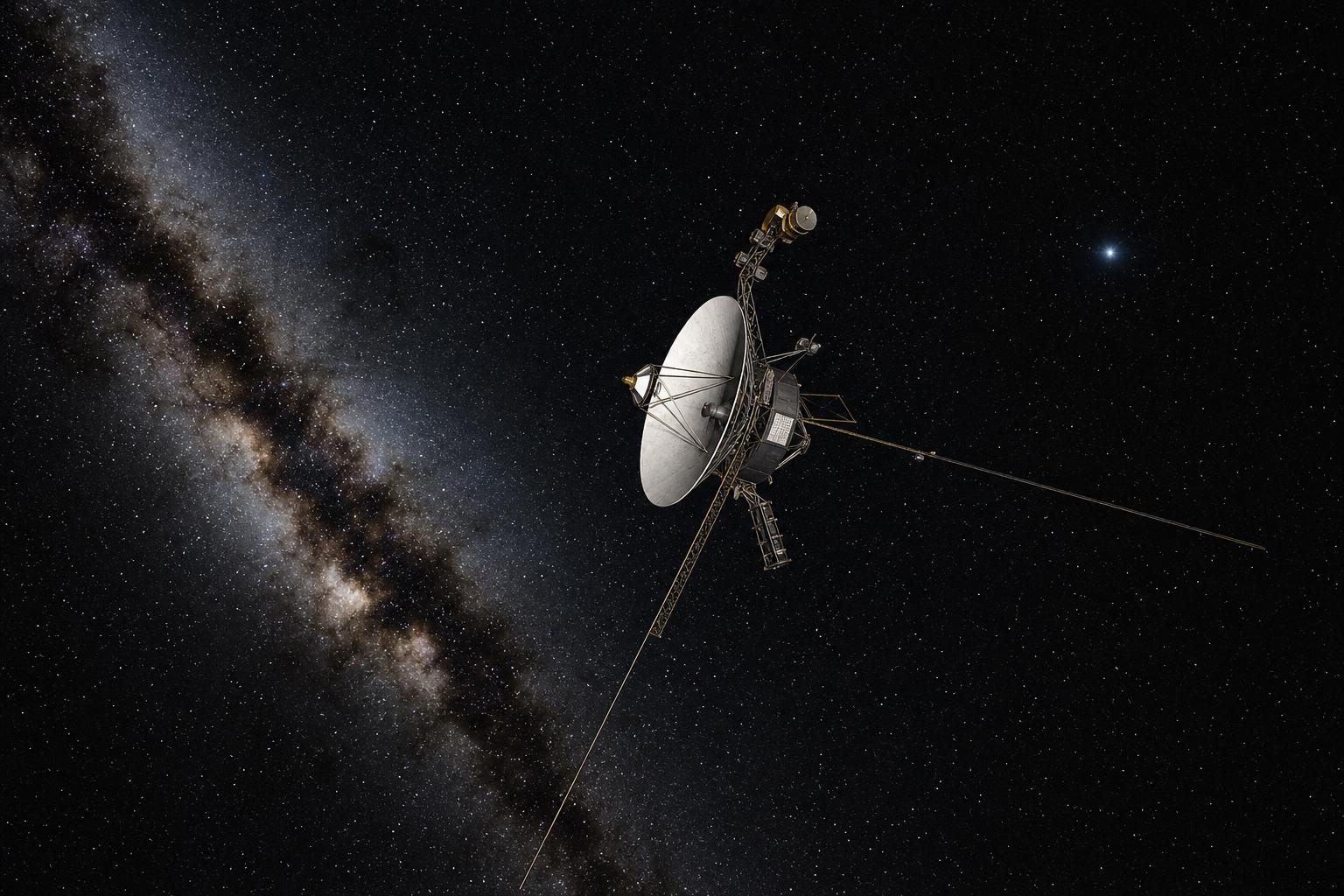
Sometime before dawn on the East Coast next Wednesday, a machine built in the 1970s will cross a line no human-made object has ever crossed. NASA's Voyager 1 is set to reach one light-day from Earth, the distance light travels in 24 hours, at 5:16:07 a.m. Eastern on Nov. 18, according to Science News. [2] That is roughly 16 billion miles, or about 26 billion kilometers, from home. [1][2]
Nothing will change aboard the spacecraft when it passes the mark. But the milestone captures what makes Voyager remarkable: a probe launched with 1970s technology is still flying, still talking to Earth and still sending back data from interstellar space. [1][6]
For people of faith, the moment invites something more than awe at engineering. "The heavens declare the glory of God," the psalmist wrote in Psalm 19:1, and few human achievements have shown the scale of that creation as vividly as Voyager.
A long road from Cape Canaveral
Voyager 1 lifted off from Cape Canaveral, Florida, on Sept. 5, 1977, aboard a Titan-Centaur rocket, on a mission to fly past Jupiter and Saturn, according to NASA. [1] It became the most distant human-made object in February 1998 and has extended that record every day since. [1]
In August 2012, Voyager 1 left the heliosphere, the vast bubble of charged particles blown outward by the sun, and entered interstellar space. [1] Science News reported that the crossing came on Aug. 25, 2012, when the spacecraft was about 18 billion kilometers from Earth. [2]
Even after more than a decade in that region, scientists are still learning what it looks like. Most researchers believe the heliosphere is stretched out like a comet, Science News reported, while others argue it is closer to a sphere or even shaped like a croissant. [2] Voyager 1 has also recorded four spikes in magnetic field strength and particle density around it, and those readings have stayed high since mid-2020 for reasons no one has yet explained. [2]
Linda Spilker, a planetary scientist at NASA's Jet Propulsion Laboratory, told Science News she never imagined the mission would last this long. [2] Jamie Rankin, a physicist at Princeton University, said every day of data from the Voyagers teaches researchers something new. [2] The publication noted that Ed Stone, the mission's original lead scientist, died in 2024. [2]
A day each way
The light-day mark has a practical meaning for the engineers who still fly the spacecraft from JPL in Southern California. Once Voyager 1 is a full light-day out, a command sent from Earth takes a day to arrive, and any reply takes another day to come back. [2] When the team switched off an instrument in April, the command sequence needed about 23 hours to reach the probe. [4]
That delay made the spacecraft's most serious recent emergency all the harder to solve. In November 2023, Voyager 1 stopped sending usable data. Engineers traced the problem to its flight data subsystem, one of its onboard computers, where about 3% of the memory had been corrupted, likely because a single chip had failed. [3]
The chip could not be repaired, so the team divided the affected code into sections and stored them in other parts of the computer's memory. [3] They sent the first set of commands on April 18, 2024, and two days later, on April 20, confirmed that Voyager 1 was returning readable engineering data for the first time since November 2023. [3] NASA said the team would next relocate the remaining code, including the portions that return science data. [3] It was a repair carried out across billions of miles on hardware nearly half a century old.
Living on a shrinking power supply
Voyager's greatest enemy now is not distance but power. Each spacecraft runs on radioisotope thermoelectric generators, which turn heat into electricity, and each generator puts out about 4 watts less every year, according to NASA. [6] NASA's Jet Propulsion Laboratory said power margins on Voyager 1 have grown thin. [5]
To stretch that supply, the team has been switching off heaters and instruments. [4] On April 17, 2026, engineers shut down Voyager 1's Low-energy Charged Particles instrument, leaving its magnetometer and plasma wave subsystem still at work. [4] The shutdown itself took about three hours and 15 minutes to complete, NASA said. [4] Voyager 2's version of the same instrument was turned off in March 2025. [4] Voyager 1's plasma science instrument had been switched off years earlier because its performance had degraded, according to NASA. [4]
In September, the team finished a months-long project nicknamed the "Big Bang," which swapped three power-hungry devices on Voyager 1 for lower-power alternatives. [5] Because those devices also help keep the spacecraft warm, the switch had to happen all at once. Without it, JPL said, another instrument might have had to be shut off as early as summer 2027. [5]
The aging probe still has surprises left. In October, NASA's Deep Space Network failed to detect Voyager 1 during two scheduled attempts. The silence ended on its own after about 48 hours, on Oct. 20. [5] Engineers believe a group of thrusters went offline and backups took over, which set off the spacecraft's automatic fault protection, though JPL said the cause was still under investigation. [5]
Postcards from home
Voyager 1 is more than a science probe; it is also a message. Each Voyager carries a 12-inch gold-plated record holding greetings, music and images from Earth, according to NASA. [1] Its cover includes a map showing the sun's location relative to 14 pulsars, so that any finder could trace where it came from. [1]
On Feb. 14, 1990, Voyager 1 turned its camera back toward home and took a 60-frame portrait of the solar system from about 3.7 billion miles away. [1] In the image known as the Pale Blue Dot, Earth appears as a speck about the size of a single pixel. [1] The cameras were powered off after those pictures were taken. [1]
That photo remains one of the most humbling images ever made. Every person, nation and story in human history fits inside that dot, a reminder of how small we are and how carefully our home was made.
What comes next for the Voyagers
The twin Voyagers were both still functioning as of April 2026, according to NASA. [6] The agency said the two spacecraft could remain within range of the Deep Space Network through about 2036, depending on how much power they have left to send a signal home. [6] NASA also noted that engineering data could keep coming back for several years after the science instruments go quiet. [6]
Each step of the shutdown plan buys time. JPL said the Big Bang swap was meant to extend how long Voyager 1's remaining science instruments can keep operating, delaying the day when the team must choose which one to give up next. [5]
Eventually the signals will fade, but the spacecraft will not stop. Voyager 1 will keep coasting through interstellar space, carrying its golden record into the dark long after the last engineer has gone home. [1]
For now, the milestone is a moment to marvel. A small craft built by human hands has traveled so far that light itself needs a full day to catch up, and it is still reporting what it finds. The heavens are vast, and nearly five decades on, Voyager is still declaring it. [1][2]
Sources
- [1]NASA ScienceVoyager 1: The Farthest SpacecraftOpens in a new tab ↗
- [2]Opens in a new tab ↗
- [3]Opens in a new tab ↗
- [4]Opens in a new tab ↗
- [5]NASA Jet Propulsion LaboratoryNASA's Voyager 1 Conserves Power, Resolves Brief Communications PauseOpens in a new tab ↗
- [6]NASA ScienceVoyager Frequently Asked QuestionsOpens in a new tab ↗
Do you trust scientific experts more or less than five years ago?
- More
- Less
- About the same
More in Science & Space

Back-to-Back Nevada Quakes Offer a Window Into a Land Slowly Pulling Apart
Overnight on Launch Pad with Hannah Lindgren
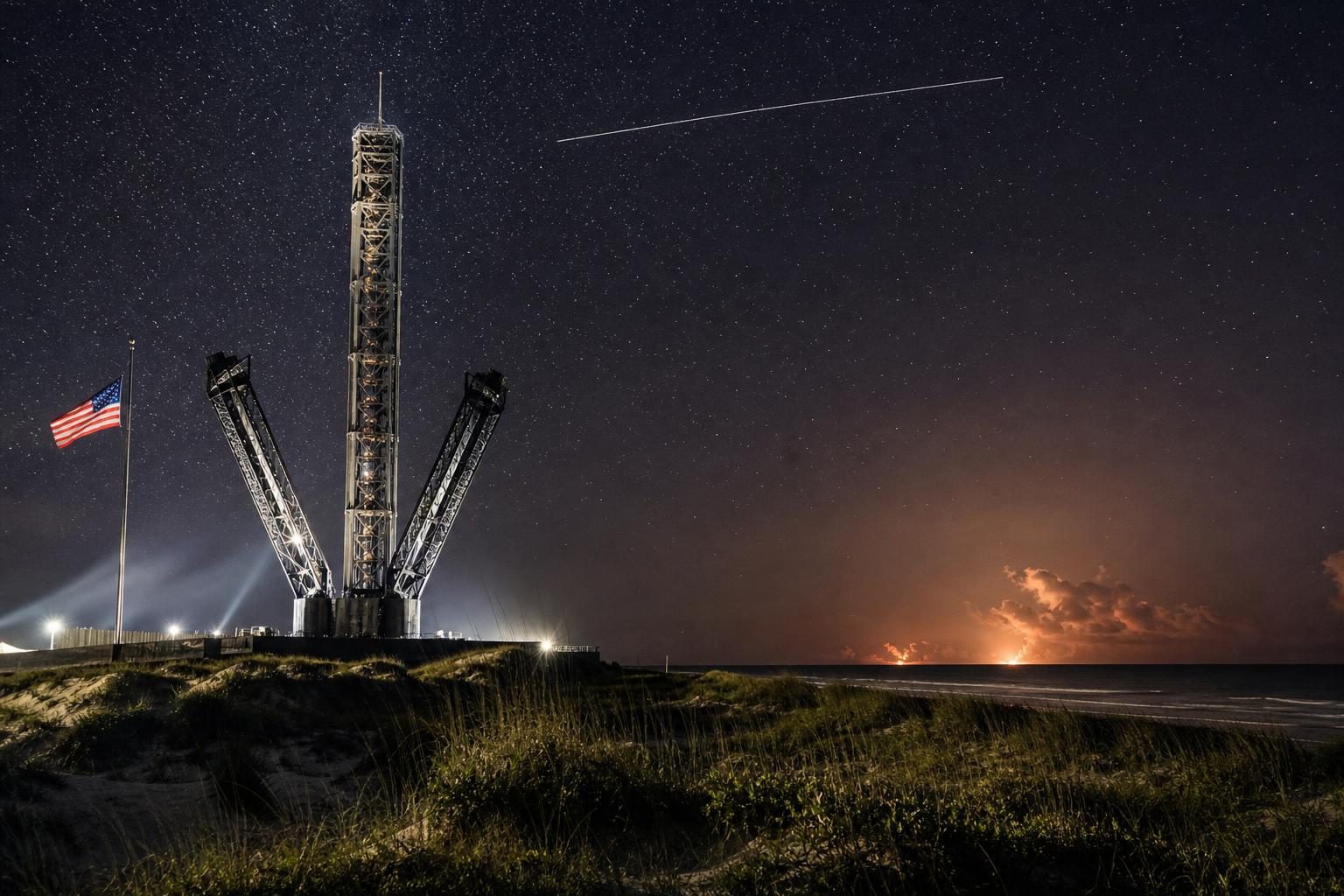
Starship Reaches Orbit on Flight 15, but a Booster Abort Ends SpaceX's Double-Catch Bid; Ship Catch Still Set for Saturday
Last night on Launch Pad with Hannah Lindgren
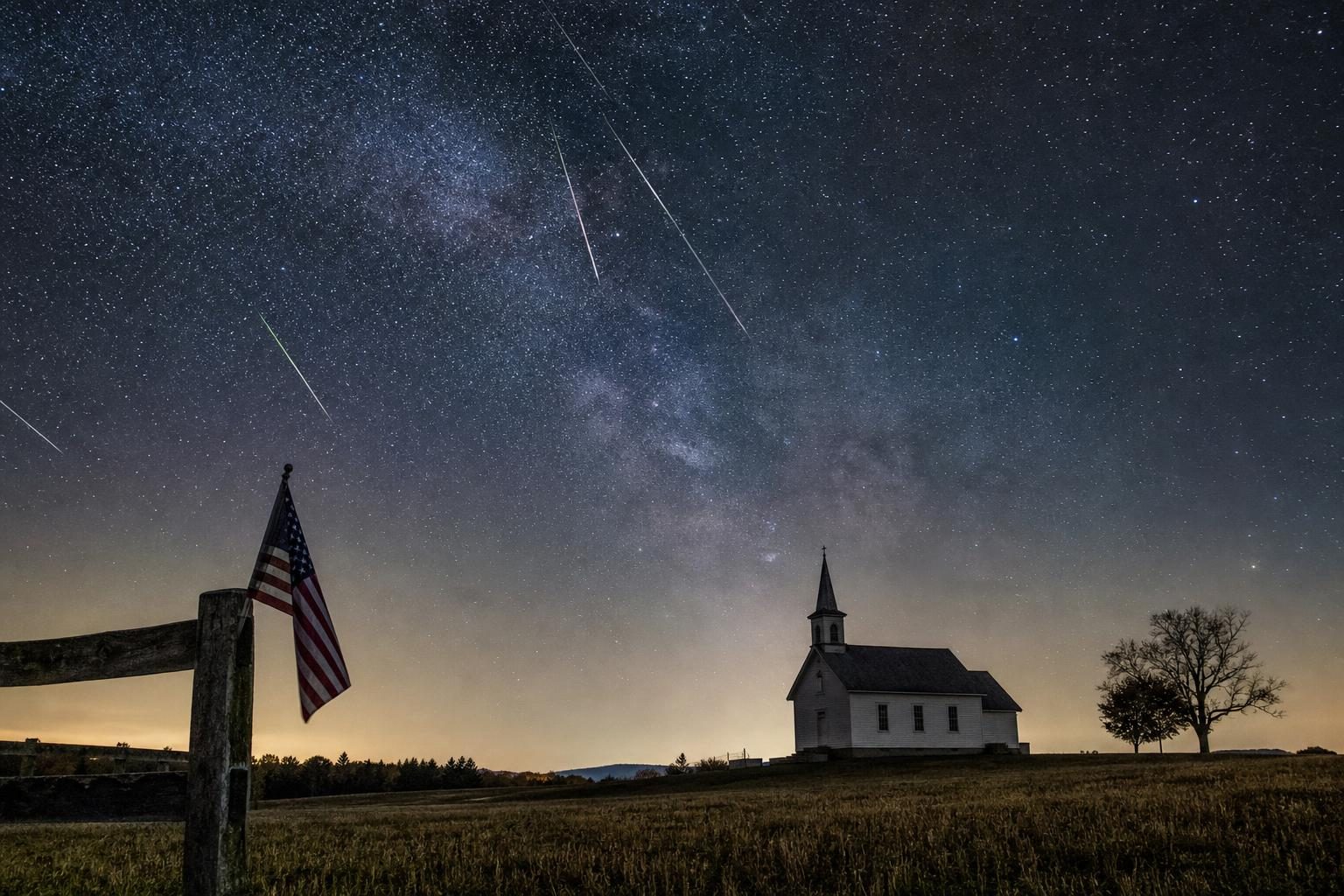
Under the Leonids: Next Week's Meteor Shower, a Comet's 33-Year Rhythm and the 1833 Night Americans Believed the Stars Were Falling
Yesterday on Launch Pad with Hannah Lindgren
Were you there?
If you were at the scene, or this story touched your life, tell us what you saw and what it was like.
Discussion 0
Sign in or create a free account to join the discussion.
No comments yet. Start the discussion.