
 This morning on Launch Pad with Hannah Lindgren
Launch Day at Starbase: Starship Flight 15's Minute-by-Minute Plan, Its Path Over South Texas and What a Double Catch Would Mean
Flight 15 lifts off from South Texas as early as 5:45 p.m. Eastern. The booster comes home in minutes; the ship flies 22 hours, crosses the Rio Grande Valley and tries to land in the tower's arms on Saturday.
Filed November 13, 2026 · 📍 Austin, TX 78701
Were you there? Share your story
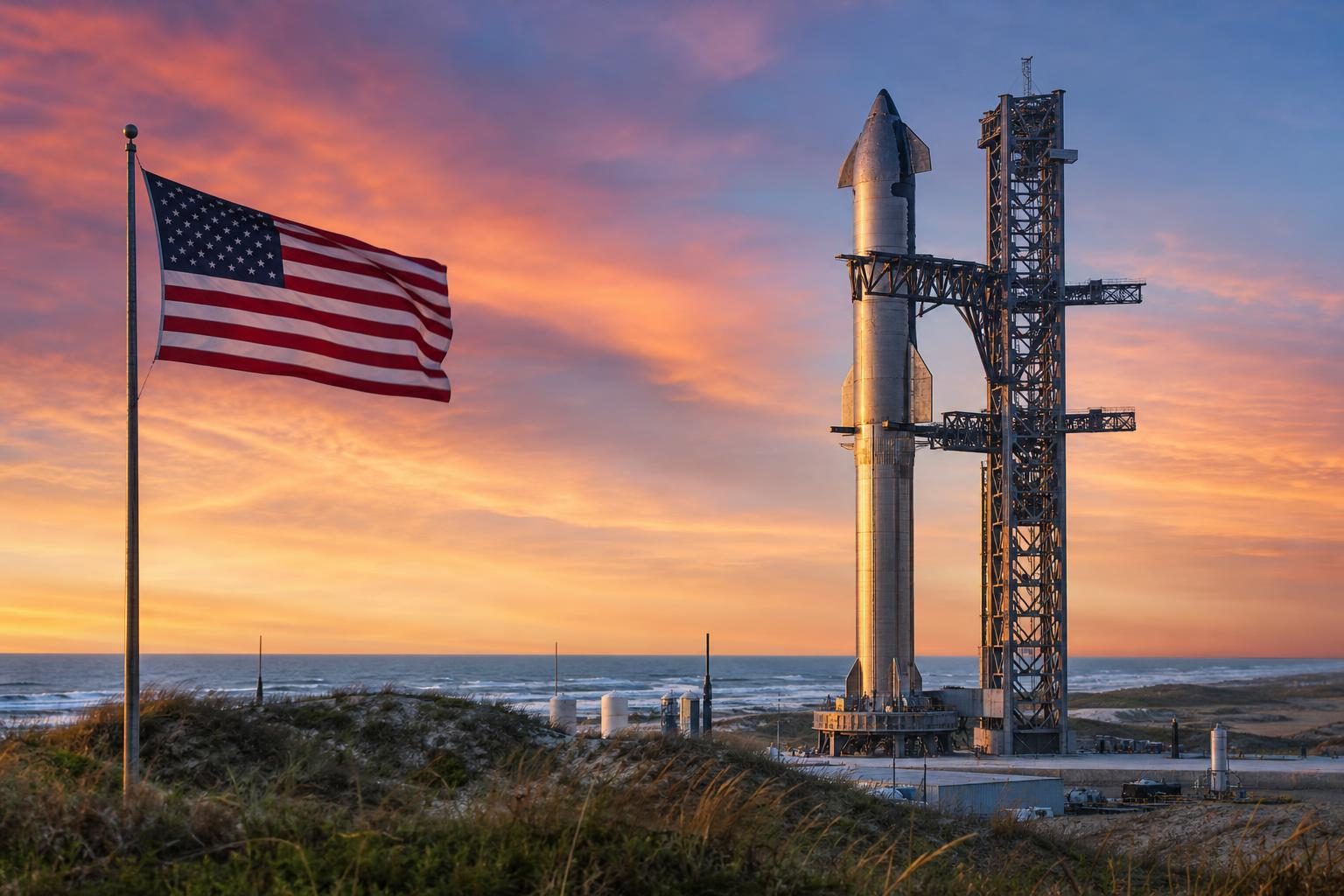
Part of our continuing coverage: SpaceX Will Try to Catch Both Halves of Starship on Friday, a First in Rocketry
Key points
- Starship Flight 15's 75-minute launch window opens at 5:45 p.m. ET Friday at Starbase, Texas.
- The Super Heavy booster is to be caught about 6.5 minutes after liftoff; the ship has never been caught before.
- The ship is planned to circle Earth about 14 times, deploy 26 Starlink V3 satellites and return Saturday afternoon.
- Its return path crosses northern Mexico and South Texas, putting Cameron County residents in line for sonic booms.
On Friday the 13th, of all days, SpaceX will try something no one has ever done: catch both halves of an orbital rocket as they come home. If it works, the giant Starship system will become the first orbital launch vehicle ever fully recovered, and America will take a long step toward cheap, routine trips to orbit, the Moon and beyond.
Starship Flight 15 is scheduled to lift off from SpaceX's Starbase site in South Texas during a 75-minute window that opens at 5:45 p.m. Eastern time, 4:45 p.m. in Texas, according to Space.com [1][2]. Gizmodo reported the same window [3]. The window closes at 7 p.m. Eastern [2].
Two Catches, One Flight
The plan has two parts, a day apart. First, the Super Heavy booster, which Space.com identified as Booster 22, will fly back to the launch site after separating from the ship and be caught by the tower's mechanical arms about six and a half minutes after liftoff [1][2]. SpaceX has caught a Super Heavy booster on three earlier flights, but it has never caught the ship [1][3].
The second catch is the new one. After a flight of just over 22 and a half hours, the Starship upper stage is supposed to return to Starbase and be grabbed by the tower's so-called chopstick arms [2]. Gizmodo reported that SpaceX will use two of its "Mechazilla" launch-and-catch towers, each about 480 feet tall [3]. If the ship launches on time, Space.com calculated that it would land at Starbase on Saturday at about 4:17 p.m. Eastern, or as late as 5:32 p.m. if it launches at the end of the window [2].
Space.com called the attempt a chance at "the world's first full recovery of an orbital rocket" [2].
The Flight Plan
The mission timeline published by Space.com lays out the day minute by minute [2]. The rocket is expected to pass through maximum aerodynamic pressure about a minute after launch, and the booster's engines will shut down at about two minutes and 19 seconds [2]. The ship will then light its own engines in what SpaceX calls hot staging, while the booster flips and burns back toward Texas [2].
The ship's main engines are due to cut off about eight minutes into the flight. A short engine burn about 26 minutes after liftoff will push it into orbit [2]. SpaceX described the target as an orbit about 275 kilometers, or roughly 171 miles, high, where the ship will circle Earth about 14 times [1][3].
Starship is also carrying real cargo. SpaceX plans to deploy 26 of its next-generation Starlink V3 internet satellites within the first 90 minutes of flight [2][3].
SpaceX built in plenty of off-ramps. Space.com reported that the team will check the ship's health at several points, early and late over the Pacific off Hawaii and midway through off Chile, with a late-mission zone in the Gulf of Mexico [2]. If something looks wrong, the ship can be put on a safe suborbital path or brought down at one of several pre-planned areas over the ocean [1][3].
Minute by Minute
For those following along at home, Space.com's published timeline gives the key moments [2]. Maximum aerodynamic pressure comes 58 seconds after liftoff. The booster's boostback burn runs from about two minutes and 26 seconds to just past three minutes, and its landing burn starts at about six minutes and 10 seconds, ending with the tower catch at about six minutes and 35 seconds [2]. If anything goes wrong on the way home, the Gulf of Mexico serves as the booster's wave-off zone [2].
The ship deploys its Starlink satellites between about 35 minutes and one hour and 17 minutes into the flight [2]. Nearly a full day later, at about 21 hours and 36 minutes, it fires its engine to leave orbit, hits the atmosphere about 35 minutes after that, slows below the speed of sound at roughly 22 hours and 30 minutes and lights its landing engines about two minutes later, touching down in the tower's arms at about 22 hours and 32 minutes [2].
A Path Over Texas, and Sonic Booms
The ship's return is the most daring part. Autoevolution reported that after a deorbit burn far out over the Pacific, the ship will come in from the west using its four flaps to steer, passing over populated areas of northern Mexico and southern Texas around the Rio Grande Valley, then north of South Padre Island and out over the Gulf before its final turn to Starbase [4]. The site said that path will put some people living in and around Cameron County under sonic booms [4]. It noted the ship will "come back over populated areas, something that has never happened before" [4].
The final approach is a piece of engineering theater. Autoevolution described the ship falling in a horizontal "bellyflop," then lighting three sea-level Raptor engines to swing upright, with one engine burning as the tower arms close around it [4]. Space.com's timeline has the landing burn and flip about 22 hours and 32 minutes after liftoff [2].
Learning From Flight 14
The last flight showed both progress and caution. Flight 14 on September 28 was the first Starship to reach orbit, but after an engine problem during the climb, SpaceX cut a planned flight of about 10 hours and six orbits down to roughly three hours, Gizmodo and Space.com reported [1][3]. The ship still performed its first deorbit burn, survived reentry and splashed down in the Pacific [3].
Elon Musk has called catching both stages "a profound technology milestone," according to Gizmodo, which said it would bring SpaceX closer to a fully reusable rocket that could cut launch costs and allow far more frequent flights [3].
Why It Matters to America
A rocket that can be caught, refueled and flown again is the difference between building a new airliner for every flight and simply turning the plane around at the gate. That is why this test matters well beyond Texas.
Space.com reported that Starship is central to NASA's plan to land Artemis astronauts on the Moon in 2028 and to future crewed flights to Mars [2]. Autoevolution likewise tied the recovery of both stages to NASA's lunar landings and eventual Mars missions [4]. Starship is also the workhorse SpaceX needs to launch its larger Starlink satellites, which Space.com said Musk envisions as a constellation of about 100,000 spacecraft [1].
For the country that first put men on the Moon, a fully reusable American launcher would be a statement of renewed confidence. It is also a reminder of what private enterprise and American ingenuity can do when they are allowed to take bold risks.
How to Watch
SpaceX will stream the launch on its website and its X account, starting about 30 minutes before liftoff, and Space.com will carry the feed beginning around 5:15 p.m. Eastern [2]. Autoevolution also noted the flight will be streamed on SpaceX's X channel [4]. Weather and technical issues can always push a launch back, and Space.com suggested watching the road and beach closure notices on SpaceX's Starbase page for clues [2].
What Comes Next
If the booster catch goes well tonight, all eyes will turn to Saturday afternoon and the ship's fiery return over South Texas. A successful double catch would be a first in the history of spaceflight. A failure would still give engineers data for the next try, the way every Starship test has so far. Either way, Friday the 13th may turn out to be a lucky day for American spaceflight.
Sources
Do you trust scientific experts more or less than five years ago?
- More
- Less
- About the same
More in Science & Space

Global Fossil Emissions Set to Dip in 2026, but Scientists Credit a Costly Oil Shock
Last night on Launch Pad with Hannah Lindgren
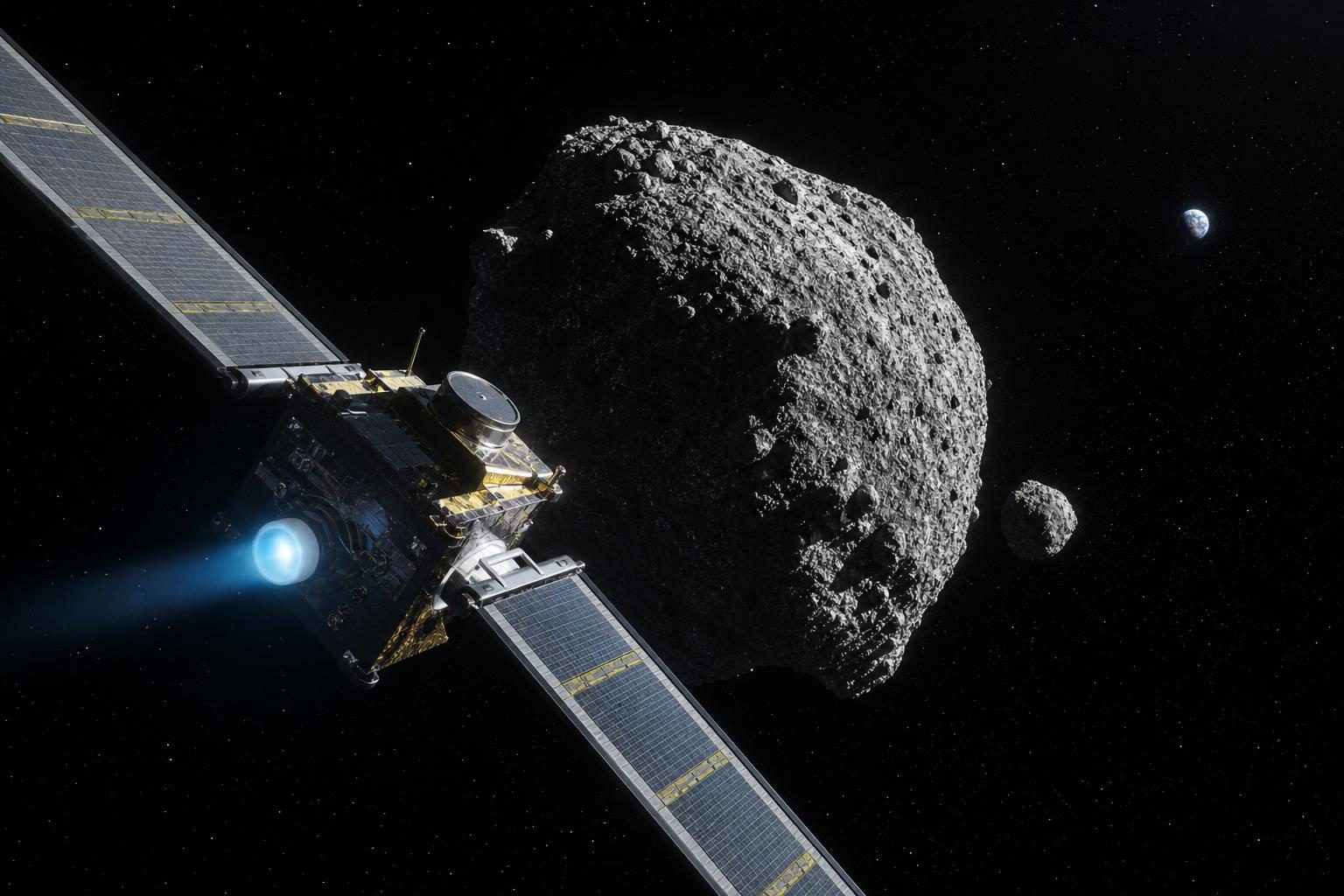
Europe's Hera Spacecraft Arrives to Investigate the Asteroid NASA Knocked Off Course
Yesterday on Launch Pad with Hannah Lindgren
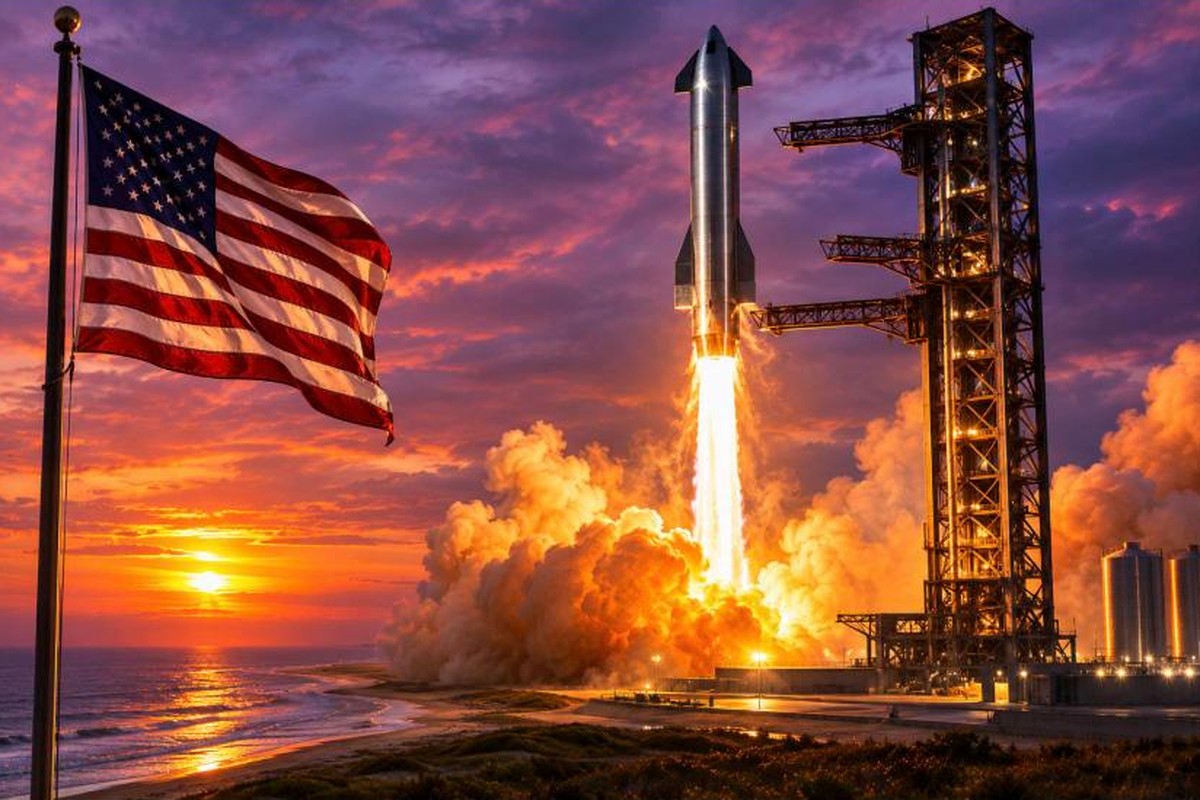
SpaceX Will Try to Catch Both Halves of Starship on Friday, a First in Rocketry
Wednesday night on Launch Pad with Hannah Lindgren
Were you there?
If you were at the scene, or this story touched your life, tell us what you saw and what it was like.
Discussion 0
Sign in or create a free account to join the discussion.
No comments yet. Start the discussion.