
 Tonight on Launch Pad with Hannah Lindgren
Global Fossil Emissions Set to Dip in 2026, but Scientists Credit a Costly Oil Shock
The Global Carbon Project projects a 0.4% decline in fossil CO2 this year, the first since 2020, with oil use squeezed by the Iran war and U.S. coal burning falling back.
Filed November 12, 2026 · 📍 Washington, DC 20001
Were you there? Share your story
Key points
- Global fossil CO2 is projected to fall 0.4% in 2026 to about 38.2 billion tons, the first decline since 2020, led by a 1.9% drop in oil emissions.
- Scientists tie the dip mainly to the Iran war's energy shock and high fuel prices, with renewables and EVs helping; the range still allows a small rise.
- U.S. emissions are projected down about 1.3% to 1.5% as coal use falls from a 2025 spike, even as American oil output and LNG exports grow.
- China falls 0.9% and the EU 1.5%, while India rises 4.4%; total CO2 including land use still hits a record 43.3 billion tons.
Global fossil-fuel carbon dioxide emissions are on course to fall this year for the first time since 2020, according to the Global Carbon Project's Global Carbon Budget, but its scientists say the biggest factor is an energy shock tied to the Iran war, not a clean-energy breakthrough [1][2].
The report, by more than 140 scientists and presented at the COP31 climate summit in Antalya, Türkiye, projects fossil CO2 emissions of about 38.2 billion metric tons in 2026, down 0.4 percent [3][5]. Analysts had expected a slight rise before the war disrupted the Strait of Hormuz, the route for about a fifth of the world's oil and liquefied natural gas, the Jerusalem Post reported [2].
Oil Down, Coal Up, India Climbing
Nearly all of the decline comes from oil, projected down 1.9 percent. Carbon Brief, in an analysis co-written by lead author Pierre Friedlingstein of the University of Exeter, ranked that among the biggest annual drops on record outside the 2020 pandemic year [4]. "It's pretty rare to see a drop in oil demand this big," Glen Peters of Norway's CICERO climate institute said, as quoted by the Post [2]. Gas emissions slip 0.3 percent while coal rises 0.6 percent, as some nations turned to domestic fuels such as coal [2][4].
China, with 32 percent of global fossil emissions, is projected down 0.9 percent as its oil emissions drop 4.6 percent [4]. The European Union is down 1.5 percent and Japan 1 percent [3]. India climbs 4.4 percent, led by a 5.9 percent jump in coal [4]. The rest of the world is down 0.7 percent, mostly in oil, which researchers tied to high prices and tight supply [3].
The figures are preliminary. The global range runs from a 1.5 percent decline to a 0.6 percent rise, and the U.S. and Chinese ranges also straddle zero [4]. "This means a small increase in emissions can not be ruled out," the Carbon Brief authors wrote [4]. Counting land use, total CO2 still reaches a projected record 43.3 billion tons, driven by Southeast Asian peat fires and forest degradation [3][4].
What the Numbers Mean for American Families
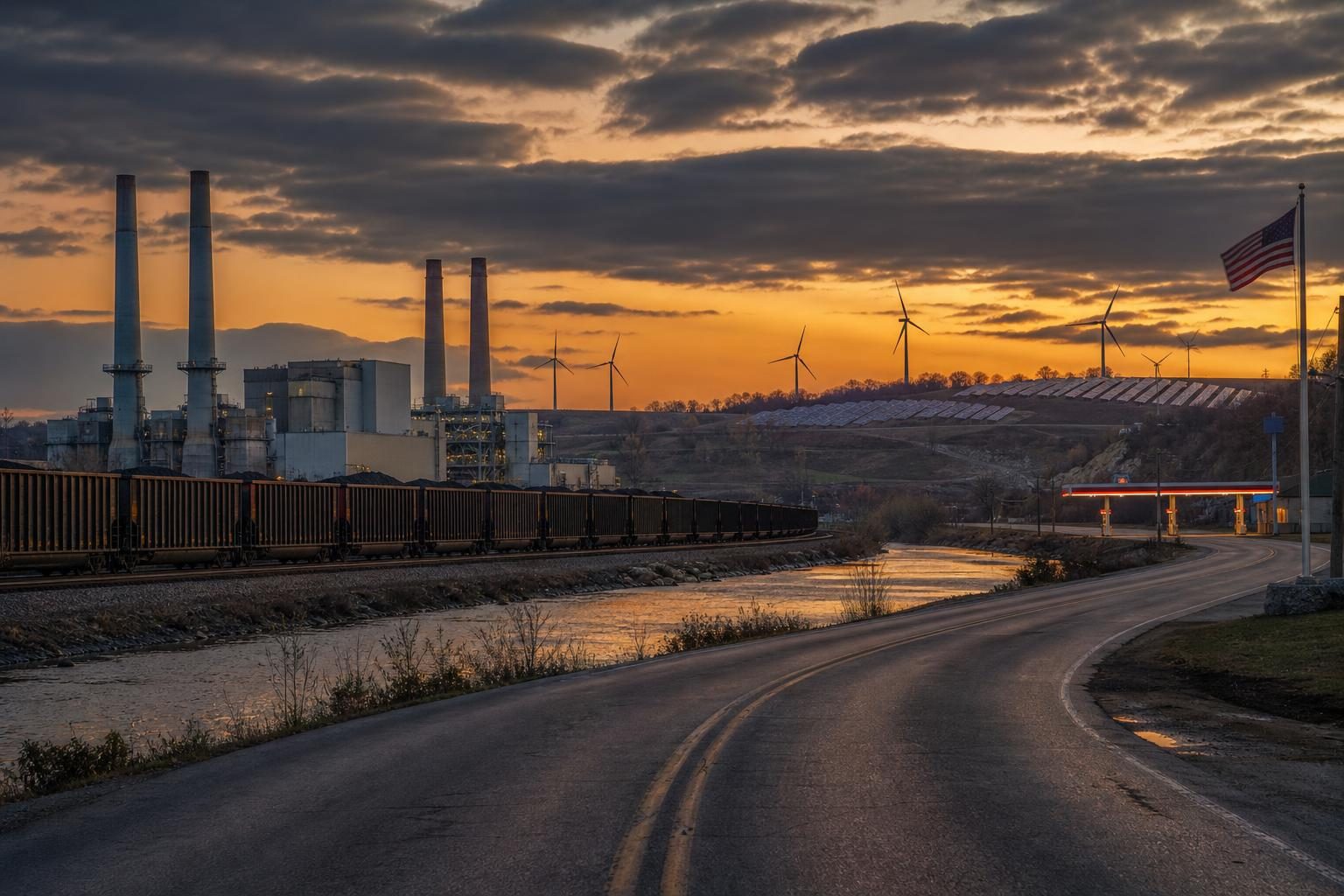
The United States, about 13 percent of global fossil emissions, is projected to cut its fossil emissions 1.3 percent, chiefly because coal emissions fall 6.7 percent after a 2025 jump driven by a cold winter and high natural gas prices [4]. Time noted that federal efforts to revive coal and repeal power-plant emissions standards could shift that trend [1].
Federal forecasters see the same pattern. The Energy Information Administration's November outlook projects U.S. coal consumption down 7 percent this year and U.S. carbon dioxide emissions down about 1.5 percent, from 4,916 million metric tons to 4,844 million, before edging up in 2027 [6]. Meanwhile, EIA expects American crude output to rise to 13.9 million barrels a day and LNG exports to reach 17.6 billion cubic feet a day, up from 15.1 billion in 2025 [6].
There is a cost side, too. EIA puts Brent crude at $97 a barrel this year, up from $69 in 2025, and retail gasoline at $3.89 a gallon, up from $3.10 [6]. Carbon Brief reported gasoline and diesel prices in the U.S., China and the EU running 10 to 50 percent above 2025 levels, and said the companion study's central estimate is that emissions would have kept rising without the war's shock [4]. Much of this year's dip, in other words, was paid for at the pump.
Reactions and What Comes Next
The researchers warn against overreading the decline. Friedlingstein said a drop driven partly by geopolitical shocks is not a lasting climate solution [2]. Exeter's Mike O'Sullivan told Time it is "probably driven by a short term shock rather than a systemic peak" [1]. The team credits solar, wind and electric vehicles with meeting about two-thirds of this year's growth in energy demand [3], though even an accelerated rollout would leave 2028 emissions above 2025's, Carbon Brief reported [4].
At COP31, former Secretary of State John Kerry said the United States would soon return to climate leadership and criticized the Trump administration's rollbacks [5]. Washington left the Paris Agreement in January, sent no official delegation for a second year and is set to exit the UN climate convention in February, Health Policy Watch reported [5]. India said it will not sign the summit's electrification pledge, and EU climate chief Wopke Hoekstra was blunt: "Expectations are low" [5].
The remaining carbon budget for holding warming to 1.5 degrees Celsius is 150 billion tons, under four years of current emissions [3], and Friedlingstein told reporters in Antalya that meeting it would require zero emissions within a decade, which he called extremely unlikely [5]. EIA assumes most Middle East oil output outside Iran recovers by mid-2027, which would test a drop the researchers already call temporary [1][6]. EIA's next outlook is due Dec. 8 [6].
The sober reading is neither triumph nor doom. A decline bought with $97 oil and near-$4 gasoline is no model for families, and the scientists deserve credit for not overselling it. The better American story is U.S. emissions falling as coal retreats from last year's spike while oil output and gas exports grow. Good stewardship cares for creation and the household budget alike, and that means energy that stays affordable and reliable.
Sources
- [1]Opens in a new tab ↗
- [2]The Jerusalem PostIran war, Hormuz disruptions drive first drop in global fossil fuel emissions since 2020 - reportOpens in a new tab ↗
- [3]University of Exeter (via EurekAlert!)Fossil CO2 emissions decrease in 2026Opens in a new tab ↗
- [4]Opens in a new tab ↗
- [5]Health Policy WatchJohn Kerry Tells COP31 the US Will Return to Climate Fight as Iran War Drives Surprise Dip in Fossil Fuel EmissionsOpens in a new tab ↗
- [6]U.S. Energy Information AdministrationShort-Term Energy Outlook (November 2026)Opens in a new tab ↗
Do you trust scientific experts more or less than five years ago?
- More
- Less
- About the same
More top stories
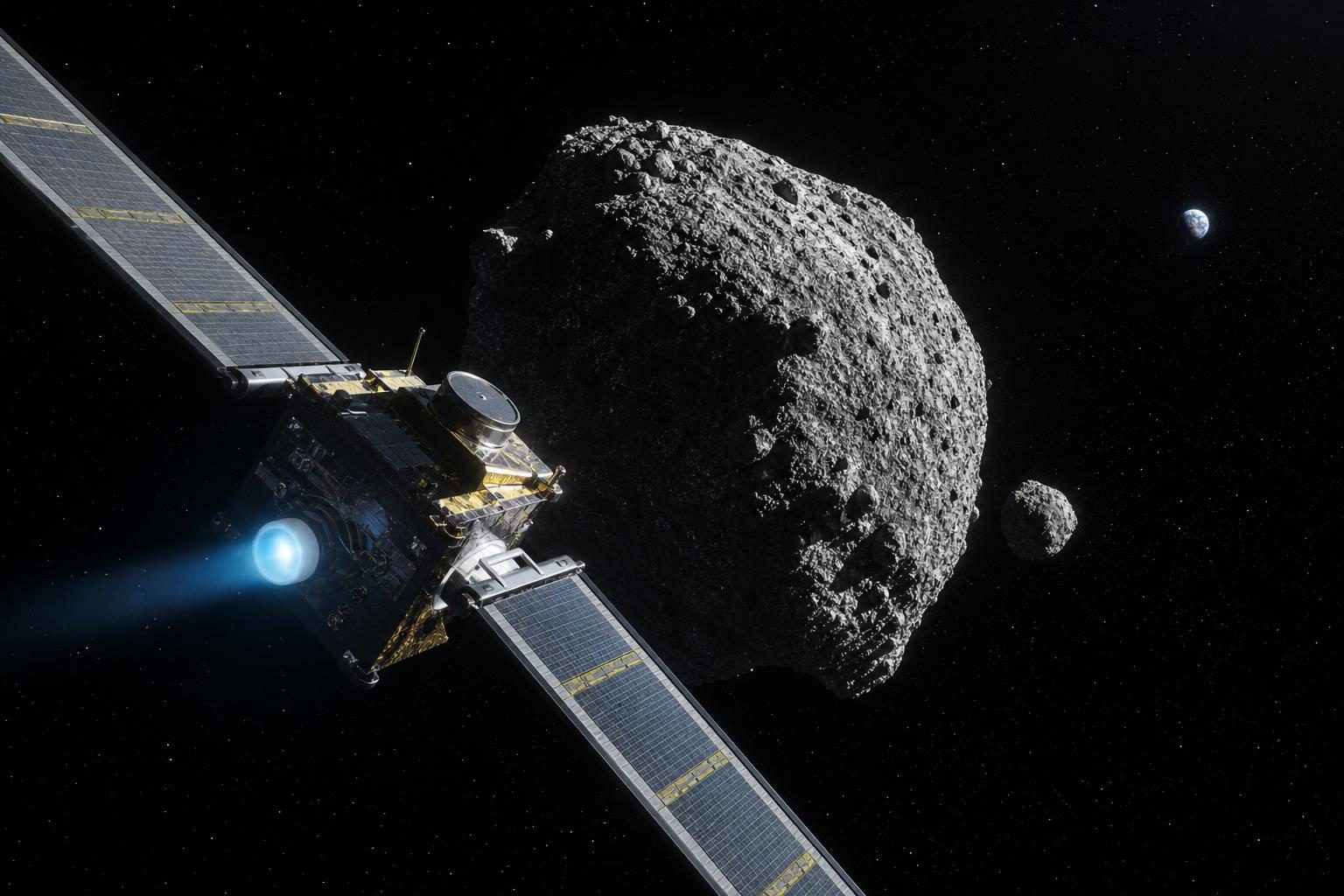
Europe's Hera Spacecraft Arrives to Investigate the Asteroid NASA Knocked Off Course
This morning on Launch Pad with Hannah Lindgren

SpaceX Will Try to Catch Both Halves of Starship on Friday, a First in Rocketry
Last night on Launch Pad with Hannah Lindgren

Ciryl Gane Answers the Critics Who Call Him a Dirty Fighter as Hokit Trains for Eye Pokes
Tonight on Fight Night with Jessie Calhoun
Were you there?
If you were at the scene, or this story touched your life, tell us what you saw and what it was like.
Discussion 0
Sign in or create a free account to join the discussion.
No comments yet. Start the discussion.