
 Overnight on World Watch with Grace Whitfield
Even the U.N.'s Climate Summit Can't Sell a Fossil-Fuel Phaseout. The Energy Numbers Explain Why
Activists are furious that the latest draft in Antalya dropped every mention of coal, oil and gas. But with electricity still under a quarter of the world's energy use, the negotiators' retreat looks more like realism than betrayal.
Filed November 20, 2026 · 📍 Los Angeles, CA 90012
Were you there? Share your story
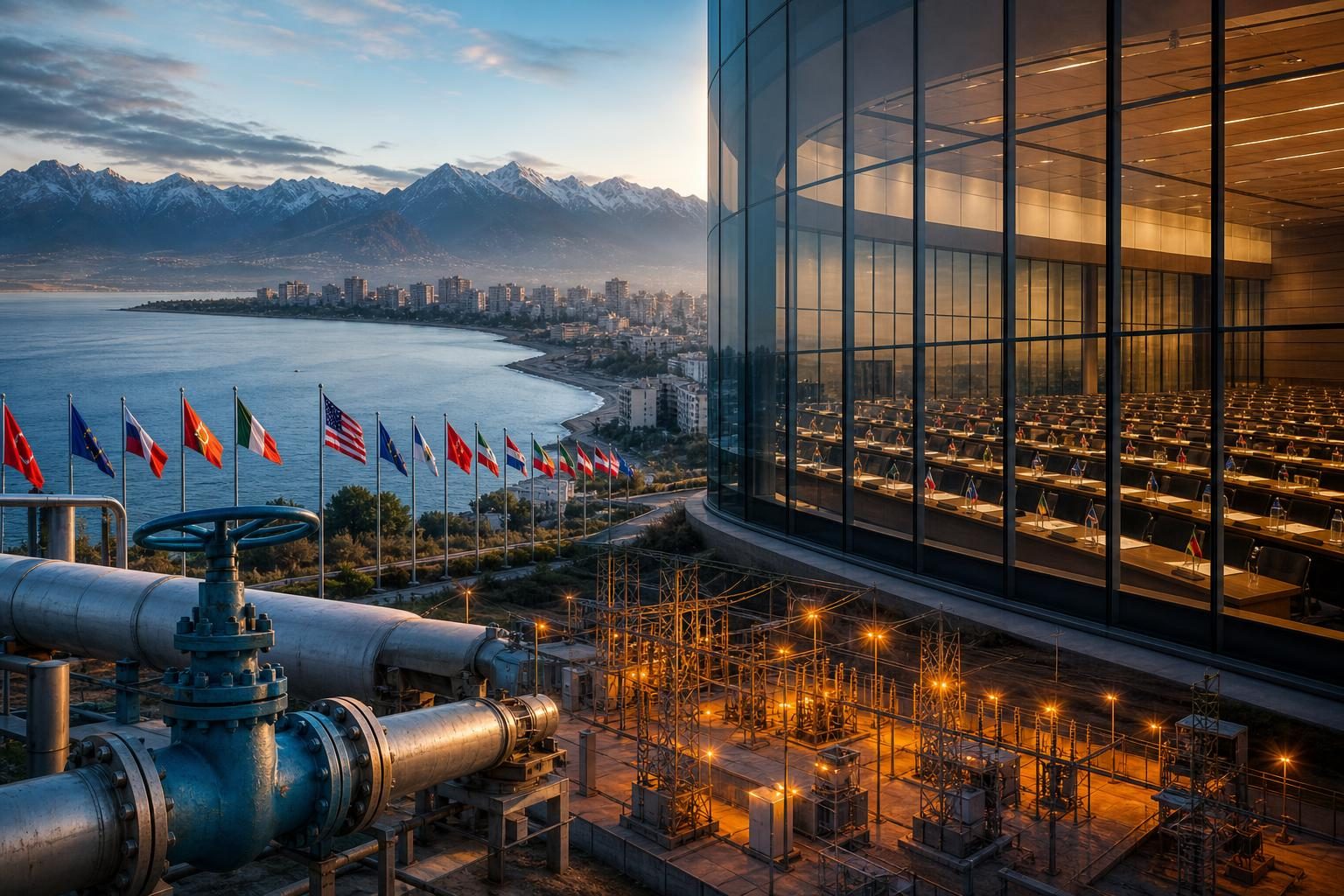
Part of our continuing coverage: COP31's Draft Demands a Faster Exit From Fossil Fuels. The Nations at the Table Can't Agree on It.
Key points
- A revised draft deal at the U.N. climate summit in Antalya dropped all references to fossil fuels and an earlier phase-out call.
- Climate groups including Greenpeace, Oil Change International and WWF sharply criticized the text.
- The draft's own target, raising electricity to 35% of world energy use by 2035 from about 23%, shows how much the world still relies on oil, gas and coal.
- Summit president Chris Bowen said the goal is the most ambitious outcome consensus allows; talks could run past Friday.
On the last scheduled day of this year's United Nations climate summit in Antalya, Turkey, the push to write a global phase-out of fossil fuels into the final deal has hit a wall. Negotiators published a slimmed-down draft on Thursday that dropped every reference to fossil fuels, including coal, oil and gas, and removed an earlier call to speed their phase-out, Reuters reported in a story carried by The Globe and Mail [1].
Climate campaigners were furious. France 24 described anger at the summit over the new text [2], and Le Monde reported an outcry as fossil fuels were stripped from the draft deal [3]. Greenpeace's delegation head argued that the draft's support for carbon capture technology would let the fossil fuel industry keep ramping up production, according to Reuters [1].
The anger is real. But the facts behind the draft tell a different story than the activists do, and they are worth hearing.
What the Activists Wanted
For years, climate groups and a bloc of wealthy nations have pressed for summit language committing the world to phase out fossil fuels on a fixed timeline. Earlier drafts at this year's talks carried that language, and two references to fossil fuels and limiting their use appeared in Monday's version before Thursday's revision removed them, Reuters reported [1]. The revised text also dropped a $120 billion target for money to help developing countries adapt to climate change, according to the same report [1].
Environmental groups say the result is a retreat. Oil Change International argued that governments had removed almost everything that showed a commitment to moving away from fossil fuels, and WWF accused major energy producers of trying to undermine the energy transition, according to Nigeria's Premium Times, which reported on the criticism of the revised draft [4].
The Answer: The World Runs on Energy, and Most of It Still Comes From Oil, Gas and Coal
Start with the numbers in the draft itself. It calls for global cooperation to raise electricity's share of world energy use to 35% by 2035, up from about 23% now, according to Reuters and the Los Angeles Times [1][5]. That means more than three-quarters of the energy the world uses today does not come through a power line at all. It is the diesel in trucks and tractors, the jet fuel in airplanes, the natural gas that heats homes and the coal and gas that fire the furnaces that make steel, cement and fertilizer.
A pledge to phase all of that out on a summit timetable was never realistic, and many of the countries at the table knew it. For a farmer in India, a factory owner in Indonesia or a family in sub-Saharan Africa still waiting for reliable electricity, affordable fuel is not a luxury. It is the difference between poverty and a decent life. Asking the world's poor to give up the energy that made the West rich is not justice. It is a new kind of burden.
The summit's own president seems to understand that. Australia's Chris Bowen, who is leading the negotiations, said the goal is the most ambitious outcome that consensus will allow, Reuters reported [1]. That is a frank admission that the countries in the room do not agree, and that a deal the world's energy producers and fastest-growing economies will not sign is no deal at all.
There is also a quieter truth in the draft. Its support for carbon capture and storage reflects a practical approach that American energy companies and many engineers have pushed for years: keep using the fuels the world needs while working to cut the emissions they produce [1]. Critics call that a loophole. Supporters call it common sense.
Who Is Pushing Back, and What Comes Next
The resistance to a fossil fuel phase-out is not coming from one country. Bowen acknowledged that countries were unlikely to simply accept the revised text, and Reuters noted it is not expected to be the final version, which means the fight over wording will go down to the wire [1]. Talks are scheduled to close Friday but could run past the deadline, as U.N. climate summits often do [1].
For Americans, the outcome matters less than the lesson. The United States has become the world's largest producer of oil and natural gas, and its exports of liquefied natural gas help allies in Europe and Asia replace coal and break their dependence on hostile suppliers. A world that keeps using natural gas for decades is a world that needs American energy, American technology and American workers.
The climate debate will go on, and it should. Responsible stewardship of creation is a duty, not a slogan. But stewardship also means telling the truth about what the world can do and what it cannot. On the final day in Antalya, the negotiators' draft came closer to that truth than the activists outside the hall would like to admit.
Sources
- [1]The Globe and Mail (Reuters)COP31 negotiators remove mention of fossil fuels from revised deal draftOpens in a new tab ↗
- [2]Opens in a new tab ↗
- [3]Opens in a new tab ↗
- [4]Opens in a new tab ↗
- [5]Los Angeles TimesClimate talks ditch call to quit fossil fuels as deal nearsOpens in a new tab ↗
Have you ever been censored or shadow-banned on social media?
- Yes
- I think so
- No
- I'm not on social media
More in Pushback

A Christmas Greeting Is Not an Established Church: Why USDA Is Right to Fight the Ruling on Rollins' Holiday Messages
Overnight on From the Bench with Margaret Callahan

Why the Drivers Are Saying No to Mamdani's Ban on Central Park's 150-Year Carriage Tradition
Overnight on Hollister Tonight with Jack Hollister

Hinojosa's Charter Critique Overlooks the Nearly 70,000 Texas Children Waiting for a Seat
Last night on Report Card with Rebecca Hartman
Were you there?
If you were at the scene, or this story touched your life, tell us what you saw and what it was like.
Discussion 0
Sign in or create a free account to join the discussion.
No comments yet. Start the discussion.