
 On Monday on The Vance Edge with Sienna Vance
COP31's Draft Demands a Faster Exit From Fossil Fuels. The Nations at the Table Can't Agree on It.
The first draft text from Antalya pairs tougher fossil fuel language with a call to triple adaptation money, but oil producers, developing nations and the facts push back.
Filed November 16, 2026 · 📍 Washington, DC 20001
Were you there? Share your story
Part of our continuing coverage: COP31 Says the World Must Ditch Fossil Fuels Faster. The Energy Facts Tell a Different Story.
Story tracker
Our anchors are following this story. New details will appear here as they come in.
Key points
- Monday's COP31 draft calls for accelerated action to move off coal, oil and gas.
- It offers two fossil fuel options, and Reuters says either could be dropped.
- Rich nations met their last $100 billion climate pledge two years late, the OECD says.
- U.S. LNG exports grew 23% in early 2026 as the U.S. skipped the talks again.
The first week of the United Nations climate summit in Antalya, Turkey, belonged to the speeches. The second week opens with a document, and it tells us more than the speeches did.
On Monday, Australia, which is co-hosting COP31 and chairing the negotiations, released a first draft of the summit's main political decision calling for "accelerated action" to move the world off coal, oil and gas, Agence France-Presse reported [1]. The draft also voices deep concern that the Paris accord's 1.5-degree Celsius warming limit is about to be breached [1]. That is a sharper tone than last year's outcome in Brazil, whose final text did not mention fossil fuels at all [1].
What Is New in the Draft
The fossil fuel section is written as a menu. According to Reuters, the 18-page text offers two options: repeating the 2023 pledge about "transitioning away" from fossil fuels, or a more ambitious call to phase them out entirely, and either could be dropped from the final deal [2].
The draft also includes developing countries' demand that wealthy nations triple funding for climate adaptation to at least $120 billion, AFP reported [1]. It records divergent views both on that money and on Turkey's proposal to raise electricity's share of global energy use to 35% by 2035, according to Reuters [2].
Even the man holding the pen is managing expectations. Australian Climate Minister Chris Bowen told reporters this will not be the final draft and that not every party will accept every element in it [1]. Some nations have already rejected clauses in the text, Reuters reported [2]. Any deal needs the approval of nearly 200 nations, and the summit is scheduled to close Friday [1].
The Resistance Is Coming From Inside the Room
Notice who is objecting, and it is not Washington, which is not even at the table. Some oil- and gas-producing nations raised reservations about the draft's energy proposals, AFP reported [1]. The Arab Group of nations has opposed energy pathways it views as imposed on countries from outside, as disputes over finance and fossil fuels test the talks, Forbes Middle East reported [3].
Whatever one thinks of those governments, they are making a point Americans should recognize: nations have the right to decide how to power their own homes, farms and factories. A summit text cannot repeal the needs of billions of people who still rely on affordable fuel to cook, commute and work.
The Money Has Never Arrived on Time
The $120 billion figure deserves a harder look, because it is a promise of other people's money. The last big pledge from wealthy nations, $100 billion a year in climate finance by 2020, was not met until 2022, two years late, when developed countries provided $115.9 billion, the Organisation for Economic Co-operation and Development said, according to Reuters [6].
Promising to triple adaptation money when the last headline pledge arrived two years late is not a plan. It is a wish. And for Americans, there is a constitutional answer to any suggestion that U.S. taxpayers should help cover the bill. Under Article I of the Constitution, no money may be drawn from the Treasury except through appropriations made by law. A pledge drafted in Antalya does not bind Congress, and it should not pretend to.
America's Answer Is Already at Sea
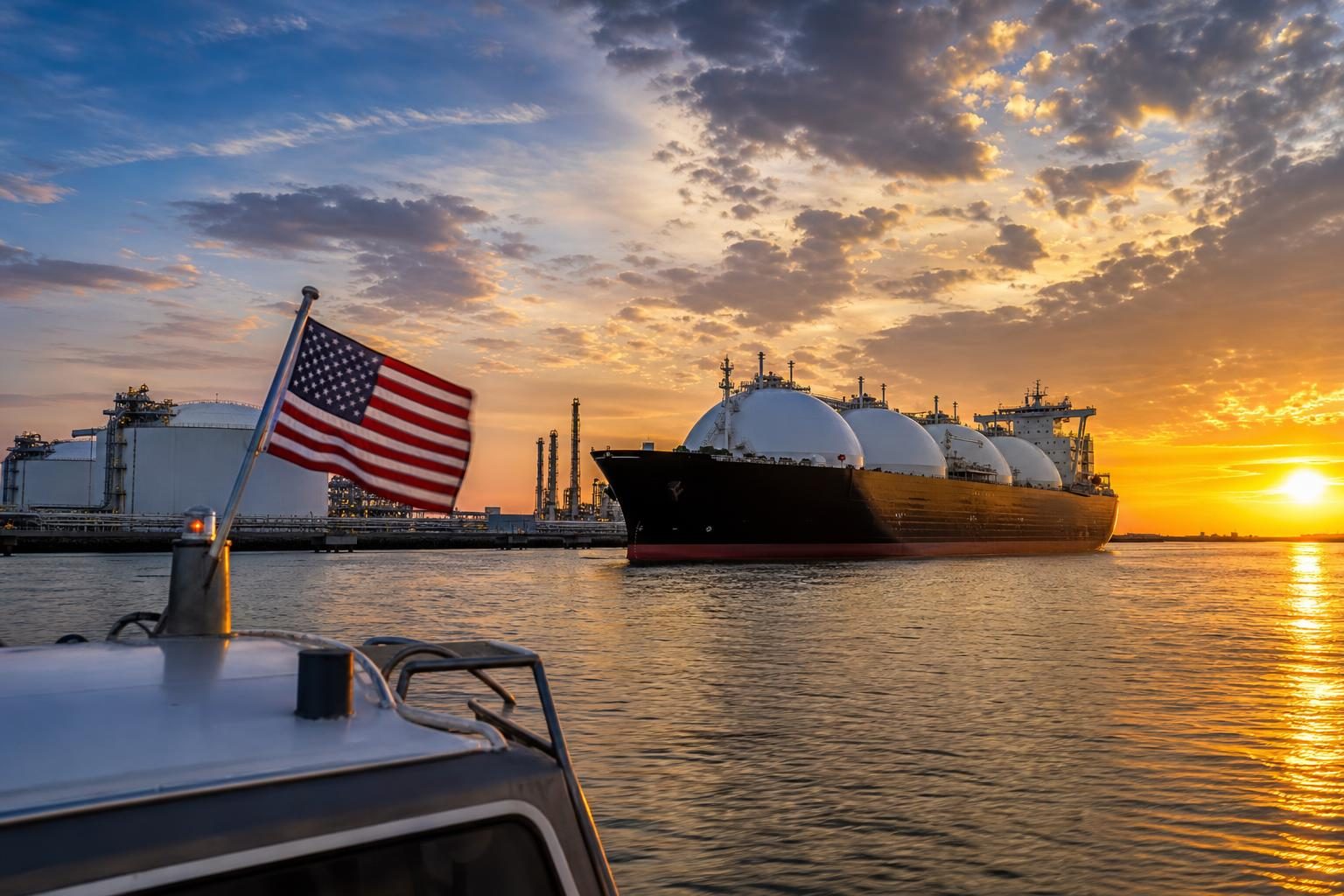
While the draft talks about accelerating away from fossil fuels, the world's buyers are moving the other way. U.S. liquefied natural gas exports averaged 17.4 billion cubic feet per day in the first half of 2026, up 23% from a year earlier and the fastest growth since large-scale exports began in 2016, the U.S. Energy Information Administration reported [5]. Shipments to Asia more than doubled over the same period, and global prices stayed high enough to keep American terminals running near full output [5].
That is not a country retreating from the world. It is a country supplying it. American cargoes give allies and trading partners a dependable alternative to less friendly suppliers. A deal that treats that trade as a problem to be phased out on a summit timetable has its priorities backward.
Who Is Pushing Back and What Comes Next
For the second year in a row, the United States has sent no official delegation to the talks, Reuters reported [4]. About 120 delegates from the America Is All In coalition, mostly Democratic governors, mayors, local officials and members of Congress, came instead [4]. They can listen and network, but they do not speak for the nation's foreign policy.
The real pushback is coming from oil producers, from developing nations that want money before mandates, and from an American government that has chosen to stay home [1][3][4]. Ministers now have until Friday to bridge those gaps, and the menu of fossil fuel options in the draft suggests the final wording could be far weaker than the headlines [1][2].
Caring for creation is a duty, and so is honesty with the poor about what rich nations will actually deliver. A draft that promises a faster exit from the fuels the world is still buying, and money that has never come on time, keeps neither duty.
Sources
- [1]Opens in a new tab ↗
- [2]Reuters (via U.S. News & World Report)First Draft of COP31 Deal Signals Tough Negotiations to ComeOpens in a new tab ↗
- [3]Forbes Middle EastArab Group Opposes Imposed Energy Pathways As Finance, Fossil Fuel Disputes Test COP31Opens in a new tab ↗
- [4]Reuters (via Rappler)Absent officially, unofficially 'America is all in' at COP31Opens in a new tab ↗
- [5]U.S. Energy Information AdministrationU.S. LNG exports rose 23% in the first half of 2026 because of higher capacityOpens in a new tab ↗
- [6]Reuters (via ThePrint)Wealthy countries met global climate finance goal two years late, OECD saysOpens in a new tab ↗
Have you ever been censored or shadow-banned on social media?
- Yes
- I think so
- No
- I'm not on social media
More in Pushback

Sanders Puts Medicare for All on a Four-Year Clock. The 154 Million Americans With Job-Based Coverage Deserve Answers First
Today on The Bottom Line with Douglas Park
Hochul Wants Answers on an ICE Site in Batavia. New York's Own Law Is Why It's Being Built
Today on Border Watch with Cole Brennan

A 25-Year-Old Network Isn't a Bargain: The Facts Behind the Fight Over Duffy's $50 Billion Air Traffic Plan
Today on Open Road with Frank Kowalski
Were you there?
If you were at the scene, or this story touched your life, tell us what you saw and what it was like.
Discussion 0
Sign in or create a free account to join the discussion.
No comments yet. Start the discussion.