
 This morning on The Vance Edge with Sienna Vance
Closing Rikers Means Emptying It First: The Numbers New Yorkers Deserve Before Mamdani's 2032 Plan Moves Ahead
The mayor wants five more years and roughly 2,500 fewer people behind bars. Before the City Council signs off, New Yorkers should know who leaves, what it costs and how the streets stay safe.
Filed November 20, 2026 · 📍 Brooklyn, NY 11201
Were you there? Share your story
Key points
- Mamdani's plan would close the Rikers jails by the end of 2032, five years past the deadline in city law.
- The new borough jails would have room for about 4,500 people; roughly 6,600 are held today.
- A veteran Queens prosecutor says about 95% of those held are awaiting trial on felony charges.
- The correction officers' union calls the plan flawed; the plan's best idea is attacking court delays.
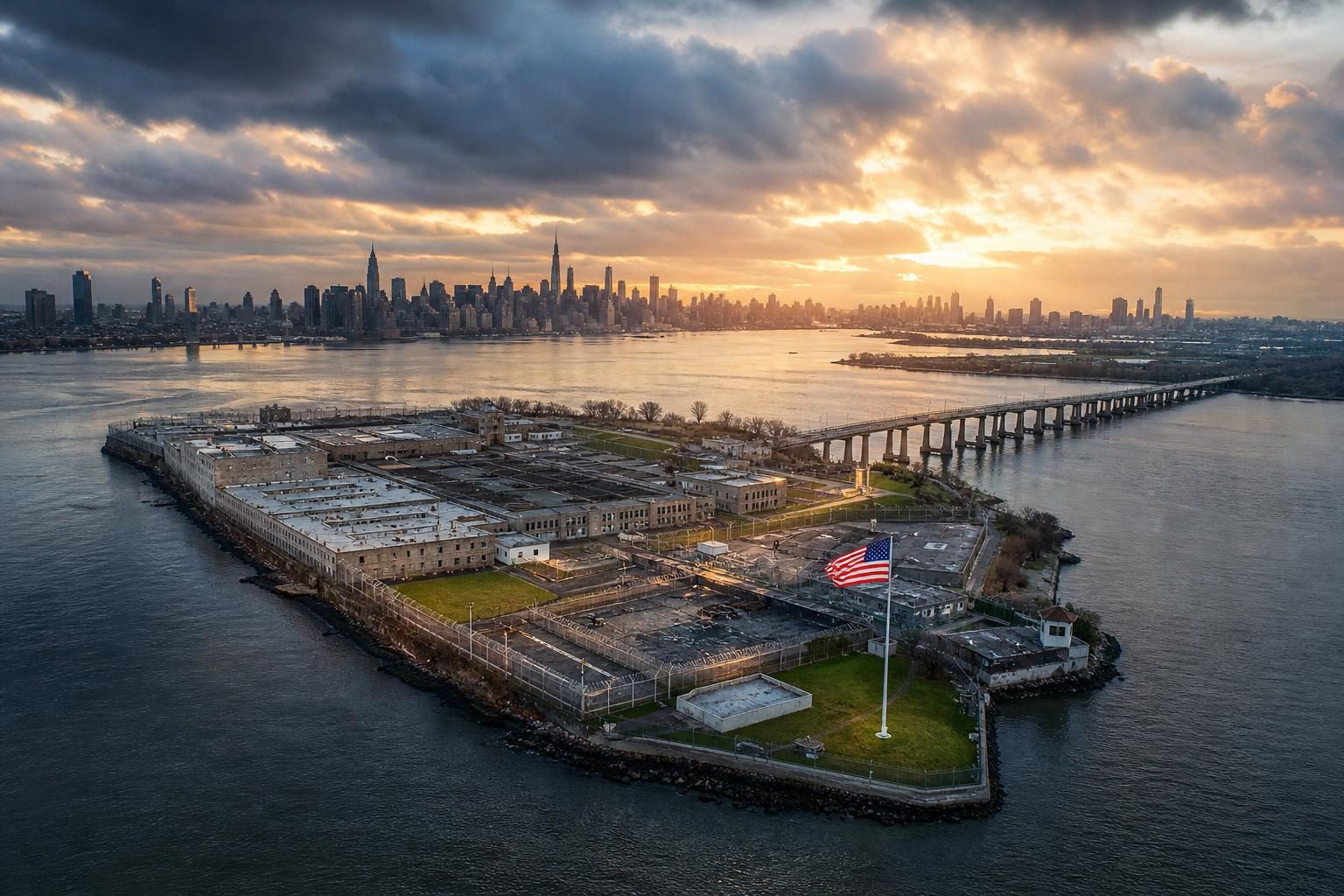
Nobody should defend Rikers Island as it is. Mayor Zohran Mamdani is right that New York needs jails that are safe for the officers who work in them and humane for the people held there. The question is whether his new plan to close the island gets there without putting the burden on the neighborhoods of New York.
What the Mayor Proposed
On Friday, Mamdani laid out a plan to close the Rikers jails by the end of 2032, five years after the August 2027 deadline written into city law, Gothamist reported [1]. Detainees would move into four new borough-based jails and three hospital units [1]. The first borough jail, in Brooklyn, would open in 2029 [1].
The plan sets caps on the jail population: no more than 5,500 people when the Brooklyn facility opens and no more than 4,100 by the end of 2032 [1]. The new facilities altogether would have room for about 4,500 people, Gothamist reported, while the city currently holds about 6,600 [1].
As CNN noted, Mamdani had pledged to work toward closing Rikers by 2027 [6]. The Associated Press reported that the city was all but certain to miss that legal requirement [3]. Because the deadline is in city law, the City Council would have to change it.
The Math Starts With Who Is Inside
The plan's arithmetic is simple. To fit into the new jails, the city must hold roughly 2,000 to 2,500 fewer people on any given day than it does now. The plan itself describes its population estimate as "not meant to be a forecast," according to Gothamist [1]. That is a remarkable admission for a promise that thousands of families will plan their safety around.
So who are the people inside? Veteran Queens prosecutor Jim Quinn wrote earlier this year that about 95 percent of those held at Rikers are awaiting trial on felony charges, mostly murder or other violent offenses [5]. If that is close to right, there is no pool of low-level offenders waiting to be released. Shrinking the population by thousands means either moving serious felony cases faster or letting more people charged with serious crimes wait for trial at home.
The cost has grown as well. The price of replacing Rikers has climbed from an early estimate of $8 billion to at least $15 billion, according to coverage of the plan [1][2]. Taxpayers deserve to know what they are buying, and whether the city can still afford the beds it may end up needing.
The Right Answer: Swift Justice
There is a good idea buried in the plan, and it deserves credit. The administration wants a Case Delay Task Force with the courts, district attorneys and defense lawyers, and the Queens Daily Eagle reported that the biggest reduction in the jail population is supposed to come from cutting case delays [4].
That is where the answer lies. The Sixth Amendment promises the accused "a speedy and public trial." A defendant who waits years for a court date is denied justice, and so is the victim and the community. Faster trials can shrink the jail population the right way: by deciding cases, convicting the guilty and freeing the innocent, rather than by quietly lowering the bar for release.
Who Is Pushing Back
The people who run the jails are skeptical. The Correction Officers' Benevolent Association has long opposed closing Rikers, and its leader, Benny Boscio, has called the closure plan flawed because the new jails would hold far fewer people than the island does today [2][6].
Even an architect of the original plan is sounding a warning. Elizabeth Glazer, who helped write the closure plan under Mayor Bill de Blasio, cautioned that without broad reform across the Department of Correction, the city risks exporting Rikers' violence into new neighborhoods, Gothamist reported [1].
What Comes Next
The Council will now weigh a new schedule. Before it votes, members should demand three things in writing: a month-by-month population target tied to court data, a plan B if the population does not fall, and a public accounting of the full cost. New Yorkers were promised a closed Rikers by 2027 and will not get it. They should not be asked to accept a 2032 promise built on a number its own authors say is not a forecast.
Close Rikers, by all means. But close it the right way: with speedy trials, honest numbers and the safety of ordinary New Yorkers put first.
Sources
- [1]Opens in a new tab ↗
- [2]Opens in a new tab ↗
- [3]Associated Press via ClickOnDetroitMamdani sets plan to close NYC's notorious Rikers Island jailOpens in a new tab ↗
- [4]Queens Daily EagleCity sets 2032 deadline in new Rikers closure planOpens in a new tab ↗
- [5]AOL (New York Post)Mamdani's 'empty Rikers' plan would guarantee another crime spikeOpens in a new tab ↗
- [6]Opens in a new tab ↗
Have you ever been censored or shadow-banned on social media?
- Yes
- I think so
- No
- I'm not on social media
More in Pushback
The First Lady Who Keeps Delivering for America's Children
This morning on Spotlight with Chloe Bennett

Even the U.N.'s Climate Summit Can't Sell a Fossil-Fuel Phaseout. The Energy Numbers Explain Why
Overnight on World Watch with Grace Whitfield

A Christmas Greeting Is Not an Established Church: Why USDA Is Right to Fight the Ruling on Rollins' Holiday Messages
Overnight on From the Bench with Margaret Callahan
Were you there?
If you were at the scene, or this story touched your life, tell us what you saw and what it was like.
Discussion 0
Sign in or create a free account to join the discussion.
No comments yet. Start the discussion.