
 Yesterday on From the Bench with Margaret Callahan
Alabama Voters Said Yes to Aniah's Law Twice. A Judge Calling It a 'Direct Assault' Doesn't Change the Constitution.
A Jefferson County judge says the bail law named for a murdered 19-year-old tramples the presumption of innocence. The Supreme Court, four in five Alabama voters and the law's own safeguards say otherwise.
Filed November 17, 2026 · 📍 Supreme Court, DC 20543
Were you there? Share your story
Key points
- Jefferson County Circuit Judge David Carpenter called Aniah's Law a 'direct assault' on constitutional rights, citing the presumption of innocence.
- Alabama voters approved Aniah's Law in 2022 with about 80% of the vote and expanded it this year to cover attempted murder.
- The U.S. Supreme Court upheld pretrial detention of dangerous defendants in United States v. Salerno in 1987, so long as fair hearing procedures are followed.
- The law is not automatic: prosecutors must ask, and a judge must hold a hearing before bail can be denied.
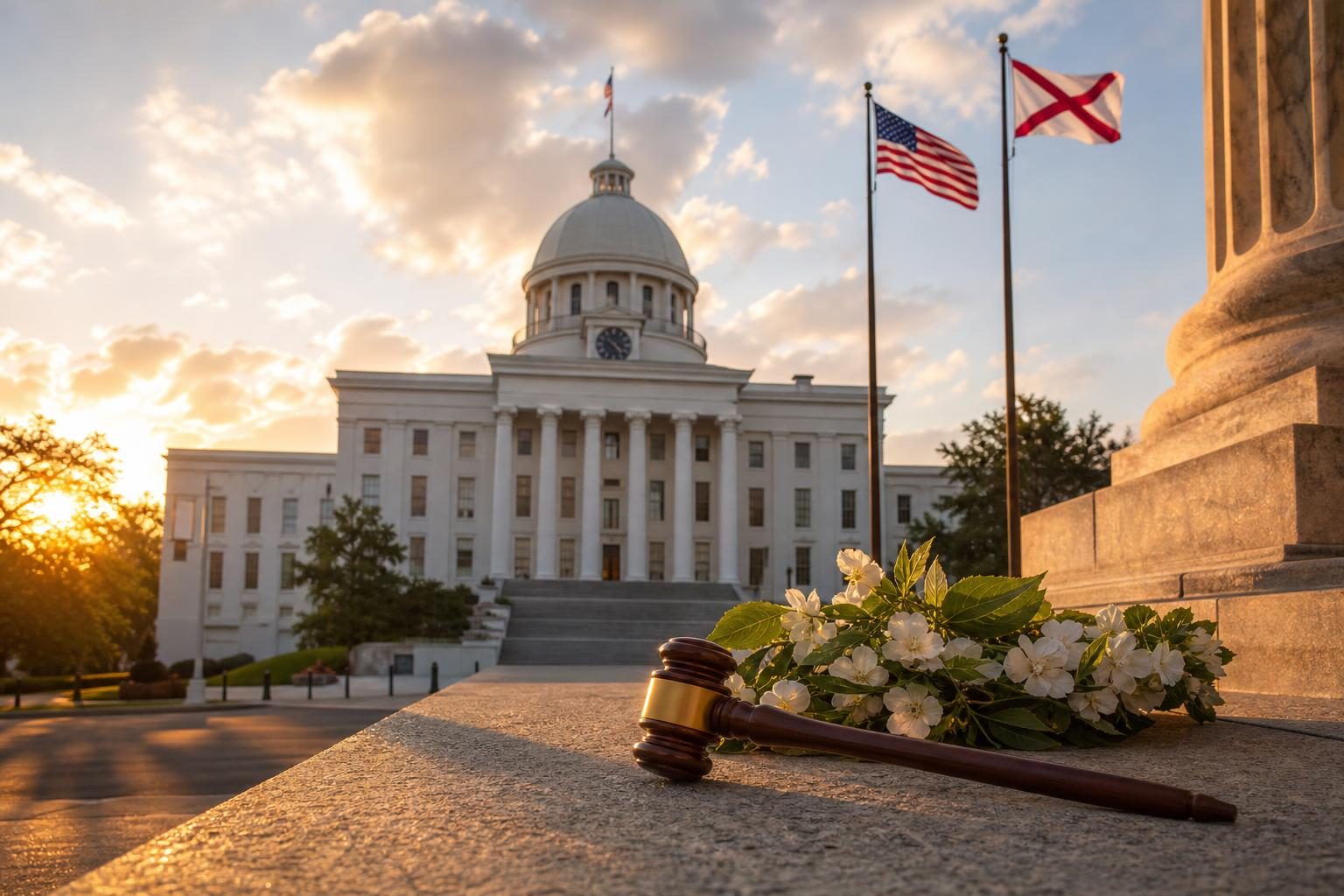
A Jefferson County circuit judge has taken aim at one of the most popular public-safety measures in Alabama history. Judge David Carpenter called Aniah's Law a "direct assault" on constitutional rights, arguing that it undercuts the presumption of innocence by allowing judges to hold defendants without bail before trial, Fox News reported [1].
Carpenter's comments arrive with baggage. Fox News reported that he has faced criticism over his own past release decisions in violent cases, and that he has pointed to prosecutors as responsible for at least one disputed outcome [1]. But the stronger answer to his argument is not about the judge. It is about the law, the Constitution and the people of Alabama.
Why the Law Exists
Aniah's Law is named for Aniah Blanchard, a 19-year-old college student whose accused killer had been free on bond despite facing other violent charges, Black Belt News Network reported [4]. Her death became a rallying point for families across the state who asked a simple question: why was a man already charged with violent crimes walking free?
The answer was that Alabama's constitution guaranteed bail in nearly every case. In 2022, lawmakers sent voters an amendment allowing the Legislature to let judges deny bail for a list of the most serious violent offenses, and voters approved it with about 80.5% of the vote, more than a million Alabamians in favor, according to Ballotpedia [3].
They did not stop there. This year, voters approved an expansion that adds attempted murder, conspiracy to commit murder and shooting into occupied buildings or vehicles to the list, according to Yellowhammer News [5].
What the Constitution Actually Says
The presumption of innocence is a bedrock trial right. It means the state must prove guilt beyond a reasonable doubt before anyone can be punished. It has never meant that every accused person must be released, no matter the danger.
The U.S. Supreme Court settled that question nearly four decades ago. In United States v. Salerno in 1987, the Court upheld the federal Bail Reform Act's provision allowing judges to detain defendants who pose a danger to the community, ruling 6-3 that such detention is regulatory rather than punishment and does not violate due process when it is limited to serious crimes and backed by fair hearing procedures [2]. Alabama's law follows the same logic.
The Safeguards Are Built In
Aniah's Law is not a blanket rule that locks up everyone who is charged. Prosecutors must ask for a defendant to be held without bail, and a judge must hold a hearing; even then, the judge may still grant bond [6]. Alabama judges have denied prosecutors' Aniah's Law requests when they found the case for detention fell short, Fox10 News reported [6]. That is the safeguards working, not failing.
That is exactly the kind of careful process the Supreme Court said the Constitution requires. A judge who disagrees with the policy is free to say so. A judge is not free to treat a measure approved by the people, written into the state constitution and consistent with Supreme Court precedent, as an assault on the rights it was carefully drafted to respect.
Who Is Standing Up for It
The people of Alabama have answered this argument twice at the ballot box [3][5], and lawmakers sent the original amendment to them without a single recorded no vote in the Senate [3]. It is not hard to see why: few things shake a community's trust like a violent defendant walking out of jail the same week he walks in.
Scripture teaches that rulers are not a terror to good works, but to the evil (Romans 13:3). Protecting the innocent from people already charged with violent crimes is not a betrayal of justice. It is one of its first duties.
What Comes Next
Carpenter's remarks will keep the debate alive, and defense lawyers may test the expanded law in court. But the law stands, backed by the voters and by precedent. For Alabama families, the more important question is whether every judge will apply it faithfully, so that the next Aniah Blanchard comes home safe.
Sources
- [1]Opens in a new tab ↗
- [2]Legal Information Institute (Cornell Law School)United States v. Salerno, 481 U.S. 739 (1987)Opens in a new tab ↗
- [3]BallotpediaAlabama Allow Denial of Bail for Offenses Enumerated by State Legislature Amendment (2022)Opens in a new tab ↗
- [4]Black Belt News NetworkStatewide Amendment 1, Aniah's Law expansion, passedOpens in a new tab ↗
- [5]Yellowhammer NewsAlabama amendments pass, voters expand Aniah's Law and approve DA pay equity in primaryOpens in a new tab ↗
- [6]Opens in a new tab ↗
Have you ever been censored or shadow-banned on social media?
- Yes
- I think so
- No
- I'm not on social media
More in Pushback
Sanders Puts Medicare for All on a Four-Year Clock. The 154 Million Americans With Job-Based Coverage Deserve Answers First
Today on The Bottom Line with Douglas Park
Hochul Wants Answers on an ICE Site in Batavia. New York's Own Law Is Why It's Being Built
Today on Border Watch with Cole Brennan

A 25-Year-Old Network Isn't a Bargain: The Facts Behind the Fight Over Duffy's $50 Billion Air Traffic Plan
Today on Open Road with Frank Kowalski
Were you there?
If you were at the scene, or this story touched your life, tell us what you saw and what it was like.
Discussion 0
Sign in or create a free account to join the discussion.
No comments yet. Start the discussion.