
 Tuesday night on From the Bench with Margaret Callahan
Praying at Home Goes to the Supreme Court: An Orthodox Jewish Man's Fight With His Ohio Suburb, and Why Every Home Bible Study Has a Stake
Solicitor General John Sauer will argue Dec. 9 alongside Daniel Grand, whose city told him he needed a zoning permit for a small Sabbath prayer group, in a case about whether believers can get into court before the paperwork ends.
Filed November 17, 2026 · 📍 Supreme Court, DC 20543
Were you there? Share your story
Key points
- The Supreme Court hears Grand v. City of University Heights on Dec. 9, with the solicitor general arguing on Grand's side.
- University Heights, Ohio, told Daniel Grand he needed a special-use permit to host a weekly minyan in his home.
- Lower courts dismissed his religious liberty suit as unripe because he withdrew his permit application.
- More than 50 members of Congress argue churches and synagogues should not be left to the whims of zoning boards.
Can a city tell a man he needs government permission to pray with his neighbors in his own living room, and then keep him out of court until he finishes the paperwork? On Dec. 9, the Supreme Court will take up that question in a case from a quiet Cleveland suburb, and the Trump administration's top courtroom lawyer will stand at the lectern on the side of the man who wanted to pray.
Solicitor General John Sauer will argue alongside lawyers for Daniel Grand, an Orthodox Jewish resident of University Heights, Ohio, in Grand v. City of University Heights, The Center Square reported [1]. The case asks whether Grand may bring his religious freedom claims to federal court now, or whether he must first run the full course of the city's zoning process.
A Small Prayer Group and a Phone Call
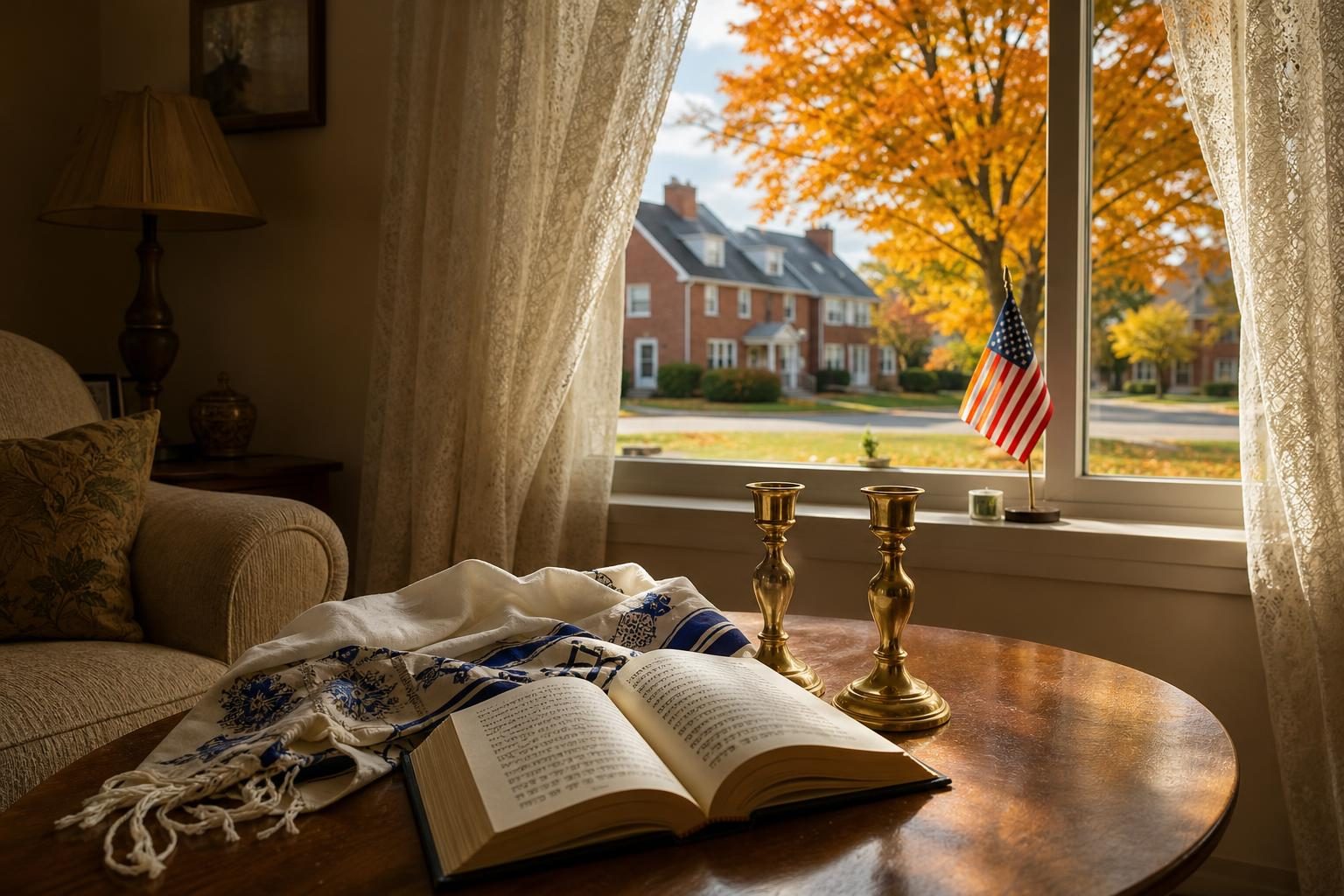
Grand wanted to host a weekly Saturday morning minyan at his home because he lives far from an Orthodox synagogue, Jewish Insider reported [2]. A minyan is the quorum of ten men that Orthodox Jewish practice requires for communal prayer. For observant Jews, who do not drive on the Sabbath, distance is not a small inconvenience. If the nearest synagogue is too far to walk, a gathering close to home is often the only way to pray with a congregation at all.
According to Grand's lawsuit, the city's mayor at the time, Michael Dylan Brennan, telephoned him on Jan. 21, 2021, and told him he could not hold religious gatherings in his home without first obtaining a special-use permit, Jewish Insider reported [2]. City officials then sent him a cease-and-desist notice [2].
Grand's brief to the justices says the matter began when a neighbor who objected forwarded his email about the prayer group to the mayor, who passed it to the city's law director [3]. The city pointed Grand to the part of its code governing "houses of assembly," under which he could apply to the planning commission for a permit [3].
How It Ended Up in the Supreme Court
Grand applied. The planning commission held a hearing in March 2021 and tabled the matter while asking him for more details, according to the city's filings [6]. Before a second hearing, Grand withdrew his application [6].
He sued in 2022, invoking the Religious Land Use and Institutionalized Persons Act, a federal law Congress passed in 2000 to protect houses of worship and religious gatherings from unfair zoning rules, along with the First Amendment and other protections, Jewish Insider reported [2]. A federal district court dismissed the case in September 2024, and the Sixth Circuit Court of Appeals upheld that dismissal in November 2025 [2].
Neither court decided whether University Heights had violated Grand's rights. Both ruled that his claims were not yet "ripe," legal language for not ready to be heard, because the city had never issued a final decision on a permit [2]. In the courts' view, by withdrawing his application, Grand had left the process unfinished.
Grand first asked the Supreme Court to step in on his own, filing his petition without a lawyer before a legal team took up his case, Jewish Insider reported [2]. The justices agreed to hear it, and it is set for argument on Wednesday, Dec. 9 [1].
The Government Takes Grand's Side
The Justice Department has thrown its weight behind Grand. In its brief to the Supreme Court, the United States argues that his religious land-use claims are ripe and frames the core question as whether ripeness rules categorically bar such challenges until a local body issues a final decision [4]. The government told the justices it has a significant interest in the case because it is charged with enforcing the federal religious land-use law [4].
The department's brief also takes on the appeals court's reasoning that Grand caused his own problem by pulling his application [4]. That point matters. If a city can tell a family to stop praying and then fault them for not completing a permit process before they sue, the clock runs in the city's favor while the prayer group stays silent.
More than 50 members of Congress filed a brief making the same case from a different angle. They argue Grand's claim was ripe the moment the city ordered him to stop holding private prayer in his home, and that the freedom of synagogues and churches to locate near their members should not be left entirely to the whims of local zoning boards [5].
The City's Answer
University Heights sees the case very differently. In its brief opposing review, the city argued that Grand, after appearing before the planning commission and saying he no longer wished to create a place of religious assembly, is effectively asking the Supreme Court to act as a local zoning administrator [6]. In the city's telling, it never banned anyone from praying. It asked a homeowner who wanted to host regular group gatherings to follow the same permit rules that apply to other houses of assembly, and he walked away from the process before it ran its course [6].
The city's brief also notes that Brennan is no longer mayor and that his successor, Michele Weiss, steps into the case in her official capacity [6].
Those are serious points, and the justices will weigh them. Cities have real interests in traffic, parking and the character of residential streets. But a weekly prayer group of a few neighbors on foot is not a megachurch parking lot, and the question before the Court is narrower than the zoning fight itself: whether a believer can get through the courthouse door at all.
Why Christians Should Care
This is an Orthodox Jewish man's case, but the principle reaches every home Bible study, every Tuesday night women's prayer circle and every house church that meets around a kitchen table. The Christian faith began in homes. The book of Acts describes the first believers breaking bread from house to house, and Jesus promised to be present where two or three gather in His name.
If a city can demand a permit for a regular gathering of believers in a private home, and then tell those believers they cannot sue until the permit process is exhausted, the practical effect is that worship can be paused for months or years by paperwork alone. The members of Congress who backed Grand warned against exactly that, arguing that where synagogues and churches may gather should not be left to the whims of zoning boards [5].
The federal religious land-use law was written to stop that kind of quiet squeeze on worship. It was a bipartisan law, and its purpose is plain: government may not impose a substantial burden on religious exercise through land-use rules unless it can justify that burden under a demanding legal test. Grand's case is about whether that promise means anything when a city acts first and asks questions later.
There is also a lesson here about friendship among people of faith. Jewish families who want to pray near home and Christian families who host Bible studies in their dens are standing on the same ground. When one community's freedom to worship is narrowed, the next community's freedom is not far behind.
What Comes Next
The justices will hear arguments on Dec. 9, with the solicitor general sharing time on Grand's side [1]. A ruling is likely by the end of the Court's term next summer.
A win for Grand would not decide whether University Heights may require a permit for a home prayer group. It would send the case back to the lower courts to hear his claims on the merits, and it could make it easier for believers across the country to challenge zoning orders that shut down worship before a city's process drags on. A loss would leave in place the rule that, in much of the country, the permit process comes first and the courthouse comes later.
Either way, the argument falls during Hanukkah week, a season that celebrates the freedom to worship God without a ruler's permission. For a man who only wanted ten neighbors and a prayer book in his living room, the timing fits.
Sources
- [1]The Center SquareSolicitor General to argue in Jewish zoning dispute caseOpens in a new tab ↗
- [2]Opens in a new tab ↗
- [3]Supreme Court of the United StatesGrand v. City of University Heights, Brief for PetitionerOpens in a new tab ↗
- [4]Supreme Court of the United StatesGrand v. City of University Heights, Brief for the United States as Amicus CuriaeOpens in a new tab ↗
- [5]Supreme Court of the United StatesGrand v. City of University Heights, Brief of Members of Congress as Amici CuriaeOpens in a new tab ↗
- [6]Supreme Court of the United StatesGrand v. City of University Heights, Brief in OppositionOpens in a new tab ↗
Pope Leo XIV drew more than a million people in Argentina. Would you travel to see the pope?
- Absolutely
- Maybe, if he came to the U.S.
- No, but I'd watch on TV
- No
More in Faith & Religion
Syria's Christian Leaders Warn of 'Grave' Threat to Their Future After Archbishop Is Bound and Robbed in Homs
Today on From the Bench with Margaret Callahan
Watford Pastor Steve Maile Cleared as Police Drop Case Seven Months After Street-Preaching Arrest
Overnight on From the Bench with Margaret Callahan
Attacks on Christians in Europe Jumped 44% Last Year, a Watchdog Finds, as Assaults on French Clergy Quadrupled
Last night on From the Bench with Margaret Callahan
Were you there?
If you were at the scene, or this story touched your life, tell us what you saw and what it was like.
Discussion 0
Sign in or create a free account to join the discussion.
No comments yet. Start the discussion.