
 Today on The Briefing Room with Claire Donovan
Strength on His Terms: Trump Signals New Iran Strikes Can Wait if Tehran Holds Its Fire
Reuters reports the president has told advisers he may hold off on new attacks unless Iran provokes the United States, keeping the next move in Tehran's hands.
Filed November 14, 2026 · 📍 Washington, DC 20001
Were you there? Share your story
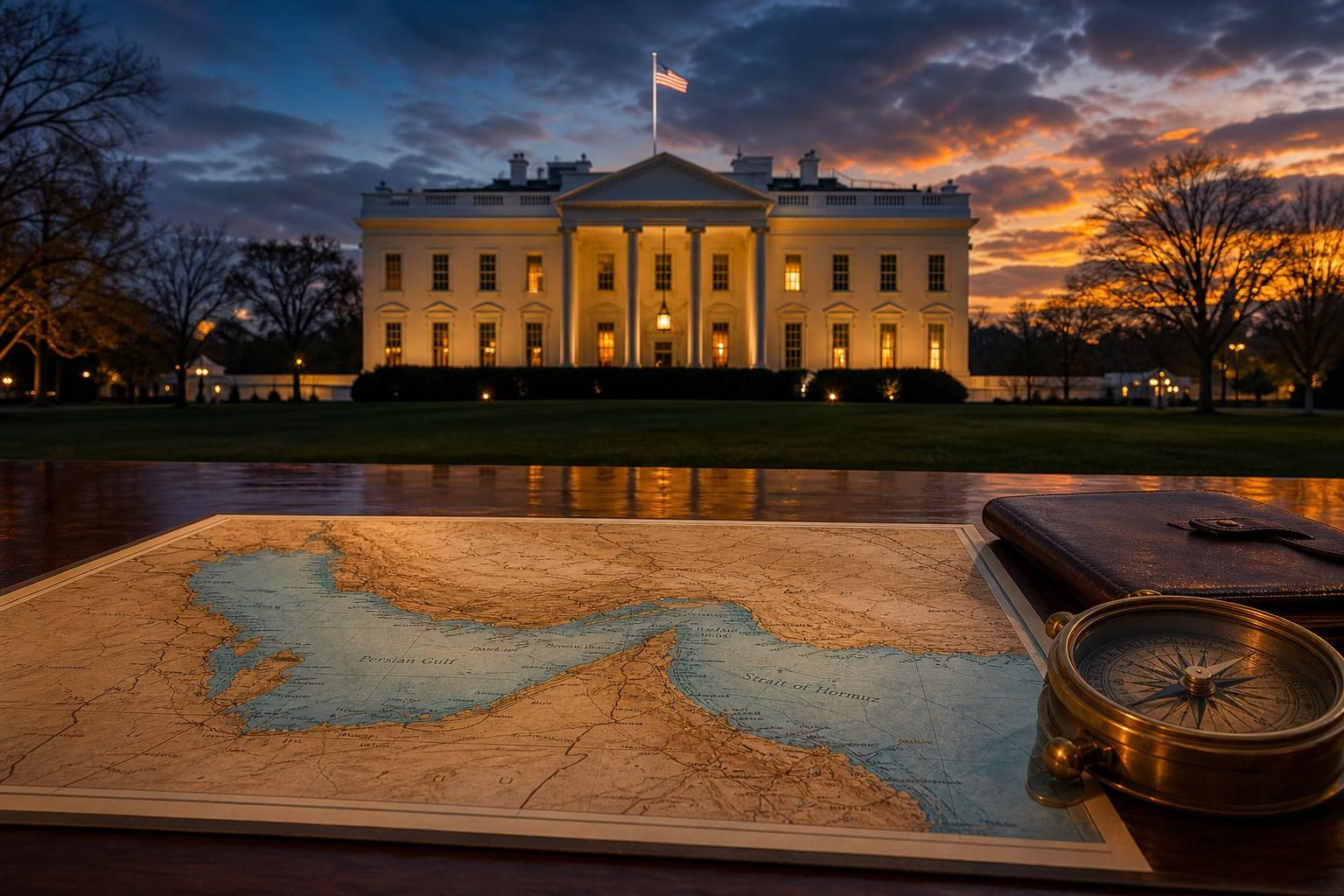
Part of our continuing coverage: Trump: America Holds the Leverage on Iran, No Deal Needed; Vance Turns to the Fraud Fight
Key points
- Reuters reports President Trump has told advisers he may hold off on new Iran strikes barring fresh provocations.
- Earlier this month he signaled new attacks were unlikely for now, and oil prices fell.
- Tehran has answered with threats and demands that Washington accept its own terms.
- The signal comes ahead of next week's APEC summit in Shenzhen, where talks with Xi Jinping are expected.
President Trump has told advisers he may hold off on new military strikes against Iran as long as Tehran avoids fresh provocations, Reuters reported Saturday in a story carried by The Hindu, citing people familiar with the matter [1]. The report describes a president keeping his options open rather than locking himself into either escalation or a deal on Iran's terms [1].
The news agency noted that the war has pushed up global fuel prices and has been unpopular with American voters, who handed Democrats control of Congress in last week's midterm elections [1]. That context matters, but it does not tell the whole story. The posture described in the report is the one the president has held for weeks: keep the pressure on, keep Tehran guessing and make clear that the decision to escalate belongs to Washington.
What the report says
According to Reuters, the president's thinking turns on Iran's own behavior [1]. If Tehran and its allies hold their fire, Mr. Trump may not order new attacks. If they strike American forces or shipping, the door to a military response stays open [1]. It is a conditional pause, not a retreat, and it puts the burden squarely on the Iranian regime.
The signal is consistent with what the president said earlier this month. CNBC reported on Nov. 9 that Mr. Trump indicated new attacks on Iran were unlikely for now while the U.S. naval blockade in the Strait of Hormuz stayed in place, and oil prices fell on the news [2]. For American families, calmer energy markets mean relief at the gas pump heading into the holidays.
Tehran's hard line
Iran has answered with threats rather than concessions. Al Jazeera reported on Nov. 8 that Iran warned it would "rain down hell" if the United States escalated the war [3]. Iranian officials have also told Washington to accept Tehran's own proposal for ending the fighting or risk a return to combat, UPI reported [4].
Those demands run headlong into the American position. The administration has shown no willingness to accept terms dictated by Tehran, and the Reuters report describes a president who intends to keep the choice of escalation in his own hands [1][2]. That is why the provocation test matters. It hands the next move to the Iranian regime. If Tehran restrains itself, the pressure continues without new risk to American lives. If it lashes out, the president has given up nothing.
Strength, restraint and the road to Shenzhen
Critics like to cast restraint as weakness and pressure as recklessness. The approach described by Reuters is neither. The threat of force remains credible precisely because the United States has already shown it will use force. What changes is that the president is giving pressure time to work while declining to spend American lives and munitions on strikes the moment may not require [1][2].
That reflects an old principle many Americans of faith recognize. Peace is worth pursuing, but it is secured by strength, not by wishful thinking. A commander in chief who holds his fire while keeping his hand on the lever is exercising discipline, not doubt.
The timing matters, too. Mr. Trump is expected in Shenzhen, China, next week for the Asia-Pacific Economic Cooperation summit, where he is expected to meet Chinese President Xi Jinping, and a first-ever three-way meeting with Russian President Vladimir Putin has been discussed, Al Jazeera reported [5]. Analysts told the network such a meeting would be a coup for Moscow, while Beijing appeared lukewarm [5]. A quieter Persian Gulf would let the president arrive focused on trade, nuclear arms and America's competition with China rather than on a new round of fighting.
What comes next
Much now depends on Tehran. The Reuters report made clear that the president has not committed to a course either way [1]. Iran's leaders can test American patience, as their threats suggest they might [3][4], or they can accept that the pressure will not ease until their behavior changes.
For now, the message from the White House is steady. America holds the leverage, the decision on force rests with the president, and any new provocation will be answered on his timetable, not Tehran's.
Sources
With Democrats taking Congress, what should Republicans focus on first?
- Blocking bad bills
- Working on prices and costs
- Winning back the House in 2028
- Confirming judges before January
More in Politics
Elections Aren't Everything: Rubio Tells Conservative Lawyers the Long Fight Is for America's Institutions
This morning on Cross-Examination with Dominic Kane
Trump, Xi and Putin at One Table: What's on the Agenda in Shenzhen, What's Off It, and Why Bringing China Into Nuclear Talks Matters
This morning on The Briefing Room with Claire Donovan
Jordan Readies a Fighting Minority as Conservatives Keep the Heat on Thune
Last night on The Sterling Report with Ava Sterling
Were you there?
If you were at the scene, or this story touched your life, tell us what you saw and what it was like.
Discussion 0
Sign in or create a free account to join the discussion.
No comments yet. Start the discussion.