
 Overnight on The Briefing Room with Claire Donovan
Trump Sets His Sights on a Free Cuba: 'I Want to Get Cuba Done Before I Leave'
The President says his team is watching the failing communist regime closely. Here is what he said, what Venezuela changed, how Havana and Miami are reacting, and what the Constitution requires.
Filed November 13, 2026 · 📍 Miami, FL 33130
Were you there? Share your story
Key points
- Trump told Hugh Hewitt he wants to resolve Cuba before his term ends and is watching the island closely
- He announced no operation or deadline; overseas outlets read the remarks as a hint of possible action
- Maduro's ouster in January cut off the regime's longtime patron as Cuba's energy crisis deepens
- Any military step would test the War Powers Resolution and a Democratic House arriving in January
President Trump has made no secret of where Cuba ranks on his list of unfinished business. In an interview with a conservative host on Thursday, he put it plainly: "I want to get Cuba done before I leave." [1] He said his administration is watching the island very closely and that the communist-run country is doing very poorly. [1]
The remarks set off a fresh round of headlines overseas. Al Jazeera reported that the President described Cuba as essentially a failed nation and characterized his words as a hint that Washington could move against the government in Havana before his term ends in January 2029. [2] It is worth being precise about what was said and what was not. The President did not announce a military operation, set a deadline or describe a plan. He stated a goal, and he left his options open. That is a familiar pattern for a commander in chief who has long argued that adversaries should never be told what America will not do.
What the President Said, and Why It Landed Now
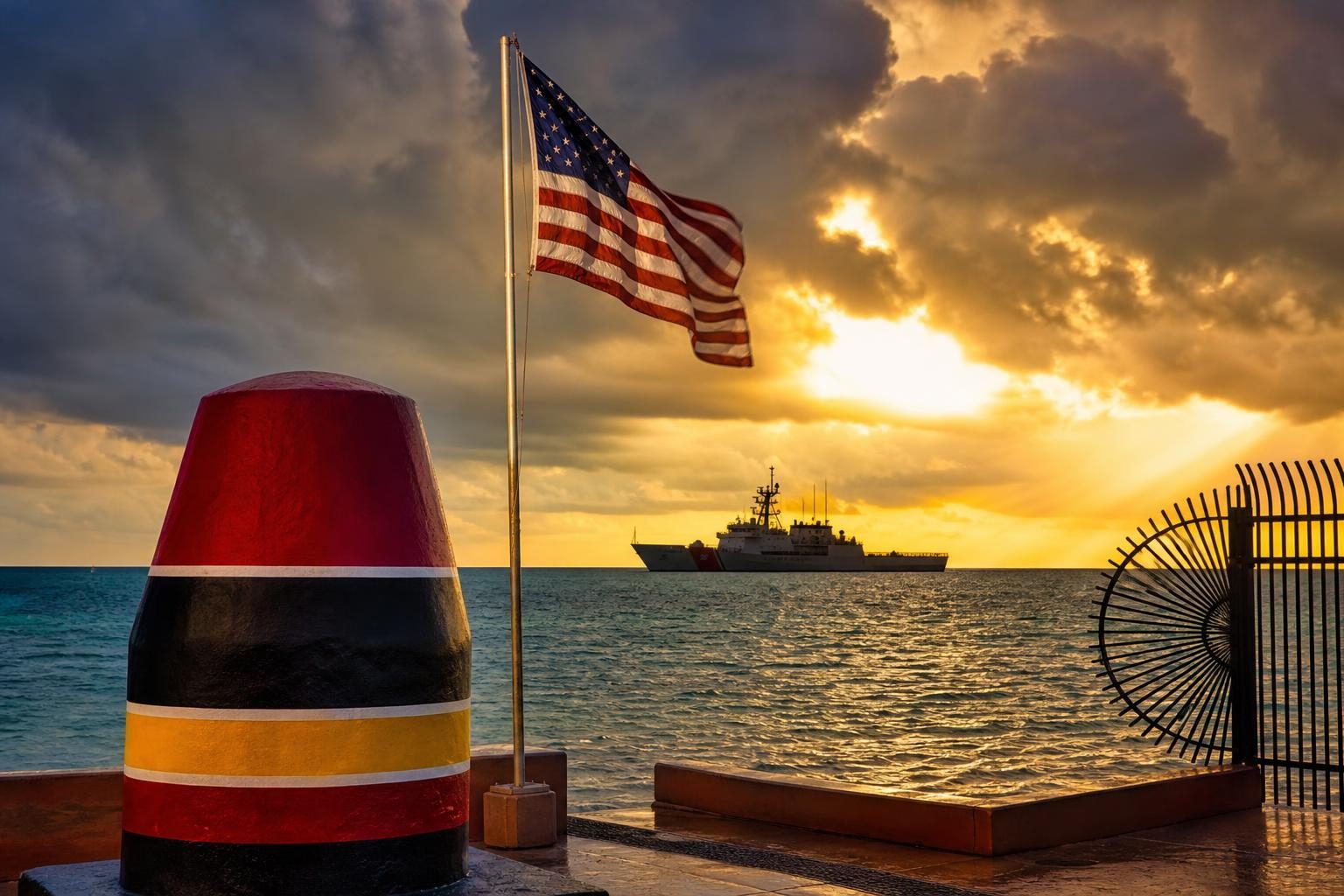
The timing matters. The interview came on a crowded Thursday at the White House, nine days after midterm elections that handed Democrats control of the House starting in January. A divided Congress will make the final two years of this presidency harder on many fronts, from spending to oversight. Foreign policy is the arena where a president's hand remains strongest, and Cuba sits ninety miles from Key West.
According to The Hill's account of the interview, Mr. Trump framed the question less as a matter of force than as a matter of a failing regime running out of road. [1] He said the situation on the island is deteriorating and that his team is following it closely. [1] Al Jazeera, a network funded by the government of Qatar, cast the same comments in sharper terms, headlining its report as the President floating the idea of toppling Cuba's authorities. [2] Readers should weigh both accounts against the words themselves: a stated ambition to resolve America's oldest Cold War standoff on his watch, without a stated method.
The Venezuela Precedent
Washington's posture toward Havana cannot be separated from what happened in Caracas this year. In January, the Trump administration ousted Nicolás Maduro, the socialist strongman whose government had propped up Cuba for two decades. [3] On Thursday, the same day as the interview, a report found that the United States has returned more than $12 billion, nearly 99 percent, of the revenue from Venezuelan oil sales handled since Maduro's removal. [3] That accounting answers critics who predicted a resource grab: according to the report, the oil money went back to Venezuela under an arrangement overseen by the United States. [3]
For Cuba, the change in Caracas was a body blow. For years, Venezuelan crude kept the island's aging power plants running in exchange for Cuban doctors, advisers and intelligence officers. With Venezuela's oil now moving under arrangements Washington oversees, Havana has lost the patron that kept its lights on. NPR reported this month that Cuba is still grappling with a deep economic and energy crisis. [4] Ordinary Cubans, not the party elite, are the ones paying for it, with long outages, scarce food and a wave of emigration unlike anything the island has seen in decades.
That backdrop explains the President's confidence. A regime that cannot keep the power on, feed its people or stop its young from leaving is, in his telling, a regime nearing the end of its run. Whether that end comes through negotiation, internal collapse or outside pressure is the open question.
Havana's Answer
Cuba's government has answered every round of American pressure the same way: with defiance. In September, a senior Cuban official denounced the possibility of U.S. military action as an atrocious crime, Al Jazeera reported. [5] Havana has long blamed what it calls the American blockade for the island's hardships, and it has warned that it would resist any intervention. [5] The regime's friends abroad have offered words of support, but none has shown it can replace the oil and cash that once flowed from Caracas.
What Havana's leaders rarely address is why so many of their own citizens have voted with their feet. The communist government has jailed peaceful protesters, harassed independent journalists and pressured churches that refuse to stay quiet. Those facts, more than any speech in Washington, are what make the regime's claims of national dignity ring hollow to the Cuban families who fled it.
Miami Is Watching
Nowhere will the President's words be parsed more closely than in South Florida, home to the largest Cuban exile community in the world. Many of those families fled with nothing after 1959, and three generations later the cause of a free Cuba remains personal.
Their patience has been tested. In October, CiberCuba reported that some Cuban exiles in Miami who had expected decisive action against the regime turned their frustration on President Trump and Secretary of State Marco Rubio, the son of Cuban immigrants, when the dramatic change they hoped for did not materialize. [6] Thursday's interview was, in part, an answer to that disappointment: a signal that Cuba has not dropped off the President's agenda as his term enters its final two years.
For Florida's Cuban-American voters, who have been among the most reliable Republican constituencies in the country, the question now is follow-through. Words have been spoken before. What they want to see is a free election, political prisoners released and churches allowed to worship without fear.
What the Constitution Requires
Any talk of moving against a foreign government raises a constitutional question, and it deserves a serious answer rather than a slogan. Article I gives Congress the power to declare war. Article II makes the President commander in chief of the armed forces. Since 1973, the War Powers Resolution has required presidents to notify Congress within 48 hours of introducing forces into hostilities and to end the operation within 60 days unless Congress authorizes it, with an additional 30 days allowed for withdrawal.
Presidents of both parties have stretched those limits, from Bill Clinton in Kosovo to Barack Obama in Libya. Mr. Trump has argued that swift action against hostile regimes protects American lives and that hesitation invites aggression. A Democratic House that takes power in January will almost certainly test that argument with hearings, resolutions and subpoenas, as it has signaled on other fronts. A wise course, and a constitutional one, would be for the White House to bring Congress along on any major step, so that a historic change in Cuba carries the full weight of the American people.
What Comes Next
The most likely near-term path is more of what has already been tried: economic pressure, diplomatic isolation of the regime and a steady drumbeat of warnings from the President and Secretary Rubio. The administration's handling of Venezuela's oil money suggests it wants to show that American leverage can be used without plundering a country's wealth, a message aimed as much at Cubans as at Havana's rulers. [3]
There are real risks. A sudden collapse could send a new wave of migrants toward Florida's coast. A military confrontation would carry costs no responsible leader should dismiss. And a regime with nothing left to lose can be dangerous. But the status quo has costs too, borne every day by Cubans living in the dark under a government that has failed them for 67 years.
The President has set an ambitious goal. Our hope is simple: that it ends with Cubans free to speak, to vote, to work and to worship, and that it is achieved with wisdom, with the support of Congress and with as little bloodshed as possible. The people of Cuba have waited long enough.
Sources
With Democrats taking Congress, what should Republicans focus on first?
- Blocking bad bills
- Working on prices and costs
- Winning back the House in 2028
- Confirming judges before January
More in Politics
Trump Stands by Lutnick as He Agrees to Face Congress: The Hard Questions in the Nvidia Chip Fight
Overnight on Cross-Examination with Dominic Kane
Van Hollen Takes On Schumer: The Fight to Lead the New Democratic Senate, and Why the Filibuster Hangs in the Balance
Overnight on The Sterling Report with Ava Sterling
Republicans Take the Lead on Nvidia Oversight: Chip-Export Curbs Gain Ground as Huang and Lutnick Are Called to Answer
Last night on The Sterling Report with Ava Sterling
Were you there?
If you were at the scene, or this story touched your life, tell us what you saw and what it was like.
Discussion 0
Sign in or create a free account to join the discussion.
No comments yet. Start the discussion.