
 Tonight on The Briefing Room with Claire Donovan
Back From Asia, Trump Takes 90 Minutes of Questions: Nuclear Common Ground, No Bomb for Iran and a Nudge for Stephen Miller
In a marathon White House news conference, the President defended talking face to face with Xi and Putin, vowed Iran will never get a nuclear weapon and said he wants data centers built at home.
Filed November 20, 2026 · 📍 White House, DC 20500
Were you there? Share your story
Part of our continuing coverage: Trump Leaves for Manila and Shenzhen Saying a Kim Jong Un Meeting in China Could Happen, if Xi Makes Room
Key points
- Trump spent almost 90 minutes at the podium after a trip that included the first three-way meeting with Xi and Putin.
- He said the three powers agreed a nuclear conflict must never happen; NPR said the summit produced few concrete results.
- On Iran, he said Tehran will never get a nuclear weapon and the U.S. will not allow a dirty bomb.
- He asked new chief of staff Stephen Miller if he wanted to run for president and said a Democratic Congress could mean more deals.
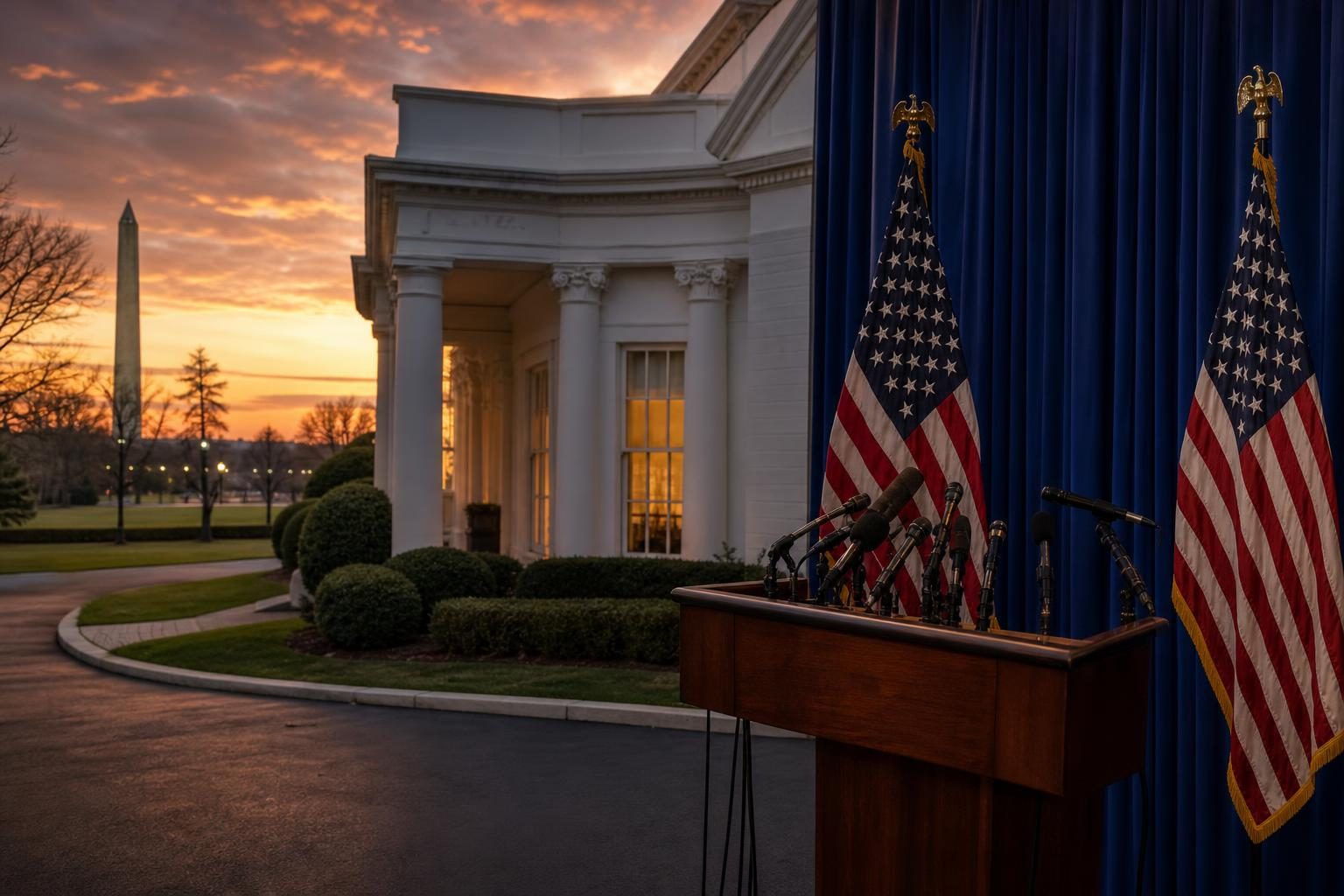
President Trump came home from Asia and spent almost 90 minutes at the White House podium on Friday, taking questions on a trip that produced trade deals and the first three-way sit-down with China's Xi Jinping and Russia's Vladimir Putin, The Hill reported [1]. Rather than pick one message, the President covered nearly every big fight in Washington: nuclear weapons, Ukraine, Iran, chips, data centers and the Democratic Congress that takes over in January.
It was classic Trump: long, unscripted and willing to take every question. Supporters will see a President making the case for talking to rivals from a position of strength. Critics will say the trip produced more handshakes than results. Both camps have something to point to, and the record from Friday shows why.
What Came Out of Shenzhen
The President's central claim was that the summit moved the world's three largest nuclear powers onto common ground. According to CNN's live coverage, he said the United States, Russia and China agreed that a nuclear conflict must never happen, and he suggested Beijing was closer to Washington than to Moscow on making peace in Ukraine [2].
NPR offered the skeptical read, reporting that the leaders' four-point "Declaration toward Peace" did not appear to produce major breakthroughs on the war in Ukraine or the war with Iran, and that the President offered few concrete results [3]. That is a fair point, and it deserves a fair answer: no three-way meeting of this kind had ever happened before, and the first step in any arms-control process has always been getting the parties into the same room. Ronald Reagan's first meeting with Mikhail Gorbachev in Geneva produced no treaty either.
The sharpest exchange came over Putin. Asked about calling the Russian leader his friend, the President defended the personal relationship, but when pressed on whether Putin is a friend to America, he said he "can't speak" to that, CTV News reported [4]. Some will read that as dodging. Read another way, it is a President drawing a line between personal rapport, which he uses as a tool, and national interest, which he has not handed to anyone.
Iran, Chips and Data Centers
On Iran, the President did not soften. CNN reported that he said Tehran will never get a nuclear weapon, accused Iran's leaders of negotiating in bad faith about ending the war, and said the United States would not allow the regime to build a so-called dirty bomb [2]. For a country weary of the war, that is not the easy political answer. It is the consistent one, and it matches what he has said since the first strikes.
On technology, CNN reported that the President said he still has confidence in Commerce Secretary Howard Lutnick despite scrutiny over chip sales to China, and that he wants only older chips sold to Beijing [2]. He also said he would stop American companies from building data centers abroad while pushing to build more of them at home, according to the same coverage [2]. The goal is plain enough: keep the most valuable computing power of this century, and the jobs and tax base that come with it, on American soil.
Miller at the Podium and a Look at January
The most talked-about moment came when the President brought his new chief of staff, Stephen Miller, to the microphone. After Miller praised the administration's record, the President turned to him and asked, "Do you want to run for president?" The Hill reported [5]. It was a light moment, but it also told Washington who holds the President's trust as the West Wing resets after the midterms.
The President also struck a hopeful note about the new Congress. Newsweek reported he said a Democratic majority could lead to more bipartisan deal-making, not less [6]. Washington is bracing for two years of investigations and gridlock, so a President openly talking about deals is worth noting. Whether Democrats meet him halfway is now their choice.
What Comes Next
The work now shifts from summits to follow-through. Watch for whether Beijing and Moscow act on the nuclear-risk dialogue they signed, whether the data-center penalty becomes a formal proposal, and whether there is any movement toward ending the war with Iran before the new year.
Friday's message was that this President still believes in American strength, American jobs and talking to adversaries face to face. Voters will judge the results. For one afternoon, at least, nobody could say he ducked the questions.
Sources
- [1]Opens in a new tab ↗
- [2]CNNTrump defends Putin relationship and says he'll stop US companies from building data centers abroadOpens in a new tab ↗
- [3]Opens in a new tab ↗
- [4]CTV NewsTrump defends calling Putin a friend but says he 'can't speak' to whether he's a friend to the U.S.Opens in a new tab ↗
- [5]Opens in a new tab ↗
- [6]Opens in a new tab ↗
With Democrats taking Congress, what should Republicans focus on first?
- Blocking bad bills
- Working on prices and costs
- Winning back the House in 2028
- Confirming judges before January
More in Politics

Idaho's Republican Family Feud: Who Speaks for Conservatives?
Tonight on Hollister Tonight with Jack Hollister

Johnson to House GOP: Show Up and Finish the Job
Tonight on The Sterling Report with Ava Sterling
Zacharia Calls California Bar Probe Political, Predicts Dismissal
Tonight on The Briefing Room with Claire Donovan
Were you there?
If you were at the scene, or this story touched your life, tell us what you saw and what it was like.
Discussion 0
Sign in or create a free account to join the discussion.
No comments yet. Start the discussion.